

Ruthenium Red

GTC-578

Ruthenium Compounds

Ruthenium Red

CAS No.
11103-72-3
Catalogue ID
GTC-578

Ruthenium Red, CAS 11103-72-3. Source-derived identification, physical data and applications are provided for catalogue reference; request the current specification, COA and SDS for the required grade.

Catalogue aliases / related identifiers

Ammoniated ruthenium oxychloride; RR; C.I. 77800; Ruthenium(III) chloride oxide ammoniated; Ruthenium salt; Ruthenium oxychloride ammoniated; Ruthenium tetramminohydroxychlorochloride; [μ-(Hexaammine-di-μ-hydroxodiruthenium)]tetraammineruthenium(6+) chloride

Supplied catalogue source: GTC-578 · Page 80

Reference data — confirm before ordering or use

The information below is a structured migration from the supplied catalogue snapshot. It is not a current product specification, COA or SDS. Confirm the actual supplier, grade, batch documents, classification, packing and destination requirements for your enquiry.


Basic Information of Ruthenium Red

CAS No.11103-72-3
EC No.234-338-0
Chemical FormulaRu₃O₂Cl₆·4H₂O
Molecular Weight786.94 g/mol
AppearanceDeep red to violet-red crystalline powder or hydrated solid
OdorOdorless
Melting pointDecomposes before melting (>200 °C)
Boiling pointNot applicable (decomposes)
Densityapprox. 2.8–3.0 g/cm³
SolubilitySoluble in water (forms deep red solutions); sparingly soluble in alcohols
Nature (hazards)Causes severe skin burns and eye damage, may cause allergic skin reaction, harmful if swallowed or inhaled, toxic to aquatic life
RIDADRUN 3260, Corrosive solid, acidic, inorganic, n.o.s. (Ruthenium red), Class 8, Packing Group III
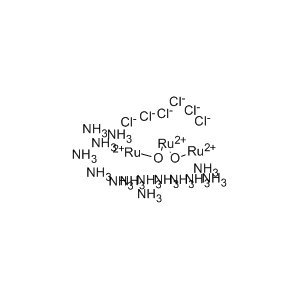
Chemical StructureMolecular Structure of Ruthenium Red

Primary Applications of Ruthenium Red

Ruthenium Red is the preferred selective stain for visualizing polyanionic structures with exceptional contrast and specificity in biological ultrastructure studies.

  1. Transmission Electron Microscopy (TEM) Staining
    Provides intense electron-dense contrast for acidic mucopolysaccharides, glycosaminoglycans, and proteoglycans in cartilage, connective tissue, basement membranes, and extracellular matrix visualization.

  2. Histochemical & Cytochemical Localization
    Selectively stains polyanionic cell surface components, microbial capsules, and glycogen granules in light and electron microscopy, enabling precise localization of anionic sites in tissues and cells.

  3. Biological Specimen Preparation for TEM
    Used as a postfixation stain in ultrathin sectioning protocols to enhance contrast of anionic polymers without osmium interference, critical for high-resolution ultrastructural analysis.

  4. Selective Metal Ion Binding & Probes
    Serves as a sensitive probe for detecting and quantifying polyanionic sites in biochemical and biophysical studies, including polysaccharide and nucleic acid interactions.

  5. Pathology & Disease Research
    Applied in studies of connective tissue disorders, amyloidosis, and microbial biofilms to visualize altered polyanion distribution and matrix changes in diseased tissues.

  6. Materials & Nanotechnology Research
    Employed as a contrast agent for characterizing polyelectrolyte multilayers, charged polymer nanoparticles, and biomimetic interfaces in advanced materials science.


  • Superior Purity & Staining Consistency
    Rigorous quality controls ensure high Ru content, minimal impurities, and reproducible color intensity and binding affinity for consistent ultrastructural contrast.

  • Secure Precious Metal Sourcing
    Transparent, responsible ruthenium procurement with inventory buffering to provide supply stability and competitive pricing.

  • Technical Microscopy Support
    Experienced specialists offer guidance on staining protocols, fixation compatibility, concentration optimization, and troubleshooting for maximum contrast and specificity.

  • Full Regulatory Compliance
    Comprehensive COA, REACH, RoHS, and detailed SDS documentation to facilitate seamless integration into research, pathology, and materials laboratories.

  • Sustainability & Recycling Commitment
    Ethical sourcing practices and ruthenium recovery/recycling programs aligned with ESG objectives and sustainable scientific practices.


Hazards Classification

  • GHS Classification: Skin Corrosion/Irritation (Category 1B); Serious Eye Damage (Category 1); Skin Sensitization (Category 1); Acute Toxicity, Oral (Category 4); Aquatic Chronic (Category 2)

  • Hazard Statements: H314: Causes severe skin burns and eye damage; H317: May cause an allergic skin reaction; H302: Harmful if swallowed; H411: Toxic to aquatic life with long lasting effects

  • UN Number: UN 3260

  • Hazard Class: 8 (Corrosive substances)

  • Packing Group: III

GHS05
GHS05: Corrosive
GHS07
GHS07: Exclamation mark (sensitizer, acute toxicity)
GHS09
GHS09: Environment (aquatic toxicity)
Before you order

Confirm the current commercial product record.

Include the required grade or purity, quantity, preferred packing, destination country/port and required document set.

  • 01Current specification
  • 02Batch or sample COA
  • 03Product- and supplier-specific SDS
  • 04Packing and shipping review
Request product review

INQUIRY

INQUIRY