

Ruthenium Carbonyl

GTC-572

Ruthenium Compounds

Ruthenium Carbonyl

CAS No.
15243-33-1
Catalogue ID
GTC-572

Ruthenium Carbonyl, CAS 15243-33-1. Source-derived identification, physical data and applications are provided for catalogue reference; request the current specification, COA and SDS for the required grade.

Catalogue aliases / related identifiers

Triruthenium dodecacarbonyl; Dodecacarbonyltriruthenium; Triruthenium carbonyl; Ruthenium dodecacarbonyl; Dodecacarbonyltriruthenium(0); Dodeca-μ-carbonyltriruthenium

Supplied catalogue source: GTC-572 · Page 79

Reference data — confirm before ordering or use

The information below is a structured migration from the supplied catalogue snapshot. It is not a current product specification, COA or SDS. Confirm the actual supplier, grade, batch documents, classification, packing and destination requirements for your enquiry.


Basic Information of Ruthenium Carbonyl

CAS No.15243-33-1
EC No.239-569-3
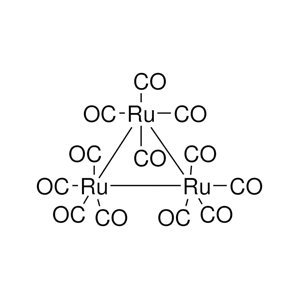
Chemical FormulaRu₃(CO)₁₂
Molecular Weight639.33 g/mol
AppearanceBright orange to red-orange crystalline powder
OdorOdorless
Melting point150 °C (decomposes)
Boiling pointNot applicable (decomposes)
Densityapprox. 2.8–3.0 g/cm³
SolubilityInsoluble in water; soluble in hexane, benzene, toluene, dichloromethane, chloroform
Nature (hazards)Harmful if swallowed, may cause long lasting harmful effects to aquatic life, air-sensitive in solution, CO-releasing upon decomposition
RIDADRNot regulated (not subject to transport regulations as hazardous material in many classifications)
Chemical StructureMolecular Structure of Ruthenium Carbonyl

Primary Applications of Ruthenium Carbonyl

Ru₃(CO)₁₂ serves as a versatile Ru(0) cluster precursor, readily undergoing ligand substitution or fragmentation to generate active ruthenium species in diverse catalytic and synthetic processes.

  1. Homogeneous Hydrogenation Catalysis
    Acts as a precursor for ruthenium carbonyl hydride species in selective hydrogenation of alkenes, alkynes, carbonyls, and nitro groups, offering high activity under mild conditions.

  2. Hydroformylation & Carbonylation Reactions
    Used to prepare ruthenium catalysts for hydroformylation of alkenes to aldehydes and carbonylation processes, providing complementary selectivity to rhodium-based systems.

  3. Organometallic Complex Synthesis
    Serves as the starting material for synthesizing substituted ruthenium carbonyl clusters, phosphine derivatives, and nitrosyl/isonitrile complexes in coordination chemistry research.

  4. Supported Ruthenium Catalyst Preparation
    Employed in impregnation or thermal decomposition to deposit Ru on carbon, alumina, or silica supports for heterogeneous hydrogenation and Fischer-Tropsch catalysis.

  5. Thin-Film & CVD Ruthenium Deposition
    Functions as a volatile Ru source for chemical vapor deposition of high-purity ruthenium films in microelectronics, interconnects, and catalytic coatings.

  6. Fine Chemical & Pharmaceutical Synthesis
    Applied in Ru-catalyzed reductions and functionalizations for key steps in API manufacturing, offering scalability and functional group tolerance.


  • High Purity & Cluster Integrity
    Rigorous quality controls ensure uniform Ru content, minimal free CO or impurities, and preserved Ru₃ framework for maximum precursor reactivity.

  • Secure Precious Metal Sourcing
    Transparent, responsible ruthenium procurement with inventory buffering to provide supply stability and competitive pricing.

  • Technical Organometallic Support
    Dedicated specialists offer guidance on ligand substitution, cluster fragmentation, catalyst activation, and reaction optimization for your specific applications.

  • Comprehensive Regulatory Compliance
    Full COA, REACH, RoHS, and detailed SDS documentation to facilitate seamless integration into global operations and research programs.

  • Sustainability & Recycling Commitment
    Ethical sourcing practices and ruthenium recovery/recycling programs aligned with ESG objectives and sustainable chemistry principles.


Hazards Classification

  • GHS Classification: Acute Toxicity, Oral (Category 4); Aquatic Chronic (Category 4)

  • Hazard Statements: H302: Harmful if swallowed; H413: May cause long lasting harmful effects to aquatic life

  • UN Number: Not regulated

  • Hazard Class: Not classified as hazardous for transport

  • Packing Group: Not applicable

GHS07
GHS07: Exclamation mark (acute toxicity)
GHS09
GHS09: Environment (aquatic hazard)
Before you order

Confirm the current commercial product record.

Include the required grade or purity, quantity, preferred packing, destination country/port and required document set.

  • 01Current specification
  • 02Batch or sample COA
  • 03Product- and supplier-specific SDS
  • 04Packing and shipping review
Request product review

INQUIRY

INQUIRY