

Ruthenium(III) Chloride

GTC-574

Ruthenium Compounds

Ruthenium(III) Chloride

CAS No.
10049-08-8
Catalogue ID
GTC-574

Ruthenium(III) Chloride, CAS 10049-08-8. Source-derived identification, physical data and applications are provided for catalogue reference; request the current specification, COA and SDS for the required grade.

Catalogue aliases / related identifiers

Ruthenium trichloride; Trichlororuthenium; Ruthenium(3+) chloride; Ruthenium chloride (RuCl3); Anhydrous ruthenium trichloride; NSC 171454

Supplied catalogue source: GTC-574 · Page 79

Reference data — confirm before ordering or use

The information below is a structured migration from the supplied catalogue snapshot. It is not a current product specification, COA or SDS. Confirm the actual supplier, grade, batch documents, classification, packing and destination requirements for your enquiry.


Basic Information of Ruthenium(III) Chloride

CAS No.10049-08-8
EC No.233-167-5
Chemical FormulaRuCl₃
Molecular Weight207.43 g/mol
AppearanceDark red to black crystalline powder
OdorOdorless
Melting pointDecomposes before melting (>200 °C)
Boiling pointNot applicable (decomposes)
Densityapprox. 3.11 g/cm³
SolubilityHighly soluble in water (hydrolyzes); soluble in alcohols, acetone, ethyl acetate
Nature (hazards)Causes severe skin burns and eye damage, may cause allergic skin reaction, harmful if swallowed or inhaled, toxic to aquatic life
RIDADRUN 3260, Corrosive solid, acidic, inorganic, n.o.s. (Ruthenium(III) chloride), Class 8, Packing Group III
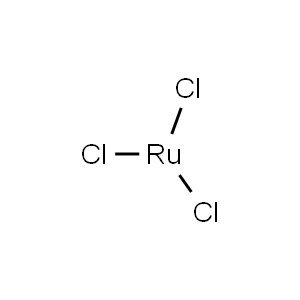
Chemical StructureMolecular Structure of Ruthenium(III) Chloride

Primary Applications of Ruthenium(III) Chloride

Ruthenium(III) Chloride serves as a versatile Ru precursor for generating highly active ruthenium catalysts in selective transformations and advanced synthesis.

  1. Olefin Metathesis Catalyst Preparation
    Acts as the primary ruthenium source for synthesizing Grubbs-type catalysts (1st, 2nd generation) and Hoveyda-Grubbs catalysts, enabling efficient ring-closing, cross, and ring-opening metathesis in pharmaceutical and polymer chemistry.

  2. Hydrogenation & Transfer Hydrogenation
    Used to prepare homogeneous or supported Ru catalysts for selective reduction of carbonyls, imines, and alkenes, offering excellent enantioselectivity in asymmetric hydrogenation processes.

  3. C–H Activation & Functionalization
    Facilitates Ru-catalyzed direct C–H arylation, alkenylation, and annulation of arenes and heterocycles, providing atom-economical routes to complex molecules.

  4. Oxidation & Dehydrogenation Reactions
    Serves as precursor for Ru catalysts in alcohol oxidation, alkane dehydrogenation, and oxidative coupling, delivering high selectivity under mild conditions.

  5. Pharmaceutical & Fine Chemical Synthesis
    Employed in key steps of API manufacturing, including metathesis and hydrogenation, offering scalability and functional group compatibility in GMP environments.

  6. Advanced Materials & Nanotechnology
    Enables preparation of Ru nanoparticles, thin films, or supported clusters for electrocatalysis, fuel cells, and functional materials research.


  • Consistent Ruthenium Content & Purity
    Precise analytical verification ensures uniform Ru content, low residual impurities, and batch reproducibility for reliable catalyst preparation and performance.

  • Secure Precious Metal Sourcing
    Transparent, responsible ruthenium procurement with inventory buffering to provide supply stability and competitive pricing.

  • Technical Catalysis Support
    Experienced specialists offer guidance on complex formation, catalyst activation, reaction optimization, and scale-up for maximum efficiency.

  • Full Regulatory Compliance
    Comprehensive COA, REACH, RoHS, and detailed SDS documentation to facilitate seamless integration into global operations and audits.

  • Sustainability & Recycling Commitment
    Ethical sourcing practices and ruthenium recovery/recycling programs aligned with ESG objectives and circular economy principles.


Hazards Classification

  • GHS Classification: Skin Corrosion/Irritation (Category 1B); Serious Eye Damage (Category 1); Skin Sensitization (Category 1); Acute Toxicity, Oral (Category 4); Aquatic Chronic (Category 2)

  • Hazard Statements: H314: Causes severe skin burns and eye damage; H317: May cause an allergic skin reaction; H302: Harmful if swallowed; H411: Toxic to aquatic life with long lasting effects

  • UN Number: UN 3260

  • Hazard Class: 8 (Corrosive substances)

  • Packing Group: III

GHS05
GHS05: Corrosive
GHS07
GHS07: Exclamation mark (sensitizer, acute toxicity)
GHS09
GHS09: Environment (aquatic toxicity)
Before you order

Confirm the current commercial product record.

Include the required grade or purity, quantity, preferred packing, destination country/port and required document set.

  • 01Current specification
  • 02Batch or sample COA
  • 03Product- and supplier-specific SDS
  • 04Packing and shipping review
Request product review

INQUIRY

INQUIRY