

Ruthenium(IV) Oxide

GTC-575

Ruthenium Compounds

Ruthenium(IV) Oxide

CAS No.
12036-10-1
Catalogue ID
GTC-575

Ruthenium(IV) Oxide, CAS 12036-10-1. Source-derived identification, physical data and applications are provided for catalogue reference; request the current specification, COA and SDS for the required grade.

Catalogue aliases / related identifiers

Ruthenium dioxide; Ruthenium oxide (RuO2); Ruthenic oxide; Ruthenium(4+) oxide; Ruthenium(IV) dioxide; Monoruthenium dioxide; NSC 102928

Supplied catalogue source: GTC-575 · Page 79

Reference data — confirm before ordering or use

The information below is a structured migration from the supplied catalogue snapshot. It is not a current product specification, COA or SDS. Confirm the actual supplier, grade, batch documents, classification, packing and destination requirements for your enquiry.


Basic Information of Ruthenium(IV) Oxide

CAS No.12036-10-1
EC No.234-829-6
Chemical FormulaRuO₂
Molecular Weight133.07 g/mol
AppearanceDark blue to black powder
OdorOdorless
Melting pointDecomposes >1200 °C
Boiling pointNot applicable (decomposes)
Densityapprox. 6.97 g/cm³
SolubilityInsoluble in water and most organic solvents; soluble in fused alkalis or hot concentrated acids
Nature (hazards)May cause respiratory irritation, skin and eye irritation, harmful if inhaled as dust, toxic to aquatic life
RIDADRNot regulated (non-hazardous for transport under standard classifications; consult SDS for specific handling)
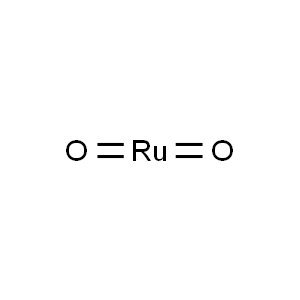
Chemical StructureMolecular Structure of Ruthenium(IV) Oxide

Primary Applications of Ruthenium(IV) Oxide

Ruthenium(IV) Oxide excels as a stable, high-performance heterogeneous catalyst and electrode material in oxidation and energy-related technologies.

  1. Selective Oxidation of Alcohols & Hydrocarbons
    Catalyzes efficient oxidation of primary alcohols to aldehydes/carboxylic acids and hydrocarbons using air or oxygen, delivering high selectivity in fine chemical and fragrance production.

  2. Dimensionally Stable Anodes (DSA) in Chlor-Alkali
    Serves as the active coating on titanium substrates for chlorine production, offering exceptional corrosion resistance, low overpotential, and long service life in industrial electrolysis.

  3. Electrocatalysis for Water Splitting & Fuel Cells
    Functions as an efficient oxygen evolution reaction (OER) catalyst in PEM and alkaline water electrolyzers, and as a cathode material in direct methanol fuel cells with superior stability.

  4. Electrochemical Capacitors & Supercapacitors
    Provides pseudocapacitive behavior with high specific capacitance and cycling stability in advanced energy storage devices and hybrid capacitor systems.

  5. Supported Catalyst Preparation
    Acts as a Ru source for generating RuO₂ or reduced Ru on various supports (carbon, alumina, TiO₂) for tailored oxidation and hydrogenation catalysis in fine chemicals.

  6. Advanced Materials & Nanotechnology
    Enables synthesis of RuO₂ nanoparticles, thin films, or nanostructures for sensors, electrochromic devices, and functional coatings requiring high conductivity and stability.


  • High Ruthenium Content & Activity
    Precise analytical control ensures consistent Ru content, optimal crystallinity, and high active surface area for maximum catalytic and electrochemical performance.

  • Custom Material Specifications
    Tailored purity, particle morphology, surface area, and supported variants to perfectly align with your oxidation, electrolysis, or energy storage application.

  • Consistent Batch-to-Batch Reproducibility
    Rigorous testing (ICP, XRD, BET, electrochemical activity) guarantees low variation and predictable performance during scale-up and production.

  • Secure Ruthenium Supply Chain
    Responsible sourcing, strategic inventory management, and transparent pricing mitigate volatility and ensure long-term availability.

  • Technical & Regulatory Support
    Expert team provides guidance on catalyst activation, electrode coating, performance optimization, and full documentation (COA, REACH, SDS) for seamless integration.


Hazards Classification

  • GHS Classification: Skin Irritation (Category 2); Eye Irritation (Category 2A); Specific Target Organ Toxicity, Single Exposure (respiratory) (Category 3); Aquatic Chronic (Category 3)

  • Hazard Statements: H315: Causes skin irritation; H319: Causes serious eye irritation; H335: May cause respiratory irritation; H413: May cause long lasting harmful effects to aquatic life

  • UN Number: Not regulated

  • Hazard Class: Not classified as hazardous for transport

  • Packing Group: Not applicable

GHS07
GHS07: Exclamation mark (irritant, respiratory)
GHS09
GHS09: Environment (aquatic hazard)
Before you order

Confirm the current commercial product record.

Include the required grade or purity, quantity, preferred packing, destination country/port and required document set.

  • 01Current specification
  • 02Batch or sample COA
  • 03Product- and supplier-specific SDS
  • 04Packing and shipping review
Request product review

INQUIRY

INQUIRY