Pentaethylene glycol
- CAS No.
- 4792-15-8
Pentaethylene glycol, CAS 4792-15-8. Source-derived identification, physical data and applications are provided for catalogue reference; request the current specification, COA and SDS for the…
GTC-296
Hydroxy PEG Derivatives
Decaethylene Glycol, CAS 5579-66-8. Source-derived identification, physical data and applications are provided for catalogue reference; request the current specification, COA and SDS for the required grade.
PEG-10; HO-PEG10-OH; OH-PEG10-OH; 3,6,9,12,15,18,21,24,27-nonaoxanonacosane-1,29-diol; Polyethylene glycol 10; Alcohol-PEG10-Alcohol; Decaethylene glycol diol; PEG10-OH
Supplied catalogue source: GTC-296 · Page 132
The information below is a structured migration from the supplied catalogue snapshot. It is not a current product specification, COA or SDS. Confirm the actual supplier, grade, batch documents, classification, packing and destination requirements for your enquiry.
Decaethylene glycol, also known as PEG-10 or HO-PEG10-OH, is a defined polyethylene glycol derivative consisting of ten ethylene oxide repeating units with terminal hydroxyl groups. This monodisperse PEG diol functions as a versatile hydrophilic building block for molecular linker design and functional PEG derivative synthesis in fine chemical applications.
| CAS No. | 5579-66-8 |
|---|---|
| EC No. | 226-962-3 |
| Linear Formula | HO(CH2CH2O)10H |
| Molecular Weight | 458.54 g/mol |
| Appearance | White or colorless to almost white or almost colorless powder to lump to clear liquid |
| Melting Point | 28 °C (lit.) |
| Boiling point | 280 °C / 7 mmHg (lit.) |
| Density | 1.115 g/cm³ (predicted) |
| Solubility | Soluble in water and polar organic solvents |
| Storage Conditions | Keep in a tightly closed container in a cool, dry and well-ventilated place. Protect from moisture. Store sealed at room temperature. |
| Chemical Structure | 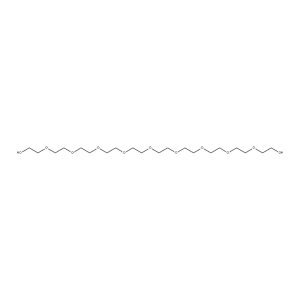 |
PEG linker intermediate: Decaethylene glycol serves as a precise ten-unit hydrophilic linker for bioconjugation, PEGylation strategies, and the construction of targeted delivery systems in pharmaceutical intermediate research.
Hydrophilic spacer: The extended PEG10 chain provides an effective hydrophilic spacer that improves solubility, flexibility, and biocompatibility in complex molecular designs during fine chemical and specialty synthesis.
Fine chemical intermediate: Functions as a versatile polyether diol building block for introducing hydrophilic segments and enabling further functionalization of terminal hydroxyl groups in organic synthesis projects.
Laboratory research: Widely utilized in medicinal chemistry and materials research laboratories for developing PEG-based architectures, surface modifications, and novel functional linkers.
Process development: Supports route optimization, scale-up studies, and custom synthesis of PEGylated advanced intermediates for pharmaceutical and specialty chemical process development.
Consistent product quality: High-purity specifications with reliable batch-to-batch consistency, supported by routine quality coordination suitable for fine chemical research and process applications.
Flexible global supply: Stable export supply supported by established logistics channels, enabling timely delivery for laboratory, pilot-scale, and bulk procurement needs worldwide.
SDS and COA support: Comprehensive documentation including SDS and COA available upon request to facilitate sourcing, export compliance, and quality review processes.
Packaging and technical service: Flexible packaging options tailored to product form and order quantity, combined with responsive technical communication for customer support.
Packaging: Available in small quantities in sealed containers or bottles; larger quantities supplied in fiber drums with inner PE liners or customized packaging configurations upon request.
Storage: Store in a tightly closed container in a cool, dry, and well-ventilated area. Protect from moisture; recommended storage at room temperature in sealed, dry conditions.
Handling of opened containers: Reseal containers immediately after use and return to recommended storage conditions to prevent moisture uptake and maintain product integrity.
General handling: Handle in accordance with good industrial hygiene practices in well-ventilated areas. Avoid direct contact with skin, eyes, and clothing; prevent ingestion or inhalation.
Personal protection: Wear suitable protective gloves, safety goggles, and protective clothing. Use respiratory protection if dust, aerosol, or vapors are generated during handling.
Documentation review: Always review the latest Safety Data Sheet (SDS) before handling, storage, transportation, or use to ensure appropriate safety measures are followed.
Include the required grade or purity, quantity, preferred packing, destination country/port and required document set.
Pentaethylene glycol, CAS 4792-15-8. Source-derived identification, physical data and applications are provided for catalogue reference; request the current specification, COA and SDS for the…
Octaethylene Glycol, CAS 5117-19-1. Source-derived identification, physical data and applications are provided for catalogue reference; request the current specification, COA and SDS for the…
Nonaethylene Glycol, CAS 3386-18-3. Source-derived identification, physical data and applications are provided for catalogue reference; request the current specification, COA and SDS for the…
Heptaethylene Glycol, CAS 5617-32-3. Source-derived identification, physical data and applications are provided for catalogue reference; request the current specification, COA and SDS for the…
Hexaethylene glycol, CAS 2615-15-8. Source-derived identification, physical data and applications are provided for catalogue reference; request the current specification, COA and SDS for the…