GHS Classification: Flammable Liquid (GHS02), Exclamation Mark (GHS07)
Hazard Statements: Flammable liquid and vapor; may cause skin irritation; may cause respiratory irritation; may cause drowsiness or dizziness.
UN Number: UN 2222
Hazard Class: 3 (Flammable Liquids)
Packing Group: III
Anisole
GTC-226
Representative packaging
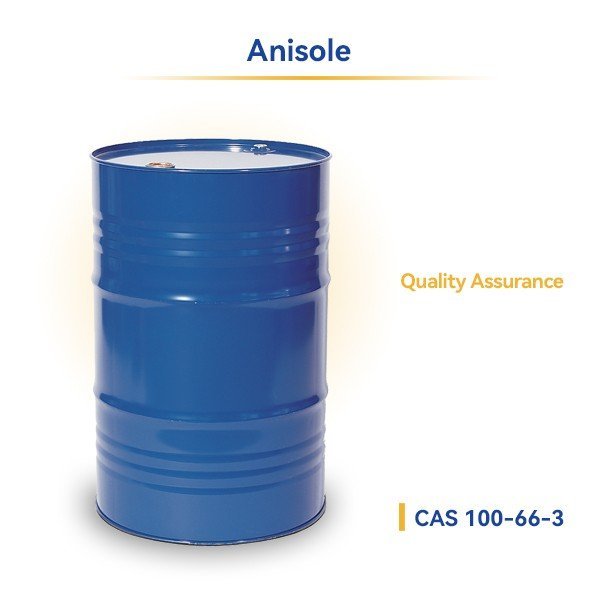
Ethers
Anisole
- CAS No.
- 100-66-3
- Catalogue ID
- GTC-226
Anisole, CAS 100-66-3. Source-derived identification, physical data and applications are provided for catalogue reference; request the current specification, COA and SDS for the required grade.
Catalogue aliases / related identifiers
Methoxybenzene; Methyl phenyl ether; Phenyl methyl ether
Supplied catalogue source: GTC-226 · Page 14
Reference data — confirm before ordering or use
The information below is a structured migration from the supplied catalogue snapshot. It is not a current product specification, COA or SDS. Confirm the actual supplier, grade, batch documents, classification, packing and destination requirements for your enquiry.
Basic Information of Anisole
Anisole (CAS No. 100-66-3) is a clear, colorless liquid with a characteristic aromatic, anise-like odor. Its unique chemical structure, featuring a methoxy group attached to a benzene ring, imparts a valuable combination of physical and chemical properties:
| CAS No.: | 100-66-3 |
|---|---|
| EC No.: | 202-876-1 |
| Linear Formula: | C₇H₈O |
| Molecular Weight: | 108.14 |
| Appearance: | Clear, colorless liquid |
| Odor: | Aromatic, pleasant, anise-like |
| Melting Point: | -37 °C |
| Boiling point | 154 °C |
| Density: | 0.995 g/mL at 25 °C (lit.) |
| Solubility: | Slightly soluble in water; highly miscible with most organic solvents like ethanol, ether, and acetone. |
| Flash Point: | 43 °C |
| Purity: | Available in high-purity grades suitable for sensitive applications. |
| RIDADR: | UN 2222 3/PG 3 |
| Chemical Structure: | 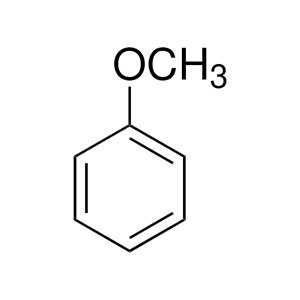 |
These properties make Anisole an excellent choice for a wide range of applications where its solvency, aromatic character, and reactivity are beneficial.
Versatile Applications of Anisole
Solvent: A versatile aprotic solvent in various organic reactions, particularly those requiring mild conditions or high temperatures. It is used in the synthesis of pharmaceuticals, agrochemicals, and other fine chemicals.
Pharmaceutical Intermediate: A key building block and reaction medium in the synthesis of numerous pharmaceutical active ingredients (APIs), especially those involving electrophilic aromatic substitution reactions.
Flavors & Fragrances: Its pleasant, anise-like odor makes it a valuable component in the formulation of various flavors and fragrances for food, cosmetics, and perfumes.
Dye Intermediate: Used in the production of certain dyes and pigments.
Pesticides & Agrochemicals: Serves as an intermediate in the synthesis of various agricultural chemicals.
Grignard Reagent Solvent: Can be used as a solvent for Grignard reagents and other organometallic reactions.
Assured Quality: Our Anisole is rigorously tested to ensure high purity and consistent performance, meeting or exceeding stringent industry specifications for fine chemicals.
Technical Expertise: Our knowledgeable team is always available to provide comprehensive support and answer any technical questions you may have regarding product application, handling, and safety.
Hazards Classification


Before you order
Confirm the current commercial product record.
Include the required grade or purity, quantity, preferred packing, destination country/port and required document set.
- 01Current specification
- 02Batch or sample COA
- 03Product- and supplier-specific SDS
- 04Packing and shipping review
INQUIRY
Continue browsing
Related Products
Tetrahydrofuran
- CAS No.
- 109-99-9
Tetrahydrofuran, CAS 109-99-9. Source-derived identification, physical data and applications are provided for catalogue reference; request the current specification, COA and SDS for the required…
Propylene Glycol Butyl Ether
- CAS No.
- 29387-86-8
Propylene Glycol Butyl Ether, CAS 29387-86-8. Source-derived identification, physical data and applications are provided for catalogue reference; request the current specification, COA and SDS…
Methyl tert-Butyl Ether
- CAS No.
- 1634-04-4
Methyl tert-Butyl Ether, CAS 1634-04-4. Source-derived identification, physical data and applications are provided for catalogue reference; request the current specification, COA and SDS for…
Diisopropyl Ether (DIPE)
- CAS No.
- 108-20-3
Diisopropyl Ether (DIPE), CAS 108-20-3. Source-derived identification, physical data and applications are provided for catalogue reference; request the current specification, COA and SDS for…
Dimethyl Ether
- CAS No.
- 115-10-6
Dimethyl Ether, CAS 115-10-6. Source-derived identification, physical data and applications are provided for catalogue reference; request the current specification, COA and SDS for the…
Dibutyl Ether
- CAS No.
- 142-96-1
Dibutyl Ether, CAS 142-96-1. Source-derived identification, physical data and applications are provided for catalogue reference; request the current specification, COA and SDS for the…
α-Pinene oxide
- CAS No.
- 1686-14-2
α-Pinene oxide, CAS 1686-14-2. Source-derived identification, physical data and applications are provided for catalogue reference; request the current specification, COA and SDS for the…
Allyl Cyclohexylpropionate (Kosher/Halal)
- CAS No.
- 2705-87-5
Allyl Cyclohexylpropionate (Kosher/Halal), CAS 2705-87-5. Source-derived identification, physical data and applications are provided for catalogue reference; request the current specification, COA and SDS for…