

Palladium nitrate solution

GTC-508

Palladium Compounds

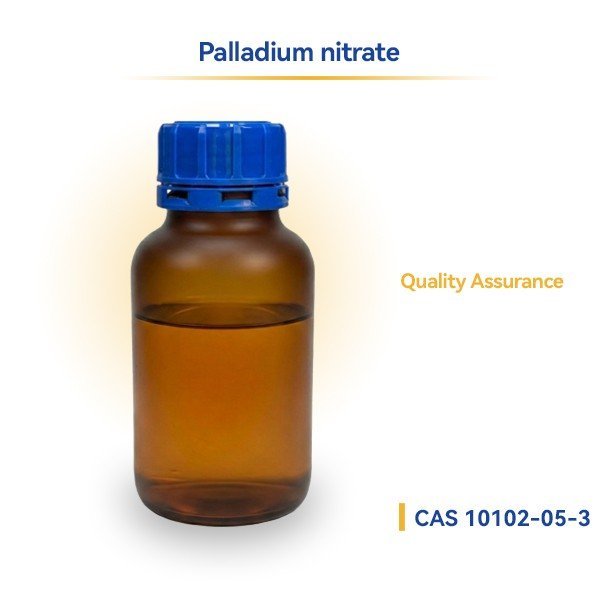
Palladium nitrate solution

CAS No.
10102-05-3
Catalogue ID
GTC-508

Palladium nitrate solution, CAS 10102-05-3. Source-derived identification, physical data and applications are provided for catalogue reference; request the current specification, COA and SDS for the required grade.

Catalogue aliases / related identifiers

Palladium(2+) dinitrate; Palladous nitrate; Palladium dinitrate solution; Nitric acid, palladium(2+) salt; Palladium nitrate nitric acid solution; Palladium matrix modifier; Hydrogen tetranitropalladate(II); P-Nitrate

Supplied catalogue source: GTC-508 · Page 74

Reference data — confirm before ordering or use

The information below is a structured migration from the supplied catalogue snapshot. It is not a current product specification, COA or SDS. Confirm the actual supplier, grade, batch documents, classification, packing and destination requirements for your enquiry.


Basic Information of Palladium(II) Nitrate Solution

CAS No.10102-05-3
EC No.233-265-8
Chemical FormulaPd(NO3)2 (aq.)
Molecular Weight230.43 g/mol (anhydrous basis)
AppearanceClear to pale brown liquid (aqueous solution, typically 5–20% Pd w/w)
OdorOdorless to slight nitric
Melting pointNot applicable (liquid solution)
Boiling point>100 °C (water-based; decomposes on heating)
Density1.05–1.35 g/mL at 25 °C (concentration-dependent)
SolubilityMiscible with water; soluble in alcohols, acetone, acetonitrile
Nature (hazards)Oxidizing liquid, may intensify fire, causes skin and eye irritation, harmful if swallowed, toxic to aquatic life
RIDADRUN 3099, Oxidizing liquid, corrosive, n.o.s. (Palladium(II) nitrate solution), Class 5.1 (8), Packing Group III
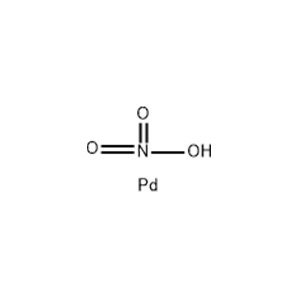
Chemical StructureMolecular Structure of Palladium(II) Nitrate

Primary Applications of Palladium(II) Nitrate Solution

Palladium(II) Nitrate Solution provides a clean, ready-to-use Pd source for solution processing, enabling precise palladium incorporation in high-technology and catalytic applications. As a halide-free Pd(II) precursor, it is particularly suitable for systems requiring controlled coordination chemistry and uniform metal distribution, frequently utilized in workflows related to palladium salts and catalyst precursor preparation.

  1. Thin-Film Palladium Deposition
    Ideal for spin-coating, dip-coating, or ink formulations to produce palladium electrodes, seed layers, or conductive films in microelectronics, sensors, and MEMS devices. Controlled thermal decomposition of nitrate complexes allows formation of uniform metallic palladium films with minimal halide contamination, critical for advanced electronic components.

  2. Supported Palladium Catalyst Impregnation
    Used in wet impregnation of carbon, alumina, silica, or other supports to create high-dispersion Pd catalysts for hydrogenation, hydrogenolysis, and cross-coupling reactions. Upon drying and controlled reduction, the nitrate-derived palladium species generate finely dispersed metallic Pd sites suitable for applications described under hydrogenation and supported palladium catalysis.

  3. CVD / ALD Precursor Solutions
    Serves as a liquid delivery source or component in chemical vapor deposition and atomic layer deposition processes for uniform, high-purity palladium thin films. Its solubility and defined decomposition profile support reproducible film growth in semiconductor and sensor fabrication.

  4. Organometallic Palladium Complex Synthesis
    Acts as a halide-free Pd(II) precursor for preparing phosphine, carbene, or amine Pd complexes used in homogeneous catalysis and materials research. The absence of chloride facilitates cleaner ligand exchange reactions and controlled complex formation.

  5. Fuel Cell & Electrocatalyst Development
    Enables synthesis of Pd nanoparticles, Pd alloys, or Pd-modified carbon supports for fuel cells, electrolyzers, and energy conversion technologies. Nitrate-based systems allow controlled reduction to nanoscale palladium particles with tunable dispersion and morphology.

  6. Advanced Materials & Nanotechnology
    Facilitates controlled reduction to generate palladium nanostructures, functional coatings, or hydrogen-permeable membranes requiring high purity and controlled Pd loading. Such materials are critical in hydrogen separation, sensing, and catalytic microreactor technologies.

For a comprehensive overview of palladium material categories—including salts, oxides, supported catalysts, and organometallic systems across industrial sectors—refer to Palladium Compounds: Applications, Categories & Industrial Uses.


  • Accurate & Consistent Pd Concentration
    Precise analytical control ensures uniform palladium content, low impurities, and batch reproducibility for reliable deposition or catalytic performance in high-technology processes.

  • Halide-Free Formulation
    Nitrate-based solution eliminates chloride contamination risks, making it suitable for electronics, fuel cells, and processes demanding ultra-high purity palladium.

  • Custom Solution Tailoring
    Adjustable Pd levels, concentration ranges, and compatible solvent systems can be provided to align with specific deposition or catalyst preparation requirements.

  • Technical Process Support
    Technical guidance is available for solution handling, impregnation techniques, thermal treatment, reduction protocols, and optimization of palladium dispersion.

  • Regulatory & Sustainability Focus
    Full COA, REACH, RoHS, and SDS documentation are available, alongside precious metal recycling and recovery support to enhance sustainability and regulatory compliance.


Hazards Classification

  • GHS Classification: Oxidizing Liquids (Category 2 or 3); Acute Toxicity, Oral (Category 4); Skin Corrosion/Irritation (Category 1B or 2); Serious Eye Damage (Category 1); Aquatic Chronic (Category 2 or 3)

  • Hazard Statements: H272: May intensify fire; oxidizer; H302: Harmful if swallowed; H314 or H315: Causes severe skin burns or irritation; H318: Causes serious eye damage; H411: Toxic to aquatic life with long lasting effects

  • UN Number: UN 3099

  • Hazard Class: 5.1 (Oxidizing substances) + 8 (Corrosive)

  • Packing Group: III

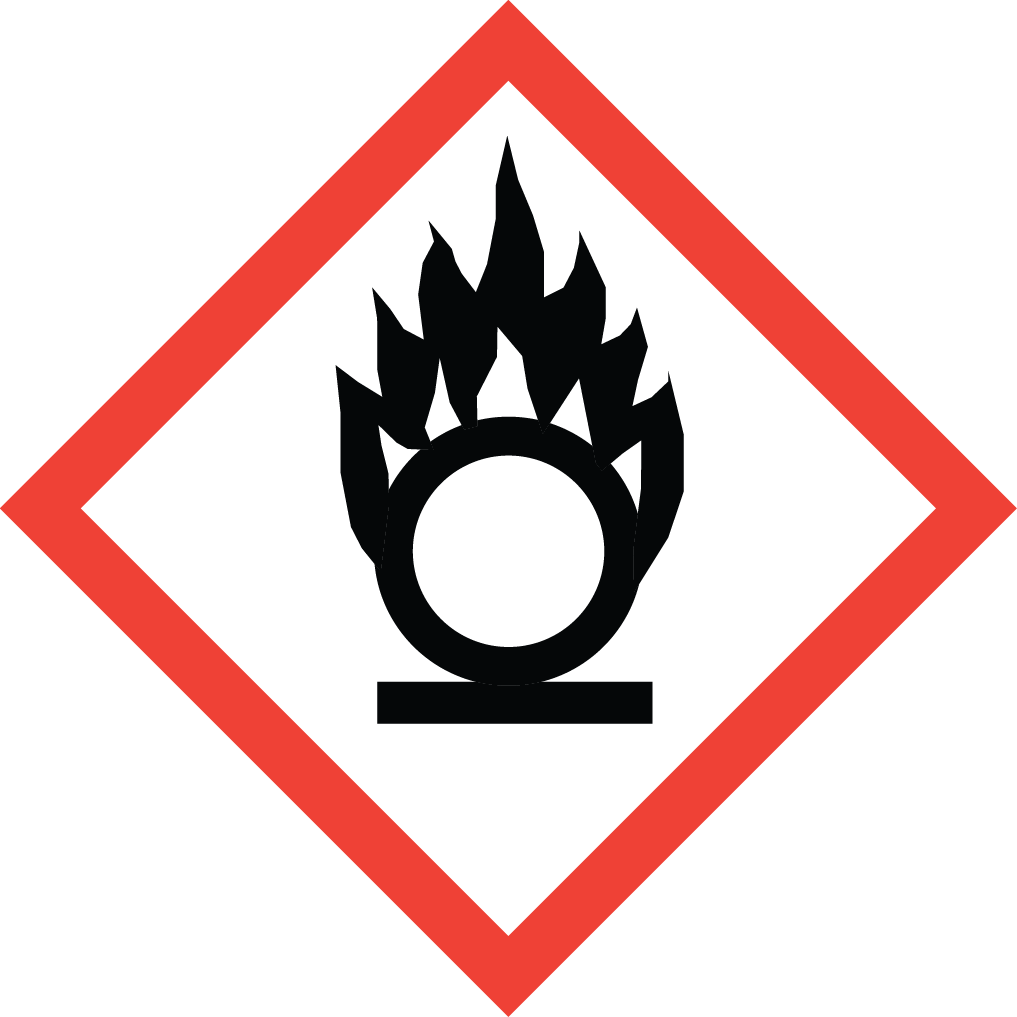
GHS03
GHS03: Oxidizer
GHS05
GHS05: Corrosive
GHS07
GHS07: Exclamation mark (irritant, acute toxicity)
GHS09
GHS09: Environment (aquatic toxicity)
Before you order

Confirm the current commercial product record.

Include the required grade or purity, quantity, preferred packing, destination country/port and required document set.

  • 01Current specification
  • 02Batch or sample COA
  • 03Product- and supplier-specific SDS
  • 04Packing and shipping review
Request product review

INQUIRY

INQUIRY