

Palladium oxide(II)

GTC-510

Palladium Compounds

Palladium oxide(II)

CAS No.
1314-08-5
Catalogue ID
GTC-510

Palladium oxide(II), CAS 1314-08-5. Source-derived identification, physical data and applications are provided for catalogue reference; request the current specification, COA and SDS for the required grade.

Catalogue aliases / related identifiers

Palladium monoxide; Palladous oxide; Palladium(2+) oxide; Monopalladium oxide; Palladium oxide (PdO); Palladium monooxide; NSC 102927; Palladium(II) oxide anhydrous

Supplied catalogue source: GTC-510 · Page 75

Reference data — confirm before ordering or use

The information below is a structured migration from the supplied catalogue snapshot. It is not a current product specification, COA or SDS. Confirm the actual supplier, grade, batch documents, classification, packing and destination requirements for your enquiry.


Basic Information of Palladium(II) Oxide

CAS No.1314-08-5
EC No.215-218-8
Chemical FormulaPdO
Molecular Weight122.42 g/mol
AppearanceBlack to dark brown powder
OdorOdorless
Melting pointDecomposes >800 °C to Pd metal and O₂
Boiling pointNot applicable (decomposes)
Densityapprox. 8.70 g/cm³
SolubilityInsoluble in water and most organic solvents; soluble in hot concentrated acids (e.g., aqua regia)
Nature (hazards)May cause respiratory irritation, skin and eye irritation, harmful if inhaled as dust, toxic to aquatic life
RIDADRNot regulated (non-hazardous for transport under standard classifications; consult SDS for specific handling)
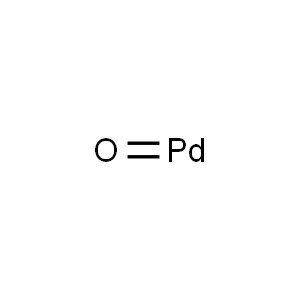
Chemical StructureMolecular Structure of

Primary Applications of Palladium(II) Oxide

Palladium(II) Oxide serves as a robust heterogeneous catalyst for selective oxidation and hydrogenation, delivering high performance in demanding chemical transformations. Upon exposure to hydrogen, PdO is readily reduced in situ to catalytically active metallic Pd(0), enabling versatile redox cycling under practical reaction conditions. It is widely associated with applications described in hydrogenation and supported palladium catalysis systems, where controlled activation and recyclability are critical.

  1. Alcohol Oxidation to Aldehydes/Ketones
    Catalyzes efficient, selective oxidation of primary and secondary alcohols using molecular oxygen or air, providing clean routes to carbonyl compounds in fine chemicals and pharmaceutical intermediates. The surface redox properties of PdO enable controlled oxidative transformations with minimal overoxidation or byproduct formation.

  2. Hydrogenation & Hydrogenolysis
    Reduced in situ to active Pd(0) for hydrogenation of alkenes, alkynes, nitro groups, and hydrogenolysis of benzyl protecting groups with excellent activity and selectivity. The heterogeneous nature of PdO allows straightforward catalyst separation and reuse in multi-step industrial processes.

  3. Dehydrogenation Reactions
    Promotes dehydrogenation of saturated hydrocarbons or alcohols to unsaturated compounds, useful in the production of olefins, aromatics, and specialty monomers. Controlled surface chemistry enables balance between hydrogen removal and substrate stability.

  4. CO Oxidation & Emission Control
    Employed in catalytic converters and environmental applications for low-temperature oxidation of carbon monoxide and hydrocarbons to reduce emissions. PdO-based systems contribute to effective pollutant removal under variable operating conditions.

  5. Fine Chemical & API Synthesis
    Supports key oxidation and reduction steps in multistep pharmaceutical manufacturing, offering scalability, easy catalyst separation, and high reproducibility. Its stable oxide form simplifies storage and handling prior to in situ activation.

  6. Supported Catalyst Preparation
    Acts as a Pd source for generating PdO or reduced Pd on various carriers (alumina, silica, carbon) for tailored heterogeneous catalysis in industrial processes. Impregnation and thermal treatment strategies enable controlled dispersion and particle size distribution.

For a broader understanding of palladium material categories—including salts, oxides, supported catalysts, and organometallic systems across industrial sectors—refer to Palladium Compounds: Applications, Categories & Industrial Uses.


  • High Palladium Content & Activity
    Precise analytical control ensures consistent Pd content, optimal particle size, and high active surface area for maximum catalytic efficiency.

  • Custom Formulations & Supports
    Tailored purity, morphology, and supported variants (PdO/Al₂O₃, PdO/C) to precisely align with your substrate, reaction conditions, and process scale.

  • Batch-to-Batch Reproducibility
    Rigorous testing (ICP, BET, XRD, activity assays) guarantees low variation and predictable performance during scale-up and production.

  • Secure Palladium Supply
    Responsible sourcing, strategic inventory, and transparent pricing mitigate market volatility and ensure long-term availability.

  • Technical & Regulatory Support
    Expert catalysis team provides activation guidance, poison mitigation strategies, recycling advice, and full documentation (COA, REACH, SDS) for seamless integration.


Hazards Classification

  • GHS Classification: Skin Irritation (Category 2); Eye Irritation (Category 2A); Specific Target Organ Toxicity, Single Exposure (respiratory) (Category 3); Aquatic Chronic (Category 3)

  • Hazard Statements: H315: Causes skin irritation; H319: Causes serious eye irritation; H335: May cause respiratory irritation; H413: May cause long lasting harmful effects to aquatic life

  • UN Number: Not regulated

  • Hazard Class: Not classified as hazardous for transport

  • Packing Group: Not applicable

GHS07
GHS07: Exclamation mark (irritant, respiratory)
GHS09
GHS09: Environment (aquatic hazard)
Before you order

Confirm the current commercial product record.

Include the required grade or purity, quantity, preferred packing, destination country/port and required document set.

  • 01Current specification
  • 02Batch or sample COA
  • 03Product- and supplier-specific SDS
  • 04Packing and shipping review
Request product review

INQUIRY

INQUIRY