Pentaethylene glycol
- CAS No.
- 4792-15-8
Pentaethylene glycol, CAS 4792-15-8. Source-derived identification, physical data and applications are provided for catalogue reference; request the current specification, COA and SDS for the…
GTC-485
Hydroxy PEG Derivatives
Nonaethylene Glycol, CAS 3386-18-3. Source-derived identification, physical data and applications are provided for catalogue reference; request the current specification, COA and SDS for the required grade.
PEG-9; HO-PEG9-OH; OH-PEG9-OH; 3,6,9,12,15,18,21,24-octaoxahexacosane-1,26-diol; Polyethylene glycol 9; Nonaethylene glycol diol; Alcohol-PEG9-Alcohol; PEG9-OH
Supplied catalogue source: GTC-485 · Page 134
The information below is a structured migration from the supplied catalogue snapshot. It is not a current product specification, COA or SDS. Confirm the actual supplier, grade, batch documents, classification, packing and destination requirements for your enquiry.
Nonaethylene glycol, commonly known as PEG-9 or HO-PEG9-OH, is a monodisperse polyethylene glycol derivative featuring nine ethylene oxide units with terminal hydroxyl groups. It is a key hydrophilic building block widely employed in the synthesis of molecular linkers and functional PEG derivatives for advanced chemical applications.
| CAS No. | 3386-18-3 |
|---|---|
| EC No. | 222-206-1 |
| Linear Formula | HO(CH2CH2O)9H |
| Molecular Weight | 414.49 g/mol |
| Appearance | White to almost white powder to lump |
| Melting Point | 24–26 °C (lit.) |
| Boiling point | Not available (typical reference) |
| Density | 1.115 g/cm³ (predicted) |
| Solubility | Soluble in water and polar organic solvents |
| Storage Conditions | Keep in a tightly closed container in a cool, dry and well-ventilated place. Protect from moisture. Recommended storage below 15 °C. |
| Chemical Structure | 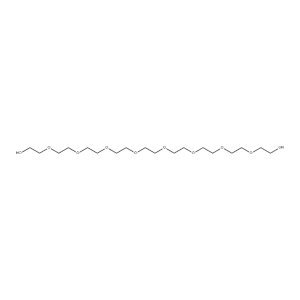 |
PEG linker intermediate: Nonaethylene glycol functions as a well-defined hydrophilic linker in bioconjugation and PEGylation strategies, providing precise spacer length for pharmaceutical intermediate development and targeted delivery research.
Hydrophilic spacer: The nine-unit PEG chain serves as an effective hydrophilic spacer, enhancing water solubility and biocompatibility when incorporated into complex molecular architectures during fine chemical synthesis.
Fine chemical intermediate: Acts as a versatile diol building block for introducing polyether segments and enabling further functionalization through its reactive terminal hydroxyl groups in organic synthesis projects.
Laboratory research: Extensively used in academic and industrial research laboratories for exploring PEG-based linkers, surface modifications, and the development of novel specialty chemicals.
Process development: Supports route optimization, scale-up studies, and custom synthesis of PEG-containing advanced intermediates for pharmaceutical and specialty chemical applications.
Consistent product quality: High-purity material (95%+) with reliable batch consistency, supported by thorough quality coordination suitable for demanding fine chemical and research applications.
Flexible global supply: Established supply chain and logistics support enabling timely delivery for laboratory-scale, pilot-scale, and bulk orders to customers worldwide.
SDS and COA support: Full documentation package including SDS and COA provided upon request to assist with regulatory compliance, export procedures, and internal quality assessments.
Packaging and technical service: Customized packaging solutions based on quantity requirements along with responsive technical communication to address specific sourcing and application needs.
Packaging: Supplied in 1 kg, 5 kg, or 25 kg quantities; bulk orders available in fiber drums with protective inner liners or other customized packaging configurations upon request.
Storage: Store in tightly sealed containers in a cool, dry, and well-ventilated environment. Protect from moisture and direct sunlight; recommended storage temperature below 15 °C to maintain stability.
Handling of opened containers: Immediately reseal opened containers after dispensing and return to recommended storage conditions. Minimize exposure to air and moisture during handling operations.
General handling: Use in well-ventilated areas following standard laboratory or industrial safety protocols. Avoid ingestion, inhalation, and direct contact with skin or eyes.
Personal protection: Wear chemical-resistant gloves, safety goggles or face shield, and suitable protective clothing. Respiratory protection may be necessary if aerosol or dust formation occurs.
Documentation review: Consult the current Safety Data Sheet (SDS) for detailed information on safe handling, storage, transportation, and disposal before use.
Include the required grade or purity, quantity, preferred packing, destination country/port and required document set.
Pentaethylene glycol, CAS 4792-15-8. Source-derived identification, physical data and applications are provided for catalogue reference; request the current specification, COA and SDS for the…
Octaethylene Glycol, CAS 5117-19-1. Source-derived identification, physical data and applications are provided for catalogue reference; request the current specification, COA and SDS for the…
Heptaethylene Glycol, CAS 5617-32-3. Source-derived identification, physical data and applications are provided for catalogue reference; request the current specification, COA and SDS for the…
Hexaethylene glycol, CAS 2615-15-8. Source-derived identification, physical data and applications are provided for catalogue reference; request the current specification, COA and SDS for the…
Decaethylene Glycol, CAS 5579-66-8. Source-derived identification, physical data and applications are provided for catalogue reference; request the current specification, COA and SDS for the…