GHS Classification: Acute Toxicity Oral (GHS06), Acute Toxicity Dermal (GHS07), Skin Irritation (GHS07), Eye Irritation (GHS07), Aquatic Chronic (GHS09)
Hazard Statements: Harmful if swallowed; Harmful in contact with skin; Causes skin irritation; Causes serious eye irritation; Harmful to aquatic life with long lasting effects.
UN Number: UN 3464
Hazard Class: 6.1 (Toxic substances)
Packing Group: III
Tetrabutylphosphonium Bromide
GTC-626
Representative packaging
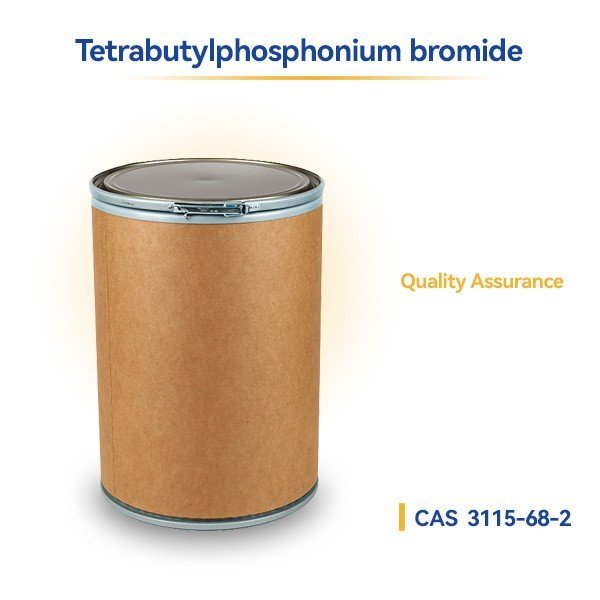
Phosphorus Compounds
Tetrabutylphosphonium Bromide
- CAS No.
- 3115-68-2
- Catalogue ID
- GTC-626
Tetrabutylphosphonium Bromide, CAS 3115-68-2. Source-derived identification, physical data and applications are provided for catalogue reference; request the current specification, COA and SDS for the required grade.
Catalogue aliases / related identifiers
Phosphonium, tetrabutyl-, bromide (1:1); TBAB (incorrect – that is tetrabutylammonium bromide); Tetra-n-butylphosphonium bromide; Tetrabutylphosphanium bromide; TPB-4; Cyphos IL 101; Cyphos 441P; IL-101 (former Cytec name)
Supplied catalogue source: GTC-626 · Page 39
Reference data — confirm before ordering or use
The information below is a structured migration from the supplied catalogue snapshot. It is not a current product specification, COA or SDS. Confirm the actual supplier, grade, batch documents, classification, packing and destination requirements for your enquiry.
Tetrabutylphosphonium Bromide (TBPB) (CAS 3115-68-2) is a versatile quaternary phosphonium salt, widely recognized as a highly effective Phase-Transfer Catalyst (PTC). It typically appears as a white to off-white crystalline powder with minimal odor. Unlike the highly reactive tertiary phosphines, TBPB is a stable, non-volatile salt that efficiently transports anions (e.g., nucleophiles) from an aqueous or solid phase into an organic solvent phase. This capability significantly accelerates many difficult organic reactions by enabling reagents to meet and react faster. TBPB's robustness and thermal stability also make it a valuable precursor for preparing advanced ionic liquids.
Basic Information of TBPB
| CAS No.: | 3115-68-2 |
|---|---|
| EC No.: | 221-487-8 |
| Linear Formula: | C16H36BrP |
| Molecular Weight: | 339.33 |
| Appearance: | White to off-white crystalline powder |
| Odor: | Little to none |
| Melting Point: | 100-103 °C(lit.) |
| Density: | 1.8[at 20℃] |
| Solubility: | Insoluble in water; soluble in alcohol, oils, and most organic solvents. |
| Flash Point: | 290 °C |
| RIDADR: | UN 3464 6.1/PG 3 |
| Chemical Structure: | 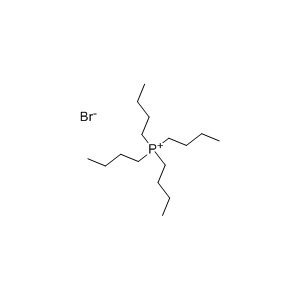 |
Application Overview
TBPB's stability, low toxicity compared to other phosphonium salts, and powerful catalytic activity make it essential across diverse chemical and material science fields:
Phase-Transfer Catalysis (PTC): Its primary role is in enabling two-phase reactions, facilitating nucleophilic substitutions (e.g., converting alkyl halides to nitriles or thiocyanates), oxidation, reduction, and polymerization reactions by bridging incompatible solvent systems (aqueous/organic).
Ionic Liquid Precursor: The tetrabutylphosphonium cation is a key building block for synthesizing various room-temperature ionic liquids (ILs), where it imparts desirable properties like high thermal stability and low flammability to the resulting solvent.
Polymerization Catalyst/Modifier: Used as a catalyst or co-catalyst in the synthesis of specialized polymers (e.g., polycarbonates, polyesters), where it can influence molecular weight and improve reaction kinetics.
Nanomaterials Stabilization: Acts as a surface capping agent or stabilizing ligand for the preparation of certain metal nanoparticles, preventing aggregation and controlling size distribution.
Electrochemistry: Employed as a supporting electrolyte in non-aqueous electrochemical studies due to its high solubility in polar organic solvents and its large, non-coordinating cation.
High Catalytic Purity: We minimize the presence of residual water and inorganic salts (e.g., sodium bromide), which can interfere with the activity of the phosphonium cation. Our ultra-dry grade TBPB guarantees maximum catalytic efficiency, particularly in water-sensitive organic synthesis.
Hazards Classification



Before you order
Confirm the current commercial product record.
Include the required grade or purity, quantity, preferred packing, destination country/port and required document set.
- 01Current specification
- 02Batch or sample COA
- 03Product- and supplier-specific SDS
- 04Packing and shipping review
INQUIRY
Continue browsing
Related Products
Tributylhexadecylphosphonium Bromide
- CAS No.
- 14937-45-2
Tributylhexadecylphosphonium Bromide, CAS 14937-45-2. Source-derived identification, physical data and applications are provided for catalogue reference; request the current specification, COA and SDS for the…
Tetrabutylphosphonium Chloride
- CAS No.
- 2304-30-5
Tetrabutylphosphonium Chloride, CAS 2304-30-5. Source-derived identification, physical data and applications are provided for catalogue reference; request the current specification, COA and SDS for the…
Tetraoctylphosphonium Bromide
- CAS No.
- 23906-97-0
Tetraoctylphosphonium Bromide, CAS 23906-97-0. Source-derived identification, physical data and applications are provided for catalogue reference; request the current specification, COA and SDS for the…