GHS Classification: Acute Toxicity Oral (GHS06), Acute Toxicity Dermal (GHS06), Acute Toxicity Inhalation (GHS06), Skin Corrosion (GHS05), Serious Eye Damage (GHS05), Skin Sensitization (GHS07), Environmental Hazard (GHS09)
Hazard Statements: Harmful if swallowed; Toxic in contact with skin; Fatal if inhaled; Causes severe skin burns and eye damage; May cause an allergic skin reaction; Toxic to aquatic life with long lasting effects.
UN Number: UN 2928
Hazard Class: 6.1 (Toxic substances)
Packing Group: II
Tetrabutylphosphonium Chloride
GTC-627
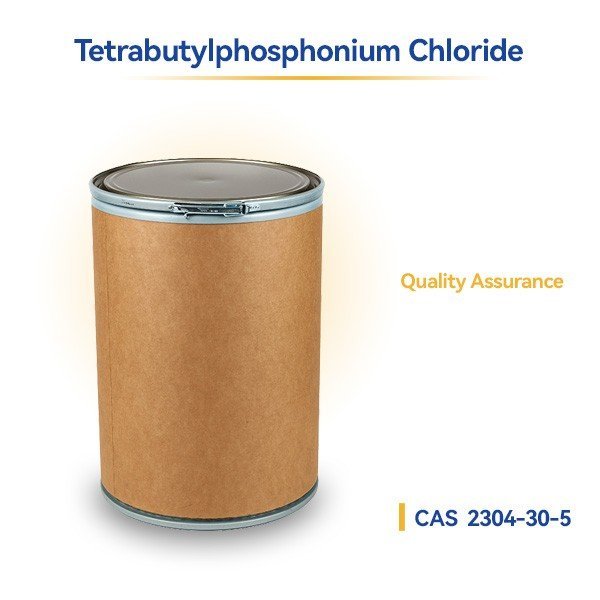
Representative packaging
Phosphorus Compounds
Tetrabutylphosphonium Chloride
- CAS No.
- 2304-30-5
- Catalogue ID
- GTC-627
Tetrabutylphosphonium Chloride, CAS 2304-30-5. Source-derived identification, physical data and applications are provided for catalogue reference; request the current specification, COA and SDS for the required grade.
Catalogue aliases / related identifiers
Phosphonium, tetrabutyl-, chloride (1:1); Tetra-n-butylphosphonium chloride; TBPC; [P₄₄₄₄]Cl; Cyphos IL 102; Cyphos 443P; IL-102 (former Cytec name); Tetrabutylphosphanium chloride
Supplied catalogue source: GTC-627 · Page 39
Reference data — confirm before ordering or use
The information below is a structured migration from the supplied catalogue snapshot. It is not a current product specification, COA or SDS. Confirm the actual supplier, grade, batch documents, classification, packing and destination requirements for your enquiry.
Tetrabutylphosphonium Chloride (TBPC) (CAS 2304-30-5) is a highly utilized quaternary phosphonium salt and a powerful Phase-Transfer Catalyst (PTC). It typically appears as a white, hydroscopic crystalline powder or solid with virtually no odor. TBPC's primary function is to efficiently transfer the chloride anion or other nucleophilic anions from an aqueous or solid phase into a non-polar organic solvent phase, thereby accelerating reactions that would otherwise be sluggish . Its robust chemical structure, high thermal stability, and low toxicity make it superior to many traditional ammonium-based catalysts. TBPC is also a key precursor in the synthesis of specialized ionic liquids and plays a role as an electrolyte component.
Basic Information of TBPC
| CAS No.: | 2304-30-5 |
|---|---|
| EC No.: | 218-964-8 |
| Linear Formula: | C16H36ClP |
| Molecular Weight: | 294.88 |
| Appearance: | White crystalline solid |
| Odor: | Little to none |
| Melting Point: | 62-66 °C (dec.) (lit.) |
| Boiling Point: | 344.8℃[at 101 325 Pa] |
| Density: | 0.978[at 20℃] |
| Solubility: | Highly soluble in water, ethanol, chloroform; soluble in many polar organic solvents. |
| Flash Point: | 4°C (39°F) |
| RIDADR: | UN 2928 6.1/PG 2 |
| Chemical Structure: | 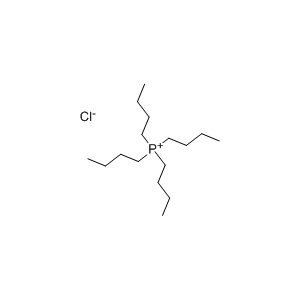 |
Application Overview
TBPC's superior performance in facilitating interfacial reactions and its thermal stability make it invaluable across industrial and research chemistry:
Phase-Transfer Catalysis (PTC): Used extensively in nucleophilic substitution, alkylation, epoxidation, and oxidation reactions. It is often preferred for reactions involving heat or strong bases due to the phosphonium cation's higher thermal and chemical stability compared to ammonium salts.
Ionic Liquid Precursor: Serves as a fundamental cation precursor in the synthesis of a wide variety of bespoke ionic liquids (ILs), where the P(C₄H₉)₄⁺ cation is paired with various anions to create non-volatile, stable, and recyclable solvents.
Polymer Science: Employed as a catalyst or co-catalyst in the synthesis of polyurethanes, polycarbonates, and specialized epoxy resins, often improving reaction rate and molecular weight control.
Electrochemistry: Its high solubility and stability in non-aqueous solvents make it a common choice as a supporting electrolyte in electrochemical studies of organic materials, sensors, and battery research.
Ultra-Low Water Content: TBPC is inherently hygroscopic. We utilize a vacuum-drying and specialized packaging process to ensure extremely low residual moisture content, which is critical for its performance in water-sensitive organic synthesis and non-aqueous applications like IL synthesis.
High Catalytic Purity: We rigorously control the synthesis to minimize organic impurities and residual tertiary phosphine starting material. This guarantees a clean, highly active quaternary phosphonium salt that provides predictable catalytic performance batch after batch.
Dedicated Packaging for Hydroscopicity: TBPC is shipped in triple-layer, moisture-barrier packaging that is purged with dry nitrogen and sealed. This ensures the material remains free-flowing and maintains its ultra-low water content right up to the point of use in your lab or manufacturing plant.
Hazards Classification




Before you order
Confirm the current commercial product record.
Include the required grade or purity, quantity, preferred packing, destination country/port and required document set.
- 01Current specification
- 02Batch or sample COA
- 03Product- and supplier-specific SDS
- 04Packing and shipping review
INQUIRY
Continue browsing
Related Products
Tributylhexadecylphosphonium Bromide
- CAS No.
- 14937-45-2
Tributylhexadecylphosphonium Bromide, CAS 14937-45-2. Source-derived identification, physical data and applications are provided for catalogue reference; request the current specification, COA and SDS for the…
Tetrabutylphosphonium Bromide
- CAS No.
- 3115-68-2
Tetrabutylphosphonium Bromide, CAS 3115-68-2. Source-derived identification, physical data and applications are provided for catalogue reference; request the current specification, COA and SDS for the…
Tetraoctylphosphonium Bromide
- CAS No.
- 23906-97-0
Tetraoctylphosphonium Bromide, CAS 23906-97-0. Source-derived identification, physical data and applications are provided for catalogue reference; request the current specification, COA and SDS for the…