GHS Classification: Flammable Liquid (GHS02), Acute Toxicity (GHS06), Corrosive (GHS05)
Hazard Statements: Highly flammable liquid and vapor; harmful if swallowed, in contact with skin or if inhaled; causes severe skin burns and eye damage.
UN Number: UN 2733
Hazard Class: 3 (Flammable Liquids)
Packing Group: II
N,N-Dimethylaminobutane (DMBA)
GTC-477
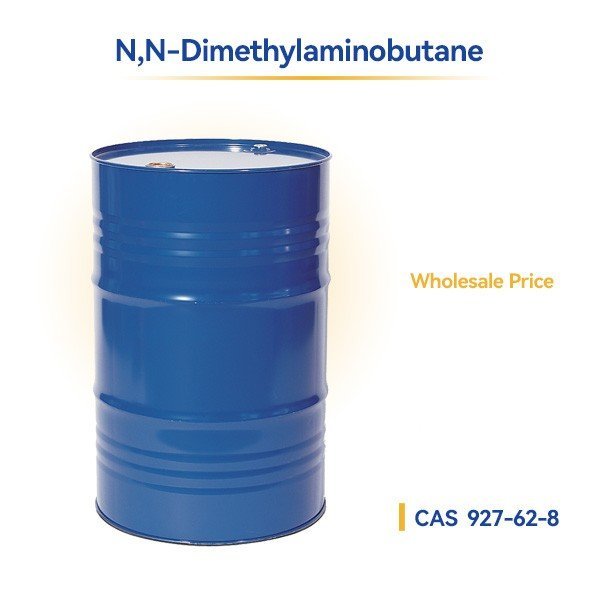
Representative packaging
Amines
N,N-Dimethylaminobutane (DMBA)
- CAS No.
- 927-62-8
- Catalogue ID
- GTC-477
N,N-Dimethylaminobutane (DMBA), CAS 927-62-8. Source-derived identification, physical data and applications are provided for catalogue reference; request the current specification, COA and SDS for the required grade.
Catalogue aliases / related identifiers
N,N-Dimethylbutanamine; Dimethylbutylamine; N-Butyl-N,N-dimethylamine; 1-Butanamine, N,N-dimethyl-; Dimethyl-n-butylamine
Supplied catalogue source: GTC-477 · Page 32
Reference data — confirm before ordering or use
The information below is a structured migration from the supplied catalogue snapshot. It is not a current product specification, COA or SDS. Confirm the actual supplier, grade, batch documents, classification, packing and destination requirements for your enquiry.
N,N-Dimethyl-n-butylamine (DMBA), CAS 927-62-8, is a medium-chain tertiary amine characterized by a straight $n$-butyl group and two methyl groups attached to the nitrogen atom. This clear, volatile liquid is utilized as a versatile chemical intermediate and a powerful base/catalyst. Its balance of volatility, basicity, and lipophilicity (fat solubility) makes it particularly useful in organic synthesis and polymer production.
Basic Information of DMBA
| CAS No.: | 927-62-8 |
|---|---|
| EC No.: | 213-156-1 |
| Linear Formula: | C6H15N |
| Molecular Weight: | 101.19 |
| Appearance: | Colorless, clear, volatile liquid |
| Odor: | Strong, characteristic amine odor |
| Melting Point: | -60 °C |
| Boiling Point: | 93.3 °C750 mm Hg(lit.) |
| Density: | 0.721 g/mL at 25 °C(lit.) |
| Solubility: | Slightly soluble in water; miscible with ethanol, ether, and other organic solvents. |
| Flash Point: | 25 °F |
| RIDADR: | UN 2733 3/PG 2 |
| Chemical Structure: | 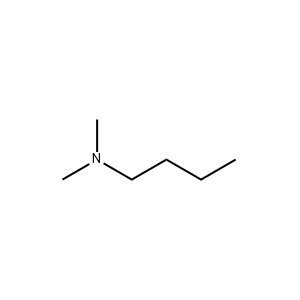 |
Application Overview
N,N-Dimethyl-n-butylamine is employed in high-performance applications where its specific chain length and tertiary amine functionality are leveraged:
Polyurethane and Urethane Catalysis: DMBA functions as a crucial tertiary amine catalyst in the manufacture of polyurethane foams and elastomers. Its intermediate chain length provides an excellent balance, promoting both the gelling (chain extension) and blowing reactions, which is key for achieving desirable physical properties in the final polymer.
Quaternary Ammonium Compound (Quat) Precursor: It is a fundamental building block for creating specialized quaternary ammonium salts. These derivatives are used as textile auxiliaries, softeners, antistatic agents, and corrosion inhibitors with improved solubility in organic media due to the butyl chain.
Pharmaceutical and Agrochemical Synthesis: DMBA is utilized as a highly specific reagent or neutralizing base in the synthesis of certain active pharmaceutical ingredients (APIs) and agrochemical intermediates where steric hindrance and volatility must be precisely managed.
Acid Gas Removal/Scrubbing: Its basicity and relatively high boiling point make it or its derivatives suitable for use in certain solvent systems designed for the absorption and removal of acidic gases (H₂S, CO₂) in industrial gas streams.
Hazards Classification



Before you order
Confirm the current commercial product record.
Include the required grade or purity, quantity, preferred packing, destination country/port and required document set.
- 01Current specification
- 02Batch or sample COA
- 03Product- and supplier-specific SDS
- 04Packing and shipping review
INQUIRY
Continue browsing
Related Products
Triisobutylamine
- CAS No.
- 1116-40-1
Triisobutylamine, CAS 1116-40-1. Source-derived identification, physical data and applications are provided for catalogue reference; request the current specification, COA and SDS for the required…
Diethanolamine
- CAS No.
- 111-42-2
Diethanolamine, CAS 111-42-2. Source-derived identification, physical data and applications are provided for catalogue reference; request the current specification, COA and SDS for the required…

Trimethylamine (Anhydrous)
- CAS No.
- 75-50-3
Trimethylamine (Anhydrous), CAS 75-50-3. Source-derived identification, physical data and applications are provided for catalogue reference; request the current specification, COA and SDS for the…
2-Aminoethanol (Monoethanolamine)
- CAS No.
- 141-43-5
2-Aminoethanol (Monoethanolamine), CAS 141-43-5. Source-derived identification, physical data and applications are provided for catalogue reference; request the current specification, COA and SDS for the…
Tri(2-ethylhexyl)amine
- CAS No.
- 1860-26-0
Tri(2-ethylhexyl)amine, CAS 1860-26-0. Source-derived identification, physical data and applications are provided for catalogue reference; request the current specification, COA and SDS for the required…

Triallylamine
- CAS No.
- 102-70-5
Triallylamine, CAS 102-70-5. Source-derived identification, physical data and applications are provided for catalogue reference; request the current specification, COA and SDS for the required…
Triethylamine
- CAS No.
- 121-44-8
Triethylamine, CAS 121-44-8. Source-derived identification, physical data and applications are provided for catalogue reference; request the current specification, COA and SDS for the required…

Tripentylamine
- CAS No.
- 621-77-2
Tripentylamine, CAS 621-77-2. Source-derived identification, physical data and applications are provided for catalogue reference; request the current specification, COA and SDS for the required…