GHS Classification: Flammable Liquid (GHS02), Corrosive (GHS05), Acute Toxicity (GHS06), Health Hazard (GHS08)
Hazard Statements: Highly flammable liquid and vapor; causes severe skin burns and eye damage; toxic if inhaled; may cause respiratory irritation; suspected of damaging fertility or the unborn child.
UN Number: UN 2924
Hazard Class: 3 (Flammable Liquids), 8 (Corrosive Substances)
Packing Group: II
Boron Trifluoride Dimethyl Carbonate Complex 99610-25-0
GTC-253
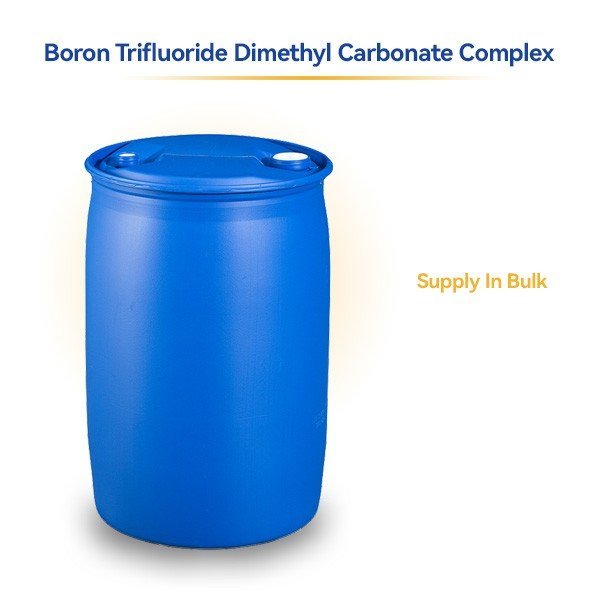
Representative packaging
Boron Compounds
Boron Trifluoride Dimethyl Carbonate Complex 99610-25-0
- CAS No.
- 99610-25-0
- Catalogue ID
- GTC-253
Boron Trifluoride Dimethyl Carbonate Complex 99610-25-0, CAS 99610-25-0. Source-derived identification, physical data and applications are provided for catalogue reference; request the current specification, COA and SDS for the required grade.
Catalogue aliases / related identifiers
Dimethyl carbonate-boron trifluoride adduct; BF3-DMC; Carbonic acid, dimethyl ester, compound with trifluoroborane (1:1); Trifluoroborane dimethyl carbonate complex; Dimethyl carbonate, compd. with boron fluoride (BF₃) (1:1)
Supplied catalogue source: GTC-253 · Page 87
Reference data — confirm before ordering or use
The information below is a structured migration from the supplied catalogue snapshot. It is not a current product specification, COA or SDS. Confirm the actual supplier, grade, batch documents, classification, packing and destination requirements for your enquiry.
Basic Information of Boron Trifluoride Dimethyl Carbonate Complex
Boron Trifluoride Dimethyl Carbonate Complex is recognized for its unique characteristics that contribute to its efficacy in various applications:
| Linear Formula: | BF₃·C₃H₆O₃ |
|---|---|
| CAS No. | 99610-25-0 |
| Molecular Weight: | 157.89 |
| Appearance: | Transparent Liquid |
| Density: | 1.3 g/cm³ |
| Solubility | Slightly soluble in water and easily soluble in organic solvents such as ether and alcohol. |
| RIDADR: | UN 2924 3,8/PG 2 |
| Chemical Structure: | 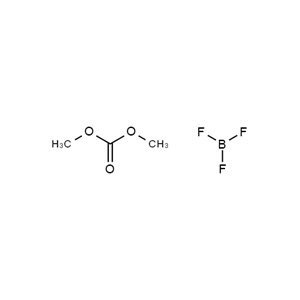 |
Its precise composition and controlled reactivity ensure high performance for demanding chemical transformations.
Main Functions and Applications of Boron Trifluoride Dimethyl Carbonate Complex
Catalyst for Pharmaceutical Intermediates & Fine Chemicals:
This complex serves as a highly effective catalyst in the production of various pharmaceutical products. Notably, it plays a significant role in the synthesis of cephalosporin drugs, where its specific catalytic activity contributes to substantially improving product yield. More broadly, it is utilized in the synthesis of other complex fine chemical products, enhancing reaction efficiency, product purity, and overall yield in intricate synthetic routes.
Versatile Catalyst for Organic Synthesis Reactions:
Beyond its specific industrial applications, Boron Trifluoride Dimethyl Carbonate Complex is recognized as a powerful and versatile Lewis acid catalyst for a wide range of general organic synthesis reactions. It effectively promotes processes such as alkylation, polymerization, isomerization, addition reactions, and various other transformations, leveraging its ability to form highly active catalytic structures that boost reaction efficiency.
Transesterification Catalyst (Especially for Polymers):
It serves as an excellent catalyst for transesterification reactions. This application is particularly relevant in the manufacturing of certain polymeric materials, most notably polycarbonates. In these processes, the complex facilitates the efficient exchange of ester groups, which is a crucial step in building the polymer chains and controlling molecular weight.
Potential as Lithium-ion Battery Electrolyte Additive:
In the cutting-edge field of advanced materials research, Boron Trifluoride Dimethyl Carbonate Complex is being actively explored as a functional additive in lithium-ion battery electrolytes. Its potential in this area includes enhancing overall battery performance, improving cycling stability, and extending the longevity of lithium-ion battery cells.
Guaranteed Purity & Consistent Performance: Our BF₃-DMC undergoes rigorous quality control to ensure high purity and reliable catalytic activity, critical for sensitive chemical synthesis and advanced material applications.
Commitment to Quality & Safety: We adhere to the highest industry standards for quality management, safety, and environmental responsibility across all our manufacturing and distribution processes.
Hazards Classification




Before you order
Confirm the current commercial product record.
Include the required grade or purity, quantity, preferred packing, destination country/port and required document set.
- 01Current specification
- 02Batch or sample COA
- 03Product- and supplier-specific SDS
- 04Packing and shipping review
INQUIRY
Continue browsing
Related Products
Boron Trifluoride Acetic Acid Complex
- CAS No.
- 373-61-5
Boron Trifluoride Acetic Acid Complex, CAS 373-61-5. Source-derived identification, physical data and applications are provided for catalogue reference; request the current specification, COA and…
Boron Trifluoride Acetonitrile Complex
- CAS No.
- 420-16-6
Boron Trifluoride Acetonitrile Complex, CAS 420-16-6. Source-derived identification, physical data and applications are provided for catalogue reference; request the current specification, COA and SDS…
Boron Trifluoride Anisole Complex
- CAS No.
- 622-45-7
Boron Trifluoride Anisole Complex, CAS 622-45-7. Source-derived identification, physical data and applications are provided for catalogue reference; request the current specification, COA and SDS…
Boron Trifluoride Dibutyl Etherate
- CAS No.
- 593-04-4
Boron Trifluoride Dibutyl Etherate, CAS 593-04-4. Source-derived identification, physical data and applications are provided for catalogue reference; request the current specification, COA and SDS…
Boron Trifluoride Diethyl Etherate Complex
- CAS No.
- 109-63-7
Boron Trifluoride Diethyl Etherate Complex, CAS 109-63-7. Source-derived identification, physical data and applications are provided for catalogue reference; request the current specification, COA and…
Boron Trifluoride Ethyl Acetate Complex
- CAS No.
- 461-44-9
Boron Trifluoride Ethyl Acetate Complex, CAS 461-44-9. Source-derived identification, physical data and applications are provided for catalogue reference; request the current specification, COA and…
Boron Trifluoride Methanol Complex
- CAS No.
- 2802-68-8
Boron Trifluoride Methanol Complex, CAS 2802-68-8. Source-derived identification, physical data and applications are provided for catalogue reference; request the current specification, COA and SDS…
Boron Trifluoride Piperidine Complex
- CAS No.
- 592-39-2
Boron Trifluoride Piperidine Complex, CAS 592-39-2. Source-derived identification, physical data and applications are provided for catalogue reference; request the current specification, COA and SDS…