GHS Classification: Flammable Liquid (GHS02), Acute Toxicity (GHS06 / GHS07), Skin Corrosion / Serious Eye Damage (GHS05)
Hazard Statements: Highly flammable liquid and vapor (H225); harmful if swallowed and in contact with skin (H302 + H312); causes severe skin burns and eye damage (H314); toxic if inhaled (H331).
UN Number: UN 2924
Hazard Class: 3 (Flammable Liquids)
Packing Group: II
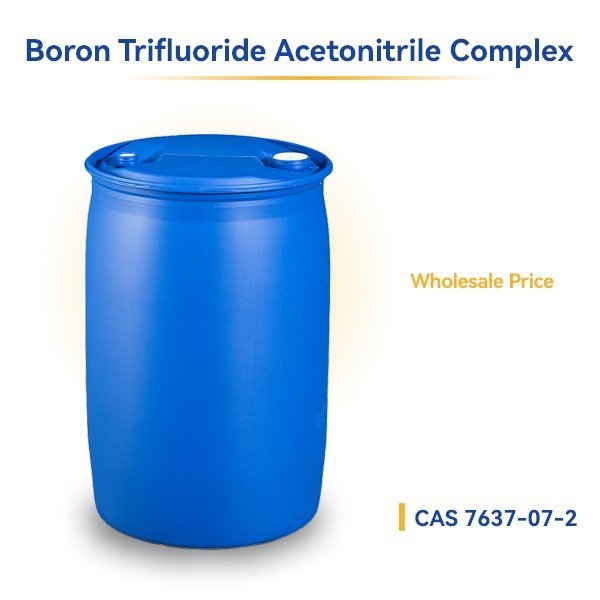
Boron Trifluoride Acetonitrile Complex
GTC-247
Representative packaging
Boron Compounds
Boron Trifluoride Acetonitrile Complex
- CAS No.
- 420-16-6
- Catalogue ID
- GTC-247
Boron Trifluoride Acetonitrile Complex, CAS 420-16-6. Source-derived identification, physical data and applications are provided for catalogue reference; request the current specification, COA and SDS for the required grade.
Catalogue aliases / related identifiers
(Acetonitrile)trifluoroboron; Trifluoroborane acetonitrile complex; Acetonitrile-boron trifluoride; Boron, (acetonitrile)trifluoro-, (T-4)-; MeCN:BF3 complex
Supplied catalogue source: GTC-247 · Page 87
Reference data — confirm before ordering or use
The information below is a structured migration from the supplied catalogue snapshot. It is not a current product specification, COA or SDS. Confirm the actual supplier, grade, batch documents, classification, packing and destination requirements for your enquiry.
Basic Information of Boron Trifluoride Acetonitrile Complex
Boron Trifluoride Acetonitrile Complex (CAS No. 420-16-6) is a critical reagent characterized by the following properties:
| CAS No.: | 420-16-6 |
|---|---|
| EC No.: | 690-796-1 |
| Linear Formula: | C₂H₃BF₃N |
| Molecular Weight: | 108.86 |
| Appearance: | Colorless to light yellow transparent liquid |
| Boiling point: | 82-85.5 °C (at 101.325 kPa) |
| Density: | 0.87-0.88 g/mL at 20 °C |
| Solubility | Easily soluble in water (reacts), miscible with many organic solvents like alcohol and ether. |
| Flash Point: | 10 °C |
| Nature: | Potent Lewis acid catalyst. |
| RIDADR: | UN 2924 3/PG 2 |
| Chemical Structure: | 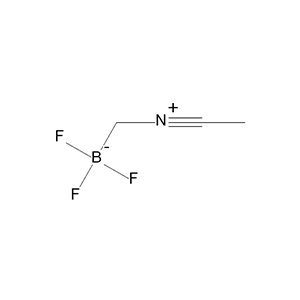 |
These characteristics make it a preferred choice for reactions requiring the strong catalytic power of BF₃ in a more manageable liquid form.
Key Applications of Boron Trifluoride Acetonitrile Complex
Specialized Catalyst for Organic Synthesis: Boron trifluoride acetonitrile complex is widely used as a potent Lewis acid catalyst in various organic reactions. Its applications include the precise synthesis of complex molecules and intermediates, especially within the pharmaceutical industry for compounds such as antibiotics.
Versatile Catalysis & Convenient BF₃ Source: Primarily employed as a highly effective catalyst for a broad spectrum of organic reactions like esterification, alkylation, polymerization, and isomerization. Furthermore, this complex serves as a stable and convenient source of Boron Trifluoride (BF₃), which is itself a crucial raw material for the industrial preparation of other boron compounds, including boron halides, elemental boron, boranes, and sodium borohydride.
Epoxy Curing & Advanced Chemical Processes: This complex can function as an efficient curing agent or accelerator for epoxy resins. The Boron Trifluoride component it provides is also relevant in specialized applications such as the production of hydrogen-based high-energy fuels (derived from boranes) and in processes for the extraction of boron isotopes.
Technical Expertise: Our knowledgeable team is always available to provide comprehensive support and answer any technical questions you may have regarding product application, handling, and safety.
Commitment to Safety & Quality: We adhere to strict safety, environmental, and quality control protocols in all our operations, ensuring responsible sourcing, production, and delivery.
Related Articles
Hazards Classification




Before you order
Confirm the current commercial product record.
Include the required grade or purity, quantity, preferred packing, destination country/port and required document set.
- 01Current specification
- 02Batch or sample COA
- 03Product- and supplier-specific SDS
- 04Packing and shipping review
INQUIRY
Continue browsing
Related Products
Boron Trifluoride Acetic Acid Complex
- CAS No.
- 373-61-5
Boron Trifluoride Acetic Acid Complex, CAS 373-61-5. Source-derived identification, physical data and applications are provided for catalogue reference; request the current specification, COA and…
Boron Trifluoride Anisole Complex
- CAS No.
- 622-45-7
Boron Trifluoride Anisole Complex, CAS 622-45-7. Source-derived identification, physical data and applications are provided for catalogue reference; request the current specification, COA and SDS…
Boron Trifluoride Dibutyl Etherate
- CAS No.
- 593-04-4
Boron Trifluoride Dibutyl Etherate, CAS 593-04-4. Source-derived identification, physical data and applications are provided for catalogue reference; request the current specification, COA and SDS…
Boron Trifluoride Diethyl Etherate Complex
- CAS No.
- 109-63-7
Boron Trifluoride Diethyl Etherate Complex, CAS 109-63-7. Source-derived identification, physical data and applications are provided for catalogue reference; request the current specification, COA and…
Boron Trifluoride Dimethyl Carbonate Complex 99610-25-0
- CAS No.
- 99610-25-0
Boron Trifluoride Dimethyl Carbonate Complex 99610-25-0, CAS 99610-25-0. Source-derived identification, physical data and applications are provided for catalogue reference; request the current specification, COA…
Boron Trifluoride Ethyl Acetate Complex
- CAS No.
- 461-44-9
Boron Trifluoride Ethyl Acetate Complex, CAS 461-44-9. Source-derived identification, physical data and applications are provided for catalogue reference; request the current specification, COA and…
Boron Trifluoride Methanol Complex
- CAS No.
- 2802-68-8
Boron Trifluoride Methanol Complex, CAS 2802-68-8. Source-derived identification, physical data and applications are provided for catalogue reference; request the current specification, COA and SDS…
Boron Trifluoride Piperidine Complex
- CAS No.
- 592-39-2
Boron Trifluoride Piperidine Complex, CAS 592-39-2. Source-derived identification, physical data and applications are provided for catalogue reference; request the current specification, COA and SDS…