
Articles
Acetals and Protected Carbonyl Ethers for Organic Synthesis
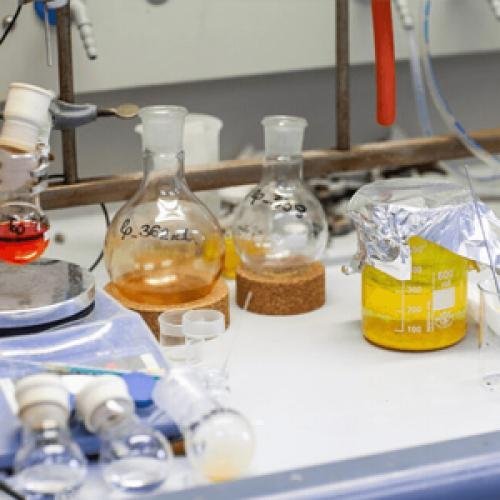
In multi-step API synthesis, protecting sensitive carbonyl groups is often the difference between a robust, scalable process and one plagued by side reactions, low yields, and difficult purifications. Acetal intermediates and dimethoxy ethane derivatives deliver reliable, reversible protection that shields aldehydes and ketones during aggressive transformations while maintaining full compatibility with the stringent demands of cGMP manufacturing.
Contact Shanghai Gubang Hengye New Materials Co., Ltd. regarding high-purity acetal intermediates and protected carbonyl ethers specifically engineered for acetals in API synthesis. These reagents improve overall yield, enhance selectivity, and increase process robustness by preventing unwanted nucleophilic additions, enolizations, or condensations. Process chemists and CDMOs rely on them to navigate complex convergent routes where unprotected carbonyls would otherwise force extra steps or compromise stereochemistry.
This application guide outlines the chemistry, mechanisms, and practical advantages of acetals and dimethoxy ethane derivatives, showing how they integrate into the complete ethers for pharmaceutical intermediates toolbox.
What Are Acetals and Dimethoxy Ethane Derivatives?
Acetals are functional groups formed by the reversible reaction of an aldehyde or ketone with two equivalents of alcohol (or one equivalent of a diol), resulting in a gem-diether structure. Dimethoxy ethane derivatives, including 1,2-dimethoxyethane (DME) and related compounds, combine the coordinating power of the ether oxygens with acetal-like stability, serving dual roles as protecting groups and specialized solvents.
The acetal linkage is stable under basic, nucleophilic, and reductive conditions yet can be cleaved cleanly under mild acidic conditions. This orthogonality makes protected carbonyl ethers ideal for sequences involving Grignard reagents, organolithiums, hydride reductions, or strong bases — conditions that would otherwise react directly with the carbonyl. Compared with unprotected carbonyls, acetal intermediates dramatically reduce side-product formation and simplify work-ups, directly supporting higher isolated yields and tighter impurity control.
In pharmaceutical process development, these acetal intermediates and dimethoxy ethane derivatives are precision tools that enable the efficient construction of complex molecular architectures while meeting ICH Q3A and Q3C requirements.
Mechanism of Protection and Deprotection
Acetal formation proceeds under acid catalysis, typically with catalytic p-toluenesulfonic acid or trimethylsilyl chloride in the presence of methanol or ethylene glycol. Water removal (via molecular sieves or azeotropic distillation) shifts equilibrium toward the protected product. Dimethoxy ethane derivatives follow similar pathways but often serve as both reagent and solvent, simplifying handling at scale.
Deprotection is mild and selective: dilute aqueous acid or mildly acidic ion-exchange resins regenerate the carbonyl under conditions that leave most other protecting groups — including THP ethers, silyl ethers, and Boc carbamates — untouched. This clean reversibility is critical in API synthesis where residual protecting-group fragments can trigger genotoxic impurity concerns or complicate final crystallization.
Compatibility with sensitive intermediates is exceptional. Acetals and dimethoxy ethane derivatives tolerate organometallic reagents, palladium-catalyzed couplings, and fluorination steps without degradation. When integrated with other ether technologies, acetals provide the orthogonal protection layer that keeps multi-step routes efficient and reproducible. They work in concert with glycidyl ethers for side-chain installation, crown ethers for catalysis, and alkoxy propanols as solvents for homogeneous reaction systems.
Applications in API Synthesis
Acetals and dimethoxy ethane derivatives are workhorse reagents in modern pharmaceutical process chemistry. In multi-step synthesis, they protect carbonyls during nucleophilic additions, allowing chemists to install carbon–carbon bonds or reduce adjacent functional groups without interference. Protected carbonyl ethers are routinely employed when a ketone must survive a strong base-mediated alkylation or when an aldehyde needs to remain inert during a late-stage fluorination.
The practical benefits are measurable: higher step yields (typically 10–25 % improvement), reduced chromatographic purification requirements, and simpler impurity profiles that ease regulatory validation. In convergent API routes, acetal protection enables the independent optimization of fragments before coupling, minimizing rework and accelerating scale-up from pilot to commercial manufacture.
Advantages increase when combined with complementary ether technologies. After installing a side chain via glycidyl ethers, an acetal can protect a newly formed ketone during subsequent transformations. Dimethoxy ethane derivatives serve as coordinating solvents that enhance performance of crown ethers in phase-transfer steps, while their low peroxide formation complements alkoxy propanols used in extractions.
For the full picture of acetal protection in the broader ether toolbox, see our central pillar page: ethers for pharmaceutical intermediates.
Industrial Applications
Pharmaceuticals (Primary)
API synthesis accounts for the largest demand for high-purity acetal intermediates. Process teams use them across oncology, CNS, cardiovascular, and antiviral programs where carbonyl protection is essential for maintaining stereochemical integrity and minimizing genotoxic impurities.
Fine Chemicals
In the manufacture of advanced intermediates for agrochemicals, flavors, and fragrances, protected carbonyl ethers enable selective transformations that would be impossible with unprotected starting materials, improving throughput and reducing waste.
Specialty Synthesis
Custom synthesis houses and CDMO partners rely on dimethoxy ethane derivatives for both protecting-group strategies and as specialized solvents in organometallic and lithium chemistry where anhydrous, coordinating conditions are required.
How to Request a Quote for Acetals and Dimethoxy Ethane Derivatives
To get a quotation from Shanghai Gubang Hengye New Materials Co., Ltd., include the following in your RFQ:
-
Product: name and CAS number
-
Grade and specification: purity or assay, water and any impurity limits you need
-
Quantity: sample, trial lot or regular volume
-
Packing: for example drums, IBCs or smaller packs
-
Shipping: destination country and port, and preferred Incoterm (FOB, CFR or CIF)
-
Documents: specification, COA, SDS or TDS
Related product pages: 2-(2-Methoxyethoxy)acetaldehyde dimethyl acetal (CAS 94158-44-8), Dimethoxymethane (methylal, CAS 109-87-5). Product pages show the reference data we hold; please confirm the current specification, COA and SDS with each enquiry.
Request a quote We reply within 1 business day.
Conclusion
Acetals and dimethoxy ethane derivatives remain indispensable for modern API protection strategies. By shielding carbonyl groups during demanding transformations, these protected carbonyl ethers deliver higher yields, superior selectivity, and streamlined purifications that directly lower cost of goods and shorten development timelines.
When integrated with crown ethers for catalysis, glycidyl ethers for side-chain installation, alkoxy propanols as process solvents, fluorinated ethers for pharmacokinetic optimization, and cyclic ethers for complementary alcohol protection, acetal intermediates complete the robust ether toolbox required for competitive API synthesis.
Ready to strengthen your protection strategy? Contact the Shanghai Gubang Hengye New Materials Co., Ltd. technical sales team today for samples, detailed specifications, a custom quotation, or a technical consultation on acetal intermediates. Our specialists will recommend the exact dimethoxy ethane derivative or acetal grade that will deliver measurable improvements in yield, purity, and process robustness.
Request a quote or sample of 1,2-dimethoxyethane, 2,2-dimethoxypropane, or any of our acetal intermediates now and discover how Shanghai Gubang Hengye New Materials Co., Ltd. can optimize your API protection strategy and accelerate your next campaign.