GHS Classification: Flammable Liquid (GHS02), Corrosive (GHS05), Exclamation Mark (GHS07)
Hazard Statements: Flammable liquid and vapor; reacts violently with water releasing corrosive gases; causes severe skin burns and eye damage; harmful if inhaled.
UN Number: UN 1298
Hazard Class: 3 (Flammable Liquids), 8 (Corrosive Substances)
Packing Group: II
Trimethylsilyl Chloride
GTC-285
Representative packaging
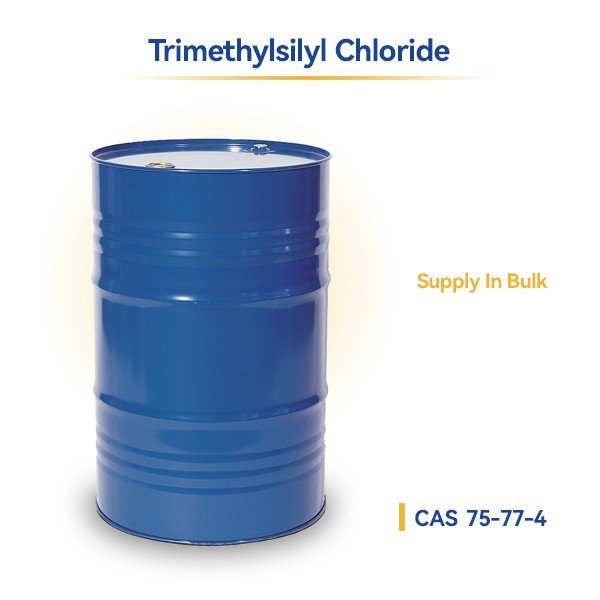
Organosilicon Compounds
Trimethylsilyl Chloride
- CAS No.
- 75-77-4
- Catalogue ID
- GTC-285
Trimethylsilyl Chloride, CAS 75-77-4. Source-derived identification, physical data and applications are provided for catalogue reference; request the current specification, COA and SDS for the required grade.
Catalogue aliases / related identifiers
Trimethylchlorosilane; TMSCl; Chloro(trimethyl)silane; Monochlorotrimethylsilane; Trimethylsilane chloride
Supplied catalogue source: GTC-285 · Page 54
Reference data — confirm before ordering or use
The information below is a structured migration from the supplied catalogue snapshot. It is not a current product specification, COA or SDS. Confirm the actual supplier, grade, batch documents, classification, packing and destination requirements for your enquiry.
Basic Information of Trimethylsilyl Chloride
| CAS No.: | 75-77-4 |
|---|---|
| EC No.: | 200-900-5 |
| Linear Formula: | (CH₃)₃SiCl |
| Molecular Weight: | 108.64 |
| Appearance: | Clear, colorless, fuming liquid. |
| Odor: | Pungent odor. |
| Melting Point: | −40 °C(lit.) |
| Boiling point: | 57 °C(lit.) |
| Density: | 0.857 g/mL at 25 °C |
| Reactivity: | Reacts vigorously with water (hydrolyzes to hexamethyldisiloxane and hydrochloric acid), alcohols, amines, and other protic solvents. |
| Flammability: | Flammable liquid and vapor. |
| Corrosivity: | Corrosive to metals in the presence of moisture and to organic tissues. |
| RIDADR: | UN 1298 3/PG 2 |
| Chemical Structure: |  |
Our commitment to delivering high-purity Trimethylsilyl Chloride ensures a reliable and efficient component for your critical processes, offering consistent quality for diverse industrial needs, while prioritizing uncompromising safety in handling and logistics.
Primary Applications of Trimethylsilyl Chloride
Trimethylsilyl Chloride's unique reactivity and ability to introduce the trimethylsilyl group make it an indispensable reagent with extensive applications across various chemical synthesis pathways:
Protecting Group:
One of its most widespread uses is as a protecting group for various functional groups in organic synthesis. It efficiently converts alcohols, phenols, carboxylic acids, and amines into their trimethylsilyl derivatives, which are often more stable, volatile, or unreactive to specific reagents, allowing for selective transformations elsewhere in the molecule.
Silylating Agent:
It acts as a versatile silylating agent, introducing the trimethylsilyl group (Me₃Si– ) into organic molecules. This can modify physical properties, enhance solubility, or facilitate subsequent reactions.
Pharmaceutical Manufacturing:
Trimethylsilyl Chloride is a crucial intermediate and reagent in the synthesis of numerous active pharmaceutical ingredients (APIs) and their precursors. Its role in protecting sensitive groups and enabling specific reactions is vital in complex drug synthesis routes.
Agrochemical Production:
It is widely employed in the synthesis of various agrochemicals, including pesticides, herbicides, and plant growth regulators, where silylation plays a role in modifying reactivity or stability.
Analytical Chemistry:
Used in analytical chemistry for derivatization, particularly to increase the volatility of polar compounds (like amino acids, sugars) for gas chromatography (GC) analysis, enabling their detection and quantification.
Production of Silicone Intermediates:
Serves as a raw material or intermediate in the synthesis of other silicone compounds, including silanes, siloxanes, and specialty silicone polymers.
Catalyst and Reagent:
In some reactions, it can function as a mild Lewis acid catalyst or as a source of chloride ions.
Exceptional Purity & Consistent Quality: Our Trimethylsilyl Chloride is manufactured to stringent purity specifications, crucial for optimizing performance and selectivity in sensitive organic synthesis reactions, particularly in pharmaceutical and fine chemical production.
Expert Technical & Safety Support: Our dedicated team of experienced chemists and highly trained safety specialists is readily available to offer comprehensive guidance on product application, stringent safe handling procedures, emergency response planning, and optimal storage conditions for Trimethylsilyl Chloride.
Commitment to Quality & Responsible Stewardship: We adhere to the highest industry standards for quality management, environmental responsibility, and product stewardship across all our operations, ensuring peace of mind for our clients and the responsible management of hazardous chemicals.
Frequently Asked Questions (FAQ)
What is Trimethylsilyl Chloride (TMSCl)?
Trimethylsilyl Chloride (TMSCl, CAS 75-77-4) is an organosilicon compound with the formula (CH3)3SiCl. It is a clear, volatile, flammable liquid used primarily as a reagent in organic synthesis and as a building block for organosilicon materials.
What are the main uses of Trimethylsilyl Chloride?
TMSCl is widely used in chemical synthesis, especially for silylation reactions where it protects hydroxyl and amino groups. It is also employed in the production of silicones, pharmaceutical intermediates, agrochemicals, and specialty polymers.
Is Trimethylsilyl Chloride hazardous?
Yes. TMSCl is classified as flammable, corrosive, and harmful. It reacts violently with water to release hydrogen chloride (HCl), which is highly irritating and corrosive to skin, eyes, and the respiratory tract.
Is Trimethylsilyl Chloride flammable?
Yes. TMSCl is a flammable liquid (GHS02) with a low flash point. It should be handled and stored away from ignition sources, heat, and sparks.
How should Trimethylsilyl Chloride be stored?
Store in a tightly sealed container under an inert gas (nitrogen or argon). Keep in a cool, dry, and well-ventilated place. Protect from moisture, acids, alcohols, and oxidizing agents.
What packaging options are available?
Trimethylsilyl Chloride is typically supplied in 200 L steel drums and tanks with corrosion-resistant liners. For laboratory use, it may be packaged in sealed glass bottles with PTFE-lined caps.
What is the UN number and transport classification?
The transport classification is UN 1298 (Flammable liquids, toxic, n.o.s., containing Trimethylsilyl Chloride). It falls under Hazard Class 3 (Flammable Liquids) with subsidiary risk Class 8 (Corrosive), Packing Group II.
Related Articles
Applications of Dichlorodimethylsilane in Pharmaceutical and Fine Chemical Synthesis
Trimethylsilyl Chloride Structure and Chemical Properties Explained
How is Trimethylsilyl Chloride Produced? Industrial Routes and Methods
Dichlorodimethylsilane vs Trimethylchlorosilane: What's the Difference?
Applications of Trimethylsilyl Chloride in Pharmaceuticals and Biotechnology
Trimethylsilyl Chloride in Polymer Chemistry and Material Science
Protecting Groups in Organic Chemistry: The Role of Trimethylsilyl Chloride
section class="safety-storage">
Hazards Classification



Before you order
Confirm the current commercial product record.
Include the required grade or purity, quantity, preferred packing, destination country/port and required document set.
- 01Current specification
- 02Batch or sample COA
- 03Product- and supplier-specific SDS
- 04Packing and shipping review
INQUIRY
Continue browsing
Related Products
Trimethylethoxysilane
- CAS No.
- 1825-62-3
Trimethylethoxysilane, CAS 1825-62-3. Source-derived identification, physical data and applications are provided for catalogue reference; request the current specification, COA and SDS for the required…
Dichlorodimethylsilane
- CAS No.
- 75-78-5
Dichlorodimethylsilane, CAS 75-78-5. Source-derived identification, physical data and applications are provided for catalogue reference; request the current specification, COA and SDS for the required…
Dichloro(methyl)phenylsilane
- CAS No.
- 149-74-6
Dichloro(methyl)phenylsilane, CAS 149-74-6. Source-derived identification, physical data and applications are provided for catalogue reference; request the current specification, COA and SDS for the required…
Dichloromethylsilane
- CAS No.
- 75-54-7
Dichloromethylsilane, CAS 75-54-7. Source-derived identification, physical data and applications are provided for catalogue reference; request the current specification, COA and SDS for the required…
Diethoxydimethylsilane
- CAS No.
- 78-62-6
Diethoxydimethylsilane, CAS 78-62-6. Source-derived identification, physical data and applications are provided for catalogue reference; request the current specification, COA and SDS for the required…