
Palladium(II) Acetylacetonate

GTC-504

Palladium Compounds

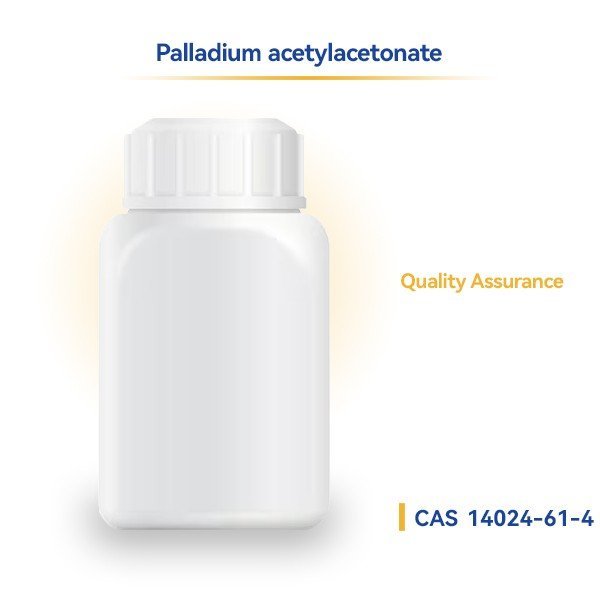
Palladium(II) Acetylacetonate (CAS 14024-61-4)

Get a quote for CAS 14024-61-4Request a sampleSend grade, quantity and destination · reply within 1 business day

CAS No.
14024-61-4
Catalogue ID
GTC-504

Palladium(II) Acetylacetonate, CAS 14024-61-4. Source-derived identification, physical data and applications are provided for catalogue reference; request the current specification, COA and SDS for the required grade.

  • Samples available
  • TDS · COA · SDS on request
  • Export packing & shipping review

Supplied catalogue source: GTC-504 · Page 73

Reference data — confirm before ordering or use

The information below is a structured migration from the supplied catalogue snapshot. It is not a current product specification, COA or SDS. Confirm the actual supplier, grade, batch documents, classification, packing and destination requirements for your enquiry.


Basic Information of Palladium(II) Acetylacetonate

CAS No.14024-61-4
EC No.237-859-8
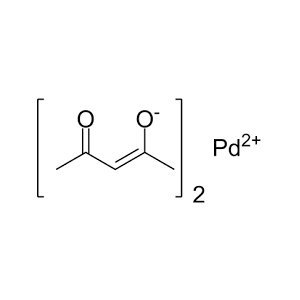
Chemical FormulaPd(C5H7O2)2
Molecular Weight304.58 g/mol
AppearanceBright yellow to orange-yellow crystalline powder
OdorOdorless to slight characteristic
Melting point200–205 °C (decomposes)
Boiling pointSublimes ~180–200 °C under vacuum
Densityapprox. 1.8–2.0 g/cm³
SolubilityInsoluble in water; soluble in chloroform, dichloromethane, toluene, benzene, acetone
Nature (hazards)May cause skin and eye irritation, harmful if swallowed or inhaled, toxic to aquatic life with long lasting effects
RIDADRUN 3077, Environmentally hazardous substance, solid, n.o.s. (Palladium(II) acetylacetonate), Class 9, Packing Group III
Chemical StructureMolecular Structure of Palladium(II) Acetylacetonate

Primary Applications of Palladium(II) Acetylacetonate

Palladium(II) Acetylacetonate excels as a volatile, halide-free Pd precursor for high-purity thin-film deposition and catalyst preparation in advanced technology sectors. As a β-diketonate complex, it exhibits favorable thermal stability and controlled volatility, making it particularly suitable for applications described under advanced palladium organometallic catalysis and materials systems, where clean ligand dissociation and residue-free metal formation are critical.

  1. Chemical Vapor Deposition (CVD) & Atomic Layer Deposition (ALD)
    Serves as a standard precursor for depositing conformal, high-purity palladium thin films, electrodes, or catalytic layers in microelectronics, MEMS, and fuel cell applications. Controlled thermal decomposition of the acetylacetonate ligands enables uniform metallic palladium film formation with minimal halide contamination.

  2. Supported Palladium Catalyst Preparation
    Used in solution impregnation or gas-phase methods to produce highly dispersed Pd on carbon, alumina, or oxide supports for hydrogenation, hydrogenolysis, and cross-coupling catalysis. Ligand removal under reductive conditions generates finely distributed Pd nanoparticles with high catalytic surface area.

  3. Palladium Nanoparticle & Nanostructure Synthesis
    Enables controlled thermal or chemical reduction to generate Pd nanoparticles, nanowires, or clusters for sensors, fuel cells, and biomedical nanotechnology. The molecular structure of Pd(acac)₂ allows predictable nucleation behavior during nanoparticle growth.

  4. Organometallic Complex & Materials Research
    Acts as a Pd(II) source for synthesizing mixed-ligand complexes, luminescent Pd compounds, or functional organometallics in academic and industrial R&D. The acetylacetonate ligands can be partially or fully displaced to form customized coordination complexes.

  5. Electrocatalyst Development for Energy Applications
    Facilitates preparation of Pd-based catalysts for oxygen reduction reaction (ORR), alcohol oxidation, and other processes in fuel cells and electrolyzers. Controlled decomposition supports uniform Pd dispersion on conductive supports.

  6. Thin-Film Electrodes & Sensors
    Supports deposition of Pd microelectrodes, catalytic surfaces, or gas-sensitive layers in chemical sensors, biosensors, and electrochemical devices. Film thickness and morphology can be precisely tuned through deposition parameter control.

For a comprehensive overview of palladium material categories—including salts, oxides, supported catalysts, and organometallic systems across industrial applications—refer to Palladium Compounds: Applications, Categories & Industrial Uses.


  • High Purity & Volatile Consistency
    Rigorous quality control ensures uniform Pd content, low impurities, and reproducible sublimation/decomposition behavior for reliable thin-film deposition.

  • Secure Precious Metal Sourcing
    Transparent, responsible palladium procurement with inventory strategies to provide supply stability and competitive pricing.

  • Technical Deposition Expertise
    Dedicated specialists offer guidance on precursor handling, CVD/ALD parameters, reduction protocols, and process optimization.

  • Comprehensive Regulatory Compliance
    Full COA, REACH, RoHS, and detailed SDS documentation to facilitate integration into global electronics and catalysis operations.

  • Sustainability Focus
    Ethical sourcing practices and palladium recovery/recycling programs aligned with ESG requirements and sustainable materials development.


Hazards Classification

  • GHS Classification: Acute Toxicity, Oral (Category 4); Skin Irritation (Category 2); Eye Irritation (Category 2A); Specific Target Organ Toxicity, Single Exposure (respiratory) (Category 3); Aquatic Chronic (Category 2)

  • Hazard Statements: H302: Harmful if swallowed; H315: Causes skin irritation; H319: Causes serious eye irritation; H335: May cause respiratory irritation; H411: Toxic to aquatic life with long lasting effects

  • UN Number: UN 3077

  • Hazard Class: 9 (Miscellaneous dangerous substances and articles)

  • Packing Group: III

GHS07
GHS07: Exclamation mark (irritant, acute toxicity)
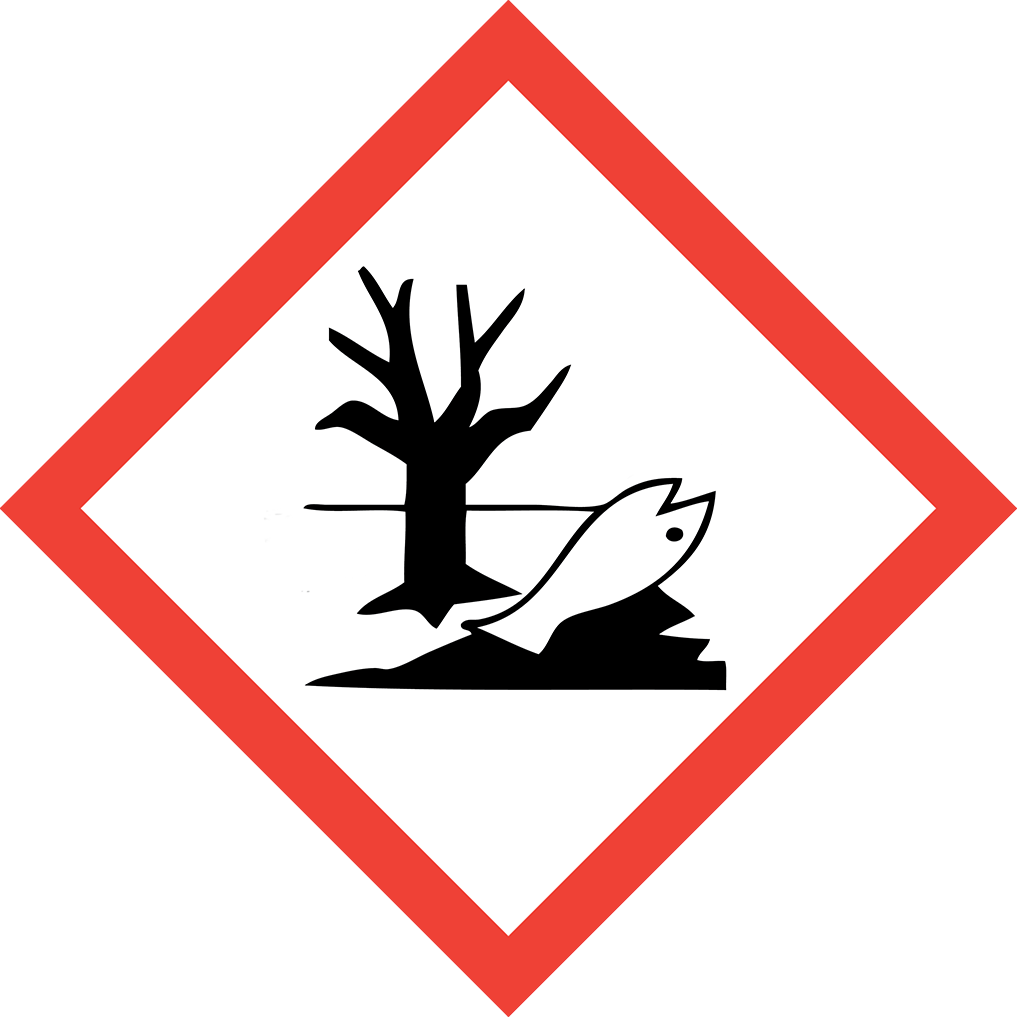
GHS09
GHS09: Environment (aquatic toxicity)
Before you order

Confirm the current commercial product record.

Include the required grade or purity, quantity, preferred packing, destination country/port and required document set.

  • 01Current specification
  • 02Batch or sample COA
  • 03Product- and supplier-specific SDS
  • 04Packing and shipping review
Request product review

INQUIRY

We reply within 1 business day

How to request a quote
  1. Grade or purity
  2. Quantity
  3. Packaging
  4. Destination port
  5. Documents needed (COA / SDS / TDS)
Enquiry type

We reply within 1 business day

INQUIRY

We reply within 1 business day

How to request a quote
  1. Grade or purity
  2. Quantity
  3. Packaging
  4. Destination port
  5. Documents needed (COA / SDS / TDS)
Enquiry type

We reply within 1 business day