GHS Classification: Flammable Liquid (GHS02), Corrosive (GHS05), Acute Toxicity (GHS06)
Hazard Statements: Highly flammable liquid and vapor; causes severe skin burns and eye damage; toxic if inhaled.
UN Number: UN 1162
Hazard Class: 3 (Flammable Liquids), 8 (Corrosive)
Packing Group: II
Dichlorodimethylsilane
GTC-312
Representative packaging
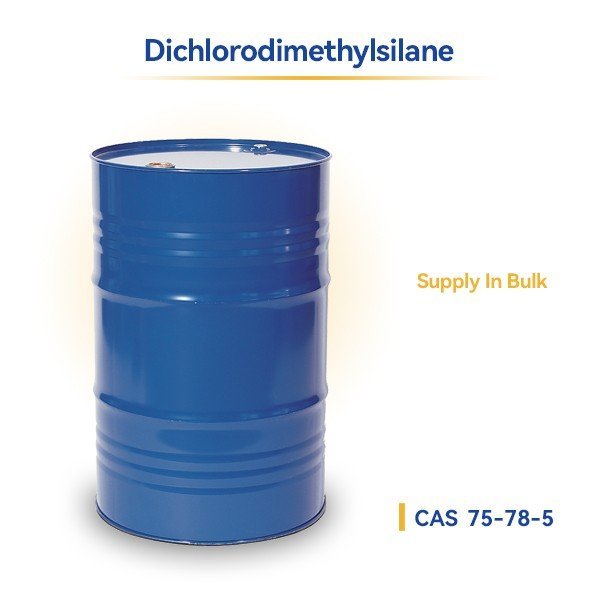
Organosilicon Compounds
Dichlorodimethylsilane
- CAS No.
- 75-78-5
- Catalogue ID
- GTC-312
Dichlorodimethylsilane, CAS 75-78-5. Source-derived identification, physical data and applications are provided for catalogue reference; request the current specification, COA and SDS for the required grade.
Catalogue aliases / related identifiers
Dimethyldichlorosilane; DMDCS; Dichloro(dimethyl)silane; Dimethylsilicon dichloride; Dimethylsilane dichloride; Silane, dichlorodimethyl-; Me2SiCl2
Supplied catalogue source: GTC-312 · Page 52
Reference data — confirm before ordering or use
The information below is a structured migration from the supplied catalogue snapshot. It is not a current product specification, COA or SDS. Confirm the actual supplier, grade, batch documents, classification, packing and destination requirements for your enquiry.
Basic Information of Dichlorodimethylsilane
| CAS No.: | 75-78-5 |
|---|---|
| EC No.: | 200-901-0 |
| Linear Formula: | (CH₃)₂SiCl₂ |
| Molecular Weight: | 129.06 |
| Appearance: | Colorless, fuming liquid. |
| Odor: | Pungent odor. |
| Melting Point: | -76 °C |
| Boiling point: | 70 °C(lit.) |
| Density: | 1.333 g/mL at 20 °C |
| Reactivity: | Reacts vigorously with water (hydrolyzes to form polydimethylsiloxanes and hydrochloric acid), alcohols, and other active hydrogen compounds. |
| Flammability: | Flammable liquid and vapor. |
| Corrosivity: | Highly corrosive to metals in the presence of moisture and to organic tissues. |
| RIDADR: | UN 1162 3,8/PG 2 |
| Chemical Structure: | 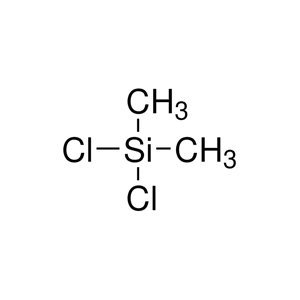 |
Our commitment to delivering high-purity Dichlorodimethylsilane ensures a reliable and efficient component for your critical processes, offering consistent quality for diverse industrial needs, while prioritizing uncompromising safety in handling and logistics.
Primary Applications of Dichlorodimethylsilane
Dichlorodimethylsilane's pivotal role as a monomer in silicone chemistry underpins its widespread industrial importance:
Silicone Polymer Manufacturing:
It is the primary precursor for the synthesis of polydimethylsiloxanes, which are the backbone of almost all silicone products. Through hydrolysis and condensation, it forms linear and cyclic silicone polymers that can be further processed into fluids, resins, and elastomers.
Silicone Fluids:
Used in the production of silicone oils and fluids, which find applications as lubricants, hydraulic fluids, damping fluids, defoamers, and in personal care products (e.g., shampoos, conditioners, cosmetics) due to their unique spreading and non-greasy feel.
Silicone Rubbers (Elastomers):
A critical component in the synthesis of silicone rubbers, known for their excellent flexibility, high-temperature stability, and resistance to environmental degradation. These are used in sealants, gaskets, automotive parts, medical devices, and electronics.
Silicone Resins:
Used to produce silicone resins, which provide durable, heat-resistant, and water-repellent properties to coatings, paints, and electrical insulation materials.
Sealants and Adhesives:
Forms the basis for various silicone-based sealants and adhesives, offering superior weather resistance, flexibility, and longevity in construction, automotive, and electronics industries.
Surface Treatment & Water Repellency:
Can be used directly or as an intermediate in the production of chemicals for surface treatment, imparting water-repellent properties to textiles, paper, masonry, and glass surfaces.
Exceptional Purity & Consistent Quality: Our Dichlorodimethylsilane is manufactured to stringent purity specifications, crucial for optimizing the performance and properties of the resulting silicone polymers and finished products.
Expert Technical & Safety Support: Our dedicated team of experienced chemists and highly trained safety specialists is readily available to offer comprehensive guidance on product application, stringent safe handling procedures, emergency response planning, and optimal storage conditions for Dichlorodimethylsilane.
Commitment to Quality & Responsible Stewardship: We adhere to the highest industry standards for quality management, environmental responsibility, and product stewardship across all our operations, ensuring peace of mind for our clients and the responsible management of hazardous chemicals.
Dichlorodimethylsilane (CAS 75-78-5) — Frequently Asked Questions
What is Dichlorodimethylsilane (DCDMS)?
Dichlorodimethylsilane ((CH3)2SiCl2, CAS 75-78-5) is a chlorosilane — a moisture-sensitive organosilicon reagent commonly used as a building block for silicones and silane-modified intermediates.
What are the main uses of DCDMS?
It is primarily used as a precursor for silicone polymers, silanol-terminated oligomers, chlorosilane intermediates, and specialty surface treatments in coatings, sealants and electronics. It also serves as a functionalizing agent in some fine-chemical processes.
What are the key physical properties?
Typical properties: colorless to pale liquid, pungent odor, relatively low boiling point, and it is moisture sensitive. Exact numbers (bp, density, vapor pressure) depend on grade — always check the product datasheet.
Is DCDMS moisture sensitive / does it react with water?
Yes. DCDMS hydrolyses on contact with water (including humid air), producing hydrochloric acid (HCl) and silanols. Handle and store it under dry, inert atmosphere (e.g., N2) to avoid hydrolysis.
Is Dichlorodimethylsilane flammable?
It can be combustible and may produce flammable vapors. Treat it as a flammable/combustible organic liquid — keep away from ignition sources and follow the SDS guidance for flash point and fire precautions.
What are the health hazards of DCDMS?
Exposure can cause respiratory irritation, severe eye and skin irritation, and corrosive effects due to HCl formed on hydrolysis. Inhalation, ingestion or skin contact should be avoided; use appropriate PPE.
What personal protective equipment (PPE) is recommended?
Use chemical-resistant gloves (e.g., butyl or Viton where suitable), splash goggles or face shield, chemical-resistant clothing, and work in a fume hood or with local exhaust. Use respiratory protection when ventilation is inadequate (see SDS).
How should DCDMS be stored?
Store in a cool, dry, well-ventilated area away from moisture and incompatible substances (water, alcohols, bases). Keep containers tightly sealed, preferably under inert gas. Use corrosion-resistant secondary containment.
How is DCDMS packaged and transported?
Supplied in moisture-tight, corrosion-resistant containers (glass bottles with PTFE caps for small volumes; lined metal drums or specially lined containers for bulk). Transport must follow local/regional dangerous-goods regulations — consult SDS and carrier for correct UN number/packing instructions for your shipment.
What should I do in case of a spill?
Evacuate the area, ventilate, and avoid breathing vapors. Stop leak if safe. Do not use water to clean up; absorb with dry, inert material (e.g., dry sand, vermiculite) and collect into dry sealed containers for hazardous waste disposal. Refer to SDS for emergency measures.
What are recommended disposal methods?
Dispose of DCDMS and contaminated materials as hazardous chemical waste per local/regional regulations. Do not release to sewer or waterways. Consult local waste authorities or the SDS for approved disposal pathways.
Where can I find the authoritative safety information?
Always consult the product Safety Data Sheet (SDS) and applicable local regulations. The SDS contains definitive info on classification, UN number, PPE, first aid, and transport instructions for the exact grade and batch.
Related Articles
Dichlorodimethylsilane vs Trimethylchlorosilane: What's the Difference?
Methyltrichlorosilane vs. Dimethyldichlorosilane: Key Differences in Reactivity and Applications
Applications of Dichlorodimethylsilane in Silicone Polymers and Sealants
How Dichlorodimethylsilane is Used in Surface Treatments and Coatings
Applications of Dichlorodimethylsilane in Pharmaceutical and Fine Chemical Synthesis
Hazards Classification



Before you order
Confirm the current commercial product record.
Include the required grade or purity, quantity, preferred packing, destination country/port and required document set.
- 01Current specification
- 02Batch or sample COA
- 03Product- and supplier-specific SDS
- 04Packing and shipping review
INQUIRY
Continue browsing
Related Products
Trimethylethoxysilane
- CAS No.
- 1825-62-3
Trimethylethoxysilane, CAS 1825-62-3. Source-derived identification, physical data and applications are provided for catalogue reference; request the current specification, COA and SDS for the required…
Dichloro(methyl)phenylsilane
- CAS No.
- 149-74-6
Dichloro(methyl)phenylsilane, CAS 149-74-6. Source-derived identification, physical data and applications are provided for catalogue reference; request the current specification, COA and SDS for the required…
Dichloromethylsilane
- CAS No.
- 75-54-7
Dichloromethylsilane, CAS 75-54-7. Source-derived identification, physical data and applications are provided for catalogue reference; request the current specification, COA and SDS for the required…
Diethoxydimethylsilane
- CAS No.
- 78-62-6
Diethoxydimethylsilane, CAS 78-62-6. Source-derived identification, physical data and applications are provided for catalogue reference; request the current specification, COA and SDS for the required…
Trimethylsilyl Chloride
- CAS No.
- 75-77-4
Trimethylsilyl Chloride, CAS 75-77-4. Source-derived identification, physical data and applications are provided for catalogue reference; request the current specification, COA and SDS for the…