Methacryloyl Chloride
- CAS No.
- 920-46-7
Methacryloyl Chloride, CAS 920-46-7. Source-derived identification, physical data and applications are provided for catalogue reference; request the current specification, COA and SDS for the…
GTC-310
Acyl Halides
Dichloroacetyl Chloride, CAS 79-36-7. Source-derived identification, physical data and applications are provided for catalogue reference; request the current specification, COA and SDS for the required grade.
2,2-Dichloroacetyl chloride; Dichloracetyl chloride; Dichloroethanoyl chloride; Dichloroacetic acid chloride; Cl2CHCOCl; Acetyl chloride, dichloro-; 2,2-Dichloroethanoyl chloride
Supplied catalogue source: GTC-310 · Page 19
The information below is a structured migration from the supplied catalogue snapshot. It is not a current product specification, COA or SDS. Confirm the actual supplier, grade, batch documents, classification, packing and destination requirements for your enquiry.
Dichloroacetyl chloride is a corrosive, fuming liquid that acts as a powerful acylating agent in organic chemistry. It readily reacts with alcohols, amines, and other nucleophiles to form esters, amides, and related derivatives while also serving as a precursor to dichloroacetic acid through hydrolysis. Its high reactivity requires handling under controlled conditions to prevent unwanted side reactions and ensure process safety.
| CAS No. | 79-36-7 |
|---|---|
| EC No. | 201-199-9 |
| Linear Formula | Cl2CHCOCl |
| Molecular Weight | 147.38 g/mol |
| Appearance | Colorless to yellow fuming liquid with pungent odor |
| Melting Point | Not available (lit.) |
| Boiling point | 107-108 °C (lit.) |
| Density | 1.53 g/mL at 20 °C (lit.) |
| RIDADR | UN 1765 Class 8 PG II |
| Chemical Structure | 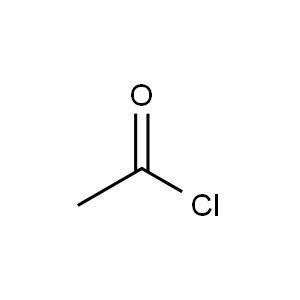 |
Major industrial intermediate: Dichloroacetyl chloride is primarily used as a key intermediate in the manufacture of dichloroacetic acid and its derivatives for pharmaceutical and agrochemical applications.
Acylating agent in synthesis: It serves as an effective reagent for introducing the dichloroacetyl group in organic synthesis for fine chemicals and specialty compounds.
Pharmaceutical applications: Employed in the production of active pharmaceutical ingredients and intermediates, particularly in certain drug syntheses.
Agrochemical production: Used in the synthesis of pesticides and herbicides as a building block for active ingredients.
Laboratory and research use: Applied as a reagent in analytical chemistry and research for acylation reactions and derivative preparation.
High purity specifications and strict batch consistency: Our dichloroacetyl chloride meets demanding quality requirements with rigorous testing to support reliable performance in sensitive acylation and intermediate synthesis processes.
Complete SDS, COA and dangerous goods documentation available: Full compliance packages including safety data sheets and certificates of analysis facilitate regulatory adherence for corrosive chemical procurement and transport.
Professional technical communication and responsive service: Our experienced team provides dedicated assistance with product handling guidance, packaging options, and technical inquiries to support safe and efficient sourcing.
GHS Classification: Skin corrosion (Category 1A) GHS05; Serious eye damage (Category 1) GHS05; Acute toxicity, dermal (Category 3) GHS06; Hazardous to the aquatic environment - Acute (Category 1) GHS09.
Hazard Statements: H314 - Causes severe skin burns and eye damage. H318 - Causes serious eye damage. H311 - Toxic in contact with skin. H400 - Very toxic to aquatic life.
UN Number: UN 1765 | Hazard Class: 8 (Corrosive) | Packing Group: II



Include the required grade or purity, quantity, preferred packing, destination country/port and required document set.
Methacryloyl Chloride, CAS 920-46-7. Source-derived identification, physical data and applications are provided for catalogue reference; request the current specification, COA and SDS for the…
Acryloyl Chloride, CAS 814-68-6. Source-derived identification, physical data and applications are provided for catalogue reference; request the current specification, COA and SDS for the…
Allyl Chlorooxalate, CAS 74503-07-4. Source-derived identification, physical data and applications are provided for catalogue reference; request the current specification, COA and SDS for the…