GTC-273
Chloro Hydroxy PEG Derivatives
Chloro PEG3 alcohol
- CAS No.
- 5197-62-6
- Catalogue ID
- GTC-273
Chloro PEG3 alcohol, CAS 5197-62-6. Source-derived identification, physical data and applications are provided for catalogue reference; request the current specification, COA and SDS for the required grade.
2-[2-(2-Chloroethoxy)ethoxy]ethanol; Triethylene glycol monochloride; 2-(2-(2-Chloroethoxy)ethoxy)ethanol; Cl-PEG3-OH; Triethylene glycol monochlorohydrin; 8-Chloro-3,6-dioxaoctan-1-ol
Supplied catalogue source: GTC-273 · Page 132
Reference data — confirm before ordering or use
The information below is a structured migration from the supplied catalogue snapshot. It is not a current product specification, COA or SDS. Confirm the actual supplier, grade, batch documents, classification, packing and destination requirements for your enquiry.
Chloro PEG3 alcohol (CAS 5197-62-6), also known as 2-[2-(2-chloroethoxy)ethoxy]ethanol, is a monodisperse chloro-functional polyethylene glycol derivative. It features a terminal chloro group and a terminal hydroxyl group connected by a triethylene glycol chain, making it a useful intermediate for organic synthesis and linker construction.
Basic Information
| CAS No. | 5197-62-6 |
|---|---|
| EC No. | 225-984-0 |
| Linear Formula | Cl(CH₂CH₂O)₂CH₂CH₂OH |
| Molecular Weight | 168.62 g/mol |
| Appearance | Colorless to yellow liquid |
| Melting Point | Not available (typical reference) |
| Boiling point | 256–258 °C (lit.) |
| Density | 1.163 g/mL at 25 °C (lit.) |
| Solubility | Soluble in water and polar organic solvents |
| Storage Conditions | Keep in a tightly closed container in a cool, dry and well-ventilated place. Protect from moisture and incompatible materials. |
| Chemical Structure | 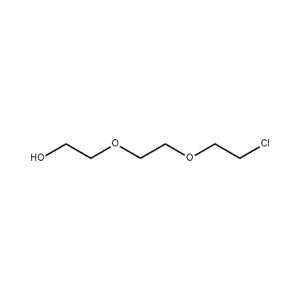 |
Key Applications
Molecular linker intermediate: The terminal chloro group enables nucleophilic substitution reactions for attaching PEG chains to amines, thiols or other nucleophiles in linker synthesis.
Organic synthesis intermediate: Used as a building block for preparing PEGylated compounds and ethylene glycol-based derivatives in fine chemical manufacturing.
Fine chemical intermediate: Serves as a versatile reagent for introducing hydrophilic chloro-PEG segments into complex organic molecules during specialty synthesis.
Pharmaceutical intermediate: Employed in the synthesis of drug intermediates and PEGylated active pharmaceutical ingredients requiring a defined spacer.
Laboratory research: Widely utilized in medicinal chemistry and process research laboratories for developing functional PEG linkers and studying substitution chemistry.
Consistent product quality: High-purity Chloro PEG3 alcohol is sourced through established channels with routine quality coordination to meet fine chemical specifications.
SDS and COA support: Comprehensive product documentation including SDS and COA is available upon request to facilitate regulatory review and international procurement.
Packaging and technical service: Responsive technical communication and assistance with appropriate packaging selection based on order quantity and product characteristics.
Packaging and Storage
Packaging: Available in small laboratory quantities in sealed glass bottles or HDPE containers; bulk volumes supplied in suitable HDPE drums. Customized liquid packaging options can be arranged upon request.
Storage: Store in a tightly closed container in a cool, dry, well-ventilated place. Protect from moisture and incompatible materials. Recommended storage at ambient or lower temperature.
Handling of opened containers: After opening, protect the product from moisture and air exposure. Use contents promptly and reseal the container tightly for remaining material.
Safety and Handling
General handling: Work in a well-ventilated area or chemical fume hood. Follow standard laboratory practices for handling organic compounds containing chloro and alcohol functional groups.
Personal protection: Wear suitable protective gloves, safety goggles, and protective clothing to prevent skin and eye contact during handling.
Documentation review: Consult the current Safety Data Sheet (SDS) before handling, storage, or transportation to ensure appropriate precautions are observed.
Confirm the current commercial product record.
Include the required grade or purity, quantity, preferred packing, destination country/port and required document set.
- 01Current specification
- 02Batch or sample COA
- 03Product- and supplier-specific SDS
- 04Packing and shipping review