GHS Classification: Flammable Liquid (GHS02), Acute Toxicity / Irritant (GHS07), Health Hazard (GHS08)
Hazard Statements: Flammable liquid and vapor; harmful if swallowed, in contact with skin or if inhaled; causes skin irritation and serious eye irritation; may cause damage to organs through prolonged or repeated exposure.
UN Number: UN 1993
Hazard Class: 3 (Flammable Liquids)
Packing Group: III
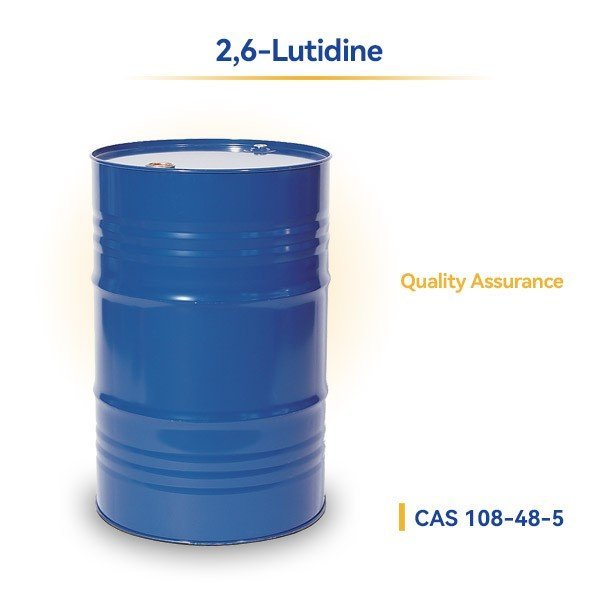
2,6-Lutidine
GTC-088
Representative packaging
Nitrogen Heterocycles
2,6-Lutidine
- CAS No.
- 108-48-5
- Catalogue ID
- GTC-088
2,6-Lutidine, CAS 108-48-5. Source-derived identification, physical data and applications are provided for catalogue reference; request the current specification, COA and SDS for the required grade.
Catalogue aliases / related identifiers
2,6-Dimethylpyridine; Dimethylpyridine (isomer); 2,6-Lu
Supplied catalogue source: GTC-088 · Page 7
Reference data — confirm before ordering or use
The information below is a structured migration from the supplied catalogue snapshot. It is not a current product specification, COA or SDS. Confirm the actual supplier, grade, batch documents, classification, packing and destination requirements for your enquiry.
Basic Information of 2,6-Lutidine
| CAS No.: | 108-48-5 |
|---|---|
| EC No.: | 203-587-3 |
| Linear Formula: | (CH₃)₂C₅H₃N |
| Molecular Weight: | 107.15 |
| Appearance: | Transparent Liquid |
| Odor: | Pungent, characteristic pyridine odor. |
| Melting point: | -6 °C (lit.) |
| Boiling point: | 143-145 °C (lit.) |
| Density: | 0.92 g/mL at 25 °C (lit.) |
| Solubility: | Slightly soluble in water; miscible with most organic solvents like ethanol, ether, and benzene. |
| Flash point: | 92 °F |
| Nature: | Flammable liquid and vapor, harmful by inhalation and skin contact. |
| RIDADR: | UN 1993 3/PG 3 |
| Chemical Structure: | 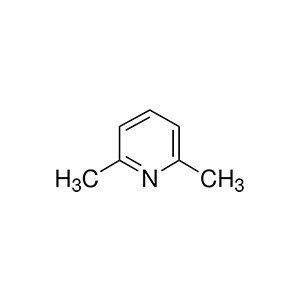 |
Our commitment to delivering high-purity 2,6-Lutidine ensures a reliable and efficient component for your complex manufacturing and synthesis processes.
Primary Applications of 2,6-Lutidine (2,6-Dimethylpyridine)
The unique steric hindrance of the methyl groups adjacent to the nitrogen in 2,6-Lutidine influences its reactivity, making it a highly valued chemical in several key industries:
Pharmaceutical Synthesis: A key intermediate for APIs, especially where substituted pyridine moieties are required.
Agrochemicals: Used in the synthesis of herbicides, insecticides, and fungicides, enhancing bioactivity and stability.
Specialty Polymers: Acts as a monomer/building block for polymers with improved thermal and chemical resistance.
Non-Nucleophilic Base: Valuable in dehydrohalogenations and base-catalyzed reactions due to steric hindrance of methyl groups.
Catalyst/Ligand: Functions as a ligand in metal complexes, influencing catalytic performance and material properties.
Exceptional Purity & Consistency: Our 2,6-Lutidine is manufactured to stringent purity specifications, crucial for maximizing yields in complex syntheses and ensuring consistent quality in your downstream products.
Commitment to Quality & Safety: We adhere to the highest industry standards for quality management, safety, and environmental responsibility across all our operations, ensuring peace of mind for our clients handling this versatile material.
Frequently Asked Questions
Q1: Is 2,6-Lutidine soluble in water?
A1: It has limited solubility in water but is readily soluble in organic solvents such as ethanol and ether.
Q2: What are the main applications?
A2: Mainly used as a pharmaceutical intermediate and as a base in organic reactions.
Hazards Classification



Before you order
Confirm the current commercial product record.
Include the required grade or purity, quantity, preferred packing, destination country/port and required document set.
- 01Current specification
- 02Batch or sample COA
- 03Product- and supplier-specific SDS
- 04Packing and shipping review
INQUIRY
Continue browsing
Related Products
Pyridine
- CAS No.
- 110-86-1
Pyridine, CAS 110-86-1. Source-derived identification, physical data and applications are provided for catalogue reference; request the current specification, COA and SDS for the required…
N-Ethylcarbazole
- CAS No.
- 86-28-2
N-Ethylcarbazole, CAS 86-28-2. Source-derived identification, physical data and applications are provided for catalogue reference; request the current specification, COA and SDS for the required…
N-Methylpiperidine
- CAS No.
- 626-67-5
N-Methylpiperidine, CAS 626-67-5. Source-derived identification, physical data and applications are provided for catalogue reference; request the current specification, COA and SDS for the required…
4-Methylpiperidine
- CAS No.
- 626-58-4
4-Methylpiperidine, CAS 626-58-4. Source-derived identification, physical data and applications are provided for catalogue reference; request the current specification, COA and SDS for the required…
4-Picoline
- CAS No.
- 108-89-4
4-Picoline, CAS 108-89-4. Source-derived identification, physical data and applications are provided for catalogue reference; request the current specification, COA and SDS for the required…
3-Aminopyridine
- CAS No.
- 462-08-8
3-Aminopyridine, CAS 462-08-8. Source-derived identification, physical data and applications are provided for catalogue reference; request the current specification, COA and SDS for the required…
3-Methylpiperidine
- CAS No.
- 626-56-2
3-Methylpiperidine, CAS 626-56-2. Source-derived identification, physical data and applications are provided for catalogue reference; request the current specification, COA and SDS for the required…
3-Picoline
- CAS No.
- 108-99-6
3-Picoline, CAS 108-99-6. Source-derived identification, physical data and applications are provided for catalogue reference; request the current specification, COA and SDS for the required…