GHS Classification: Flammable Liquid (GHS02), Acute Toxicity (GHS06), Corrosive (GHS05)
Hazard Statements: Highly flammable liquid and vapor; harmful if swallowed or inhaled; causes severe skin burns and eye damage.
UN Number: UN 2734
Hazard Class: 3 (Flammable Liquids)
Packing Group: II
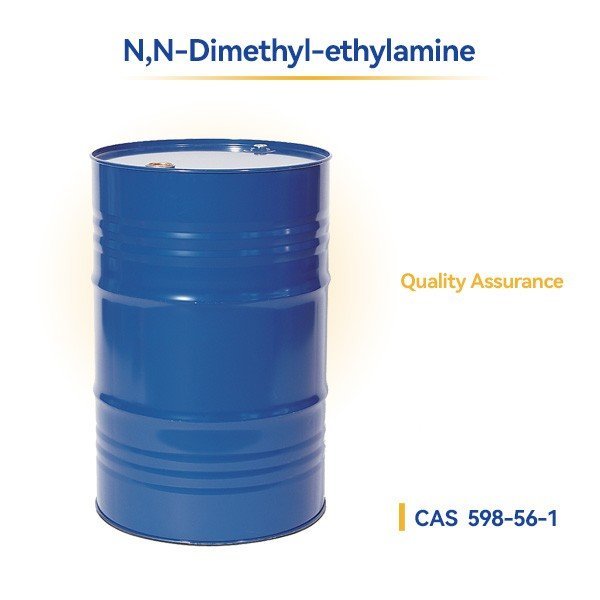
N,N-Dimethyl-ethylamine (DMEA)
GTC-476
Representative packaging
Amines
N,N-Dimethyl-ethylamine (DMEA)
- CAS No.
- 598-56-1
- Catalogue ID
- GTC-476
N,N-Dimethyl-ethylamine (DMEA), CAS 598-56-1. Source-derived identification, physical data and applications are provided for catalogue reference; request the current specification, COA and SDS for the required grade.
Catalogue aliases / related identifiers
N,N-Dimethylethylamine; Ethyldimethylamine; Dimethyl(ethyl)amine; N-Ethyldimethylamine; Dimethylethylamine; DMEA
Supplied catalogue source: GTC-476 · Page 32
Reference data — confirm before ordering or use
The information below is a structured migration from the supplied catalogue snapshot. It is not a current product specification, COA or SDS. Confirm the actual supplier, grade, batch documents, classification, packing and destination requirements for your enquiry.
N,N-Dimethylethylamine (DMEA), CAS 598-56-1, is a highly volatile tertiary amine. It is a colorless gas at room temperature, often handled as a pressurized or liquefied gas, or a very low-boiling liquid. Its structure—an ethyl group and two methyl groups attached to a nitrogen atom—makes it a highly effective nucleophile and base, giving it broad utility as a reaction catalyst and chemical intermediate, particularly in the plastics industry.
Basic Information of DMEA
| CAS No.: | 598-56-1 |
|---|---|
| EC No.: | 209-940-8 |
| Linear Formula: | C4H11N |
| Molecular Weight: | 73.14 |
| Appearance: | Colorless liquefied gas or volatile clear liquid |
| Odor: | Strong, pungent, ammonia-like, fishy odor |
| Melting Point: | −140 °C(lit.) |
| Boiling Point: | 36-38 °C(lit.) |
| Density: | 0.675 g/mL at 25 °C(lit.) |
| Solubility: | Miscible with water and most organic solvents. |
| Flash Point: | -33 °F |
| RIDADR: | UN 2734 3/PG 2 |
| Chemical Structure: | 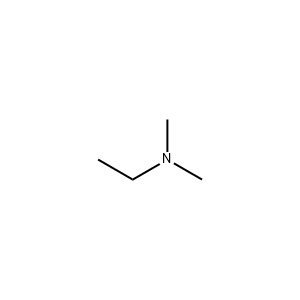 |
Application Overview
DMEA is a high-performance chemical with application focused on its strong catalytic activity and ability to form quaternary salts:
Polyurethane Foam Catalyst: It is a principal component in proprietary blends used as catalysts for flexible and rigid polyurethane foam production. DMEA primarily promotes the gelling reaction (amine-hydroxyl reaction), balancing the blowing reaction to achieve the desired cell structure and cure time.
Quaternary Ammonium Compounds (Quats): DMEA is a precursor for synthesizing various quaternary ammonium salts, which are essential ingredients used as surfactants, phase-transfer catalysts, disinfectants, and corrosion inhibitors.
Accelerant for Epoxy Curing: Due to its strong basicity, DMEA functions as an effective accelerator in the curing process of certain epoxy resins and coatings, decreasing the curing time, especially at lower temperatures.
Solvents and Specialty Chemicals: It is utilized as a specialized solvent or neutralizing agent in the production of specific pharmaceuticals and agrochemicals where a low-molecular-weight, highly volatile amine is required for easy removal after reaction.
Rubber and Elastomer Processing: It can be used as a vulcanization accelerator in the processing of certain rubber and elastomer compounds.
Minimized Residual Volatiles: Our DMEA undergoes an extra purification step to ensure extremely low levels of residual alcohol or water. This is vital for catalyst applications in polyurethane foams, where trace water can prematurely trigger the blowing reaction, leading to defective foam structure.
Catalytic Activity Certification: Every batch is tested not just for chemical purity but also for catalytic performance in standardized model reactions. We certify the effective basicity (pKₐ) to ensure consistent reaction kinetics in your polymerization and gelling processes.
Hazards Classification



Before you order
Confirm the current commercial product record.
Include the required grade or purity, quantity, preferred packing, destination country/port and required document set.
- 01Current specification
- 02Batch or sample COA
- 03Product- and supplier-specific SDS
- 04Packing and shipping review
INQUIRY
Continue browsing
Related Products
Triisobutylamine
- CAS No.
- 1116-40-1
Triisobutylamine, CAS 1116-40-1. Source-derived identification, physical data and applications are provided for catalogue reference; request the current specification, COA and SDS for the required…
Diethanolamine
- CAS No.
- 111-42-2
Diethanolamine, CAS 111-42-2. Source-derived identification, physical data and applications are provided for catalogue reference; request the current specification, COA and SDS for the required…

Trimethylamine (Anhydrous)
- CAS No.
- 75-50-3
Trimethylamine (Anhydrous), CAS 75-50-3. Source-derived identification, physical data and applications are provided for catalogue reference; request the current specification, COA and SDS for the…
2-Aminoethanol (Monoethanolamine)
- CAS No.
- 141-43-5
2-Aminoethanol (Monoethanolamine), CAS 141-43-5. Source-derived identification, physical data and applications are provided for catalogue reference; request the current specification, COA and SDS for the…
Tri(2-ethylhexyl)amine
- CAS No.
- 1860-26-0
Tri(2-ethylhexyl)amine, CAS 1860-26-0. Source-derived identification, physical data and applications are provided for catalogue reference; request the current specification, COA and SDS for the required…

Triallylamine
- CAS No.
- 102-70-5
Triallylamine, CAS 102-70-5. Source-derived identification, physical data and applications are provided for catalogue reference; request the current specification, COA and SDS for the required…
Triethylamine
- CAS No.
- 121-44-8
Triethylamine, CAS 121-44-8. Source-derived identification, physical data and applications are provided for catalogue reference; request the current specification, COA and SDS for the required…

Tripentylamine
- CAS No.
- 621-77-2
Tripentylamine, CAS 621-77-2. Source-derived identification, physical data and applications are provided for catalogue reference; request the current specification, COA and SDS for the required…