GHS Classification: Flammable Liquid (GHS02), Acute Toxicity (GHS06), Corrosive (GHS05), Environmental Hazard (GHS09)
Hazard Statements: Highly flammable liquid and vapor; harmful if swallowed or if inhaled; toxic in contact with skin; causes severe skin burns and eye damage; harmful to aquatic life with long lasting effects.
UN Number: UN 2359
Hazard Class: 3 (Flammable Liquids)
Packing Group: II
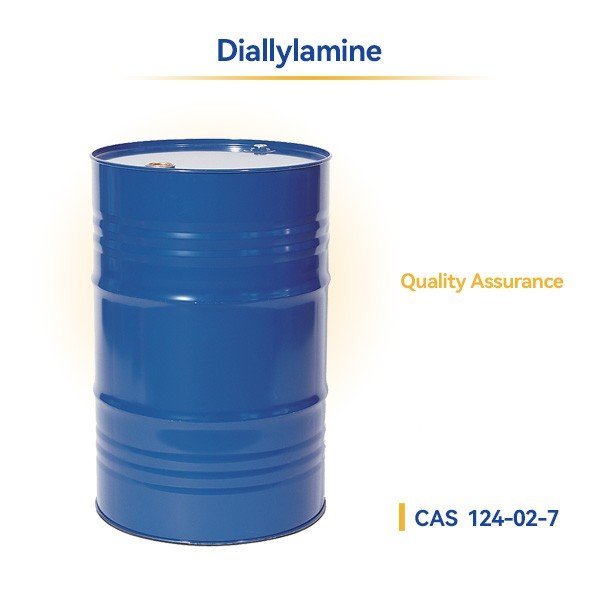
Diallylamine
GTC-302
Representative packaging
Amines
Diallylamine
- CAS No.
- 124-02-7
- Catalogue ID
- GTC-302
Diallylamine, CAS 124-02-7. Source-derived identification, physical data and applications are provided for catalogue reference; request the current specification, COA and SDS for the required grade.
Catalogue aliases / related identifiers
N,N-Diallylamine; Di-2-propenylamine; N-2-Propenyl-2-propen-1-amine; 2-Propen-1-amine, N-2-propenyl-; N,N-Di(2-propenyl)amine; Bis-allylamine; Bis(allyl)amine
Supplied catalogue source: GTC-302 · Page 18
Reference data — confirm before ordering or use
The information below is a structured migration from the supplied catalogue snapshot. It is not a current product specification, COA or SDS. Confirm the actual supplier, grade, batch documents, classification, packing and destination requirements for your enquiry.
Basic Information of Diallylamine
| CAS No.: | 124-02-7 |
|---|---|
| EC No.: | 204-671-2 |
| Linear Formula: | C6H11N |
| Molecular Weight: | 97.16 g/mol |
| Appearance: | Colorless to pale yellow liquid |
| Odor: | Characteristic amine odor |
| Melting Point: | -88 °C (lit.) |
| Boiling Point: | 111-112 °C (lit.) |
| Density: | Approx. 0.78–0.81 g/cm³ (batch dependent) |
| Solubility: | Soluble in many organic solvents; limited solubility in water |
| Flash Point: | 60 °F |
| RIDADR: | UN 2359 3/PG 2 |
| Chemical Structure: | 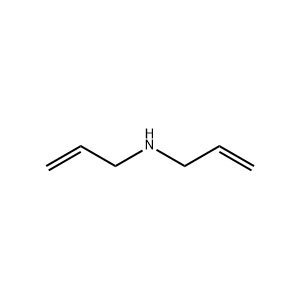 |
Application Overview
Diallylamine is a versatile building block widely used across multiple industrial sectors. Its electron-rich allyl groups and secondary amine functionality enable diverse transformations, making it valuable in:
Polymer & Monomer Synthesis: Used to produce diallyl monomers, crosslinking agents, reactive polymer modifiers, and specialty resins with enhanced mechanical and thermal properties.
Pharmaceutical Intermediates: Suitable for multi-step synthesis where allylic reactivity and amination pathways are required. Common in research routes for APIs and experimental compounds.
Agrochemical Manufacturing: Serves as a precursor for herbicide, pesticide, and plant-protection intermediates via controlled allylic substitution and addition reactions.
Surfactants & Functional Additives: Helps create specialty surfactants, corrosion inhibitors, and wetting agents where amine functionality is essential.
Fine Chemical Synthesis: Participates in Mannich reactions, alkylation steps, and cyclization pathways, enabling production of dyes, chelating agents, performance additives, and catalytic intermediates.
R&D and Pilot Projects: Commonly used in exploratory chemistry, polymer design studies, and reaction mechanism research due to its clean, predictable reactivity profile.
Stable Multi-Region Supply Chain: Diverse sourcing pathways ensure reliable material availability and reduced risk of supply interruptions.
Batch Consistency & Transparency: Every batch is supported by COA, detailed impurity data, and traceability to help customers maintain consistent process performance.
Technical Advisory Support: Application engineers can discuss reaction considerations, compatibility, and solvent selection tailored to diallylamine’s behavior.
Flexible Packaging Formats: Options include small-pack samples, laboratory bottles, industrial drums, and customized packaging to meet project scale.
Global Documentation Support: Assistance with SDS, transport classification, export paperwork, and regulatory compliance for international shipments.
Customer-Focused Lead Times: Efficient logistics and coordinated inventory planning ensure dependable delivery schedules for both recurring and project-based demand.
Hazards Classification




Before you order
Confirm the current commercial product record.
Include the required grade or purity, quantity, preferred packing, destination country/port and required document set.
- 01Current specification
- 02Batch or sample COA
- 03Product- and supplier-specific SDS
- 04Packing and shipping review
INQUIRY
Continue browsing
Related Products
Triisobutylamine
- CAS No.
- 1116-40-1
Triisobutylamine, CAS 1116-40-1. Source-derived identification, physical data and applications are provided for catalogue reference; request the current specification, COA and SDS for the required…
Diethanolamine
- CAS No.
- 111-42-2
Diethanolamine, CAS 111-42-2. Source-derived identification, physical data and applications are provided for catalogue reference; request the current specification, COA and SDS for the required…

Trimethylamine (Anhydrous)
- CAS No.
- 75-50-3
Trimethylamine (Anhydrous), CAS 75-50-3. Source-derived identification, physical data and applications are provided for catalogue reference; request the current specification, COA and SDS for the…
2-Aminoethanol (Monoethanolamine)
- CAS No.
- 141-43-5
2-Aminoethanol (Monoethanolamine), CAS 141-43-5. Source-derived identification, physical data and applications are provided for catalogue reference; request the current specification, COA and SDS for the…
Tri(2-ethylhexyl)amine
- CAS No.
- 1860-26-0
Tri(2-ethylhexyl)amine, CAS 1860-26-0. Source-derived identification, physical data and applications are provided for catalogue reference; request the current specification, COA and SDS for the required…

Triallylamine
- CAS No.
- 102-70-5
Triallylamine, CAS 102-70-5. Source-derived identification, physical data and applications are provided for catalogue reference; request the current specification, COA and SDS for the required…
Triethylamine
- CAS No.
- 121-44-8
Triethylamine, CAS 121-44-8. Source-derived identification, physical data and applications are provided for catalogue reference; request the current specification, COA and SDS for the required…

Tripentylamine
- CAS No.
- 621-77-2
Tripentylamine, CAS 621-77-2. Source-derived identification, physical data and applications are provided for catalogue reference; request the current specification, COA and SDS for the required…