GHS Classification: Acute Toxicity (GHS06), Corrosive (GHS05), Environmental Hazard (GHS09)
Hazard Statements: Toxic if swallowed; causes severe skin burns and eye damage; very toxic to aquatic life with long lasting effects.
UN Number: UN 2802
Hazard Class: 8 (Corrosive Substances)
Packing Group: III
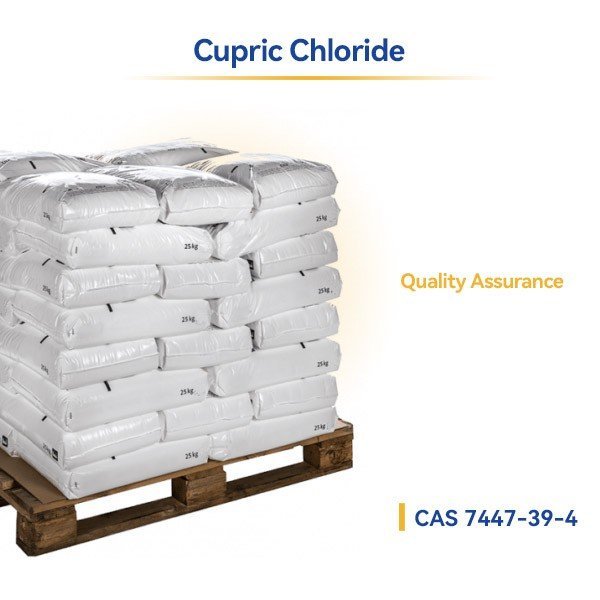
Cupric Chloride
GTC-288
Representative packaging
Inorganic Salts
Cupric Chloride
- CAS No.
- 7447-39-4
- Catalogue ID
- GTC-288
Cupric Chloride, CAS 7447-39-4. Source-derived identification, physical data and applications are provided for catalogue reference; request the current specification, COA and SDS for the required grade.
Catalogue aliases / related identifiers
Copper(II) chloride; Copper dichloride; Copper bichloride; Dichlorocopper; Copper(2+) chloride
Supplied catalogue source: GTC-288 · Page 44
Reference data — confirm before ordering or use
The information below is a structured migration from the supplied catalogue snapshot. It is not a current product specification, COA or SDS. Confirm the actual supplier, grade, batch documents, classification, packing and destination requirements for your enquiry.
Basic Information of Cupric Chloride
| CAS No.: | 7447-39-4 |
|---|---|
| EC No.: | 231-210-2 |
| Linear Formula: | Cl₂Cu |
| Molecular Weight: | 134.45 |
| Appearance: | Yellowish-brown solid (anhydrous); Blue-green crystals (dihydrate). Solutions are typically blue-green. |
| Melting point: | 620 °C(lit.) |
| Boiling point: | 993°C/760mmHg |
| Density: | 3.386 g/mL at 25 °C(lit.) |
| Solubility: | Highly soluble in water, forming acidic solutions. Soluble in ethanol, methanol, and acetone. |
| Nature: | Corrosive. Harmful if swallowed. Environmentally hazardous, particularly to aquatic life. |
| RIDADR: | UN 2802 8/PG 3 |
| Chemical Structure: | 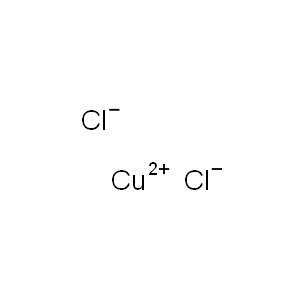 |
Our commitment to delivering high-purity Cupric Chloride ensures a reliable and efficient component for your critical processes.
Primary Applications of Cupric Chloride (Copper(II) Chloride)
Cupric Chloride's unique chemical properties, including its ability to act as an oxidizing agent and a source of copper ions, make it an incredibly valuable and versatile compound with applications across numerous industries:
Catalyst in Organic Synthesis:
It is widely used as a catalyst in various organic reactions, including the Wacker process for the oxidation of alkenes to aldehydes or ketones, and in chlorination reactions. It plays a vital role in synthesizing a range of fine chemicals.
Pigment and Dye Manufacturing:
Cupric Chloride is a precursor for various copper-based pigments and dyes, contributing to the vibrant colors in paints, ceramics, and textiles. It's used to create blue, green, and black hues.
Metallurgy and Metal Treatment:
In metallurgy, it serves as an etchant for copper and copper alloys in printed circuit board (PCB) manufacturing. It's also used in electroplating processes to deposit copper coatings and in refining precious metals.
Water Treatment and Algicides:
Due to its copper content, Cupric Chloride can be used as an algicide in certain water treatment applications to control algae growth in industrial cooling towers and ponds.
Petroleum Industry:
It is used in the petroleum industry as a desulfurizing agent and in the sweetening of sour crude oil.
Other Applications:
Minor uses include applications in photography, wood preservation, and as a mordant in some dyeing processes.
Exceptional Purity & Consistency: Our Cupric Chloride is manufactured to stringent purity specifications, critical for maximizing yields in catalytic processes and ensuring consistent quality in your end products.
Commitment to Quality & Safety: We adhere to the highest industry standards for quality management, safety, and environmental responsibility across all our operations, ensuring peace of mind for our clients.
Hazards Classification for Cupric Chloride (CAS No. 7447-39-4)



Before you order
Confirm the current commercial product record.
Include the required grade or purity, quantity, preferred packing, destination country/port and required document set.
- 01Current specification
- 02Batch or sample COA
- 03Product- and supplier-specific SDS
- 04Packing and shipping review
INQUIRY
Continue browsing
Related Products
Sodium Hypochlorite Solution (>5% Available Chlorine)
- CAS No.
- 7681-52-9
Sodium Hypochlorite Solution (>5% Available Chlorine), CAS 7681-52-9. Source-derived identification, physical data and applications are provided for catalogue reference; request the current specification, COA…
Sodium Dithionite
- CAS No.
- 7775-14-6
Sodium Dithionite, CAS 7775-14-6. Source-derived identification, physical data and applications are provided for catalogue reference; request the current specification, COA and SDS for the…
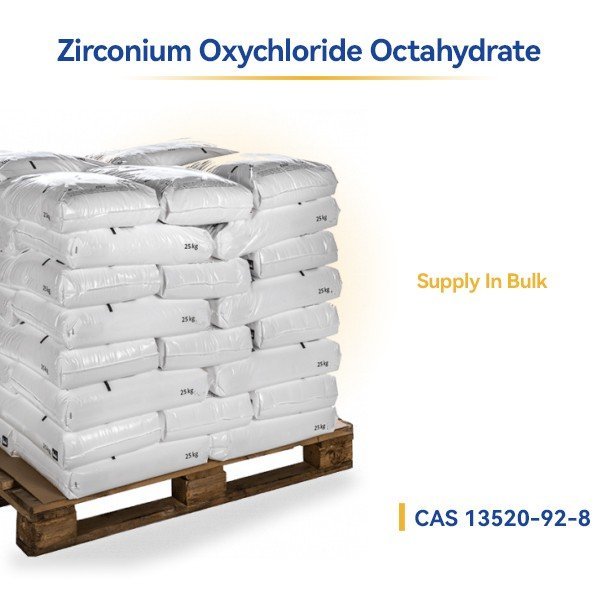
Zirconium Oxychloride Octahydrate
- CAS No.
- 13520-92-8
Zirconium Oxychloride Octahydrate, CAS 13520-92-8. Source-derived identification, physical data and applications are provided for catalogue reference; request the current specification, COA and SDS for…
Zinc Chloride
- CAS No.
- 7646-85-7
Zinc Chloride, CAS 7646-85-7. Source-derived identification, physical data and applications are provided for catalogue reference; request the current specification, COA and SDS for the…
Sodium Bisulfite
- CAS No.
- 7631-90-5
Sodium Bisulfite, CAS 7631-90-5. Source-derived identification, physical data and applications are provided for catalogue reference; request the current specification, COA and SDS for the…
Sodium Metabisulfite
- CAS No.
- 7681-57-4
Sodium Metabisulfite, CAS 7681-57-4. Source-derived identification, physical data and applications are provided for catalogue reference; request the current specification, COA and SDS for the…
Sodium Nitrite
- CAS No.
- 7632-00-0
Sodium Nitrite, CAS 7632-00-0. Source-derived identification, physical data and applications are provided for catalogue reference; request the current specification, COA and SDS for the…
Sodium Thiosulfate Pentahydrate
- CAS No.
- 10102-17-7
Sodium Thiosulfate Pentahydrate, CAS 10102-17-7. Source-derived identification, physical data and applications are provided for catalogue reference; request the current specification, COA and SDS for…