GHS Classification: Flammable Liquid (GHS02), Acute Toxicity (GHS06), Corrosive (GHS05)
Hazard Statements: Flammable liquid and vapor; fatal if inhaled; harmful if swallowed; causes severe skin burns and eye damage; may cause respiratory irritation.
UN Number: UN 2276
Hazard Class: 3 (Flammable Liquids)
Packing Group: III
2-Ethylhexylamine
GTC-105
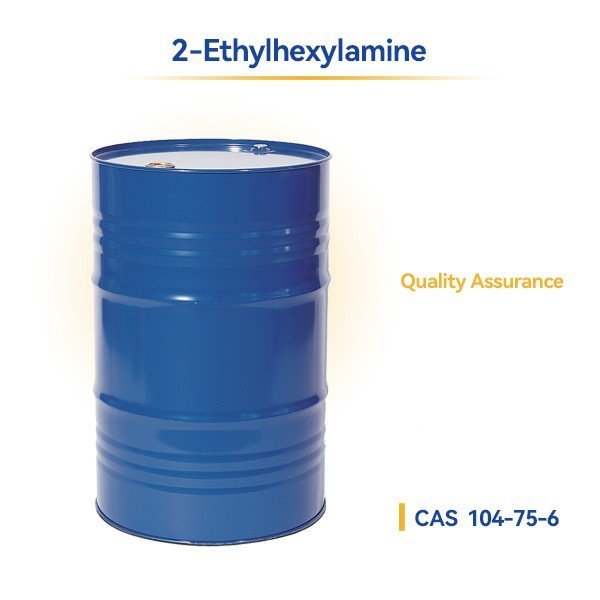
Representative packaging
Amines
2-Ethylhexylamine
- CAS No.
- 104-75-6
- Catalogue ID
- GTC-105
2-Ethylhexylamine, CAS 104-75-6. Source-derived identification, physical data and applications are provided for catalogue reference; request the current specification, COA and SDS for the required grade.
Catalogue aliases / related identifiers
2-Ethyl-1-hexylamine; 2-Ethylhexan-1-amine; 1-Amino-2-ethylhexane; 2-Ethyl-1-aminohexane; 1-Hexanamine, 2-ethyl-; β-Ethylhexylamine; Isooctylamine; 2-EHA
Supplied catalogue source: GTC-105 · Page 8
Reference data — confirm before ordering or use
The information below is a structured migration from the supplied catalogue snapshot. It is not a current product specification, COA or SDS. Confirm the actual supplier, grade, batch documents, classification, packing and destination requirements for your enquiry.
Basic Information of 2-Ethylhexylamine
| CAS No.: | 104-75-6 |
|---|---|
| EC No.: | 203-233-8 |
| Linear Formula: | C8H19N |
| Molecular Weight: | 129.24 |
| Appearance: | Colorless to pale yellow liquid |
| Odor: | Ammonia-like odor |
| Melting Point: | -76 °C |
| Boiling Point: | 169 °C(lit.) |
| Density: | 0.789 g/mL at 25 °C(lit.) |
| Solubility: | Miscible with organic solvents; partial solubility in water |
| Flash Point: | 126°F |
| RIDADR: | UN 2276 3/PG 3 |
| Chemical Structure: | 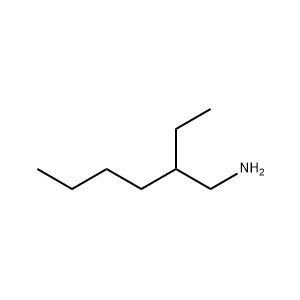 |
Application Overview
2-Ethylhexylamine is a versatile intermediate used in multiple chemical synthesis pathways due to its branched structure, hydrophobicity, and reactivity as a primary amine. It serves important functions in:
Surfactants and Emulsifier Production:A key building block for cationic and amphoteric surfactants, used in detergents, cleaners, textile auxiliaries, and industrial formulations.
Corrosion and Rust Inhibitors:Incorporated into formulations for metalworking fluids, water treatment chemicals, and protective coatings to enhance corrosion resistance.
Agrochemical Synthesis:Serves as an intermediate for herbicides, fungicides, and plant growth regulators requiring branched-chain amine structures.
Organic Synthesis Intermediate:Used in the preparation of amides, imines, quaternary ammonium compounds, and polymer modifiers.
Oilfield Chemicals:Contributes to formulations such as demulsifiers, anti-fouling additives, and flow-improving agents.
Specialty Chemicals and Resins:Acts as a precursor in the synthesis of plasticizers, adhesives, coatings, and hydrophobic modifiers.
Laboratory R&D Applications:Suitable for chemical research and small-scale synthesis requiring a branched primary amine.
Proven Industrial Reliability: Trusted by manufacturers worldwide for consistency in reactivity and purity.
Advanced Production Standards: Produced with controlled processes ensuring minimal impurities and stable performance.
Comprehensive Product Documentation: Full COA, MSDS, and regulatory support for smooth auditing and compliance.
Technical Application Guidance: Assistance from experienced chemical engineers for surfactants, inhibitors, and synthesis optimization.
Flexible Global Distribution: Efficient logistics solutions designed to support both high-volume and specialty orders.
Hazards Classification



Before you order
Confirm the current commercial product record.
Include the required grade or purity, quantity, preferred packing, destination country/port and required document set.
- 01Current specification
- 02Batch or sample COA
- 03Product- and supplier-specific SDS
- 04Packing and shipping review
INQUIRY
Continue browsing
Related Products
Triisobutylamine
- CAS No.
- 1116-40-1
Triisobutylamine, CAS 1116-40-1. Source-derived identification, physical data and applications are provided for catalogue reference; request the current specification, COA and SDS for the required…

Diethanolamine
- CAS No.
- 111-42-2
Diethanolamine, CAS 111-42-2. Source-derived identification, physical data and applications are provided for catalogue reference; request the current specification, COA and SDS for the required…

Trimethylamine (Anhydrous)
- CAS No.
- 75-50-3
Trimethylamine (Anhydrous), CAS 75-50-3. Source-derived identification, physical data and applications are provided for catalogue reference; request the current specification, COA and SDS for the…

2-Aminoethanol (Monoethanolamine)
- CAS No.
- 141-43-5
2-Aminoethanol (Monoethanolamine), CAS 141-43-5. Source-derived identification, physical data and applications are provided for catalogue reference; request the current specification, COA and SDS for the…
Tri(2-ethylhexyl)amine
- CAS No.
- 1860-26-0
Tri(2-ethylhexyl)amine, CAS 1860-26-0. Source-derived identification, physical data and applications are provided for catalogue reference; request the current specification, COA and SDS for the required…

Triallylamine
- CAS No.
- 102-70-5
Triallylamine, CAS 102-70-5. Source-derived identification, physical data and applications are provided for catalogue reference; request the current specification, COA and SDS for the required…
Triethylamine
- CAS No.
- 121-44-8
Triethylamine, CAS 121-44-8. Source-derived identification, physical data and applications are provided for catalogue reference; request the current specification, COA and SDS for the required…

Tripentylamine
- CAS No.
- 621-77-2
Tripentylamine, CAS 621-77-2. Source-derived identification, physical data and applications are provided for catalogue reference; request the current specification, COA and SDS for the required…