
Articles
Flexible & Processable Polyimide Applications
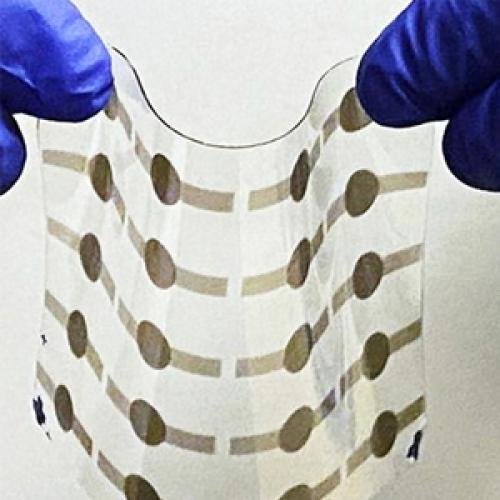
Flexible and processable polyimides are a category of aromatic polymers engineered to prioritize manufacturability through enhanced solution processability, film-forming capability, and mechanical flexibility. These systems typically incorporate structural features that support solution casting, coating, or roll-to-roll processing, while maintaining sufficient thermal and chemical resistance for moderate service environments. They are selected when controlled chain mobility is essential for manufacturing efficiency, rather than for applications requiring extreme high-temperature exposure or high structural load-bearing performance. For foundational insights into the monomers enabling these properties, refer to
Polyimide Diamine Monomers for High-Performance Polymer Systems .
Key Performance Requirements
-
Film formability suitable for solution casting, coating, or continuous processing techniques
-
Solubility and solution stability in common organic solvents to support controlled processing
-
Mechanical flexibility that accommodates bending, folding, or moderate deformation
-
Moderate thermal resistance, typically up to 300–400 °C depending on formulation and exposure duration
Molecular Design Strategies
The flexibility and processability of these polyimides are achieved through targeted modifications in molecular architecture. Ether-containing diamines such as
ether-linked aromatic diamines
are commonly employed to reduce intermolecular interactions and improve solubility. Meta-linked aromatic diamines further disrupt chain packing, supporting flexibility while preserving baseline thermal stability.
Selected fluorination, as observed in certain
fluorinated ether diamines ,
can enhance solution behavior and film quality when incorporated judiciously, without shifting the system toward low-dielectric or high-frequency optimization.
Typical Polyimide Systems in This Category
-
Flexible polyimide films derived from
ether-containing aromatic diamines ,
where pliability and uniform film formation are required -
Coating-grade polyimides formulated with
processable diphenyl ether diamines ,
supporting controlled viscosity and substrate adhesion -
Adhesive-compatible polyimide systems utilizing
meta-substituted aromatic diamines ,
enabling interfacial compliance in multilayer assemblies
Application Areas
-
Flexible substrates for electronic or optical components requiring mechanical compliance
-
Protective or functional coatings applied to substrates with complex geometries
-
Laminates and multilayer films used for insulation or general-purpose packaging
-
Devices requiring moderate mechanical adaptability, such as flexible sensors or interfaces
Relationship to Other Polyimide Application Areas
Flexible and processable polyimides share film-forming and coating characteristics with
Electronics & Semiconductor Polyimide Applications ,
although they do not prioritize high-frequency electrical or ultra-low dielectric performance.
They differ from
Aerospace & High-Temperature Polyimide Applications ,
where molecular rigidity and long-term thermal endurance dominate material selection criteria.
Limited overlap exists with
Specialty & Functional Polyimide Applications ,
particularly where flexibility supports interfacial or surface-related performance requirements.
In certain formulations, fluorination creates a conceptual link to
Fluorinated Polyimide Applications ,
although processability, rather than dielectric optimization, remains the primary design driver.
Summary
Flexible and processable polyimides are defined by molecular designs that emphasize manufacturability through controlled chain mobility, ether linkages, and reduced aromatic packing density. These materials enable solution-based processing and mechanical compliance while maintaining sufficient thermal and chemical resistance for moderate operational conditions, positioning them as a distinct category within the broader polyimide application landscape.