GHS Classification: Corrosive (GHS05), Acute Toxicity (GHS06)
Hazard Statements: Causes severe skin burns and eye damage; toxic if swallowed or inhaled.
UN Number: UN 1778
Hazard Class: 8 (Corrosive Substances)
Packing Group: II
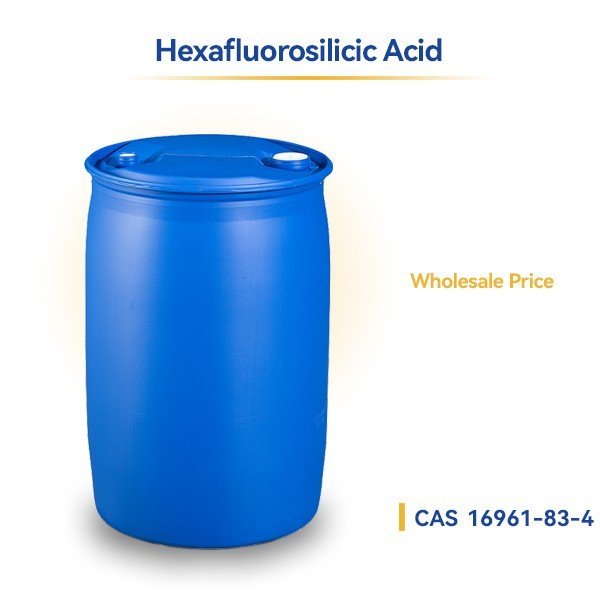
Hexafluorosilicic Acid
GTC-387
Representative packaging
Inorganic Acids
Hexafluorosilicic Acid
- CAS No.
- 16961-83-4
- Catalogue ID
- GTC-387
Hexafluorosilicic Acid, CAS 16961-83-4. Source-derived identification, physical data and applications are provided for catalogue reference; request the current specification, COA and SDS for the required grade.
Catalogue aliases / related identifiers
Fluorosilicic acid; Fluosilicic acid; Hydrofluorosilicic acid; Silicofluoric acid; Dihydrogen hexafluorosilicate; Silicofluoride; Sand acid
Supplied catalogue source: GTC-387 · Page 45
Reference data — confirm before ordering or use
The information below is a structured migration from the supplied catalogue snapshot. It is not a current product specification, COA or SDS. Confirm the actual supplier, grade, batch documents, classification, packing and destination requirements for your enquiry.
Basic Information of Hexafluorosilicic Acid
| CAS No.: | 16961-83-4 |
|---|---|
| EC No.: | 241-034-8 |
| Linear Formula: | H₂SiF₆ |
| Molecular Weight: | 144.09 |
| Appearance: | Clear, colorless to pale yellow, fuming aqueous solution |
| Odor: | A pungent odor |
| Melting Point: | Typically available in various concentrations, commonly 20-40% (w/w). |
| Boiling Point: | 108-109°C |
| Density: | 1.22 g/mL at 20 °C (lit.) 1.31 g/mL at 25 °C |
| Solubility: | Highly soluble and miscible with water. |
| Acidity: | Strong inorganic acid. |
| Reactivity: | Reacts with glass, ceramics, and certain metals. Corrosive to tissues. |
| Stability: | Relatively stable in aqueous solution, but can slowly hydrolyze to hydrofluoric acid and silica. |
| RIDADR: | UN 1778 8/PG 2 |
| Chemical Structure: | 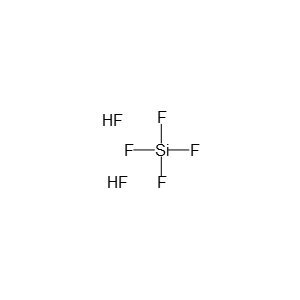 |
Our commitment to delivering high-purity Hexafluorosilicic Acid ensures a reliable and efficient component for your critical processes, offering consistent quality for diverse industrial needs.
Primary Applications of Hexafluorosilicic Acid
Hexafluorosilicic Acid's properties as a strong acid, fluoride source, and reactive agent make it a fundamental chemical with extensive applications across various industries:
Water Fluoridation:
One of its most significant applications is in municipal water fluoridation programs, where it serves as a cost-effective and efficient source of fluoride ions to help prevent tooth decay in public water supplies.
Metal Surface Treatment:
Used in the metal finishing industry for pickling and cleaning various metals, including stainless steel and aluminum, to remove impurities and prepare surfaces for subsequent processes like painting or electroplating. It can also be used for acid etching of metals.
Electroplating:
It is employed in electroplating baths (e.g., lead-acid battery production, tin plating) to improve the adhesion and uniformity of metal coatings, acting as a complexing agent for metal ions.
Chemical Manufacturing:
Serves as a chemical intermediate in the production of various fluorosilicates, cryolite, and other inorganic fluorine compounds. It's also used as a raw material for synthetic cryolite in aluminum production.
Wood Preservation:
In some formulations, it's used as a component in wood preservatives to protect timber from fungal decay and insect attacks.
Textile Industry:
Used in certain textile processes for mothproofing wool and for adjusting pH.
Concrete Hardening:
Can be used as a hardening agent for concrete, contributing to increased durability and resistance to wear.
Exceptional Purity & Consistent Quality: Our Hexafluorosilicic Acid is manufactured to stringent purity and concentration specifications, crucial for optimizing performance in sensitive applications like water fluoridation and precision metal treatments.
Commitment to Quality & Safety: We adhere to the highest industry standards for quality management, safety, and environmental responsibility across all our operations, ensuring peace of mind for our clients.
Hazards Classification


Before you order
Confirm the current commercial product record.
Include the required grade or purity, quantity, preferred packing, destination country/port and required document set.
- 01Current specification
- 02Batch or sample COA
- 03Product- and supplier-specific SDS
- 04Packing and shipping review
INQUIRY
Continue browsing
Related Products
Phosphoric Acid
- CAS No.
- 7664-38-2
Phosphoric Acid, CAS 7664-38-2. Source-derived identification, physical data and applications are provided for catalogue reference; request the current specification, COA and SDS for the…
Phosphorous Acid
- CAS No.
- 13598-36-2
Phosphorous Acid, CAS 13598-36-2. Source-derived identification, physical data and applications are provided for catalogue reference; request the current specification, COA and SDS for the…
Hydrogen Fluoride
- CAS No.
- 7664-39-3
Hydrogen Fluoride, CAS 7664-39-3. Source-derived identification, physical data and applications are provided for catalogue reference; request the current specification, COA and SDS for the…
Fluoroboric Acid
- CAS No.
- 16872-11-0
Fluoroboric Acid, CAS 16872-11-0. Source-derived identification, physical data and applications are provided for catalogue reference; request the current specification, COA and SDS for the…