

Digold Trioxide

GTC-322

Gold Compounds

Digold Trioxide

CAS No.
1303-58-8
Catalogue ID
GTC-322

Digold Trioxide, CAS 1303-58-8. Source-derived identification, physical data and applications are provided for catalogue reference; request the current specification, COA and SDS for the required grade.

Catalogue aliases / related identifiers

Gold(III) oxide; Auric oxide; Gold sesquioxide; Gold trioxide; Digold(3+) trioxide; Di-gold trioxide; Gold oxide Au₂O₃

Supplied catalogue source: GTC-322 · Page 72

Reference data — confirm before ordering or use

The information below is a structured migration from the supplied catalogue snapshot. It is not a current product specification, COA or SDS. Confirm the actual supplier, grade, batch documents, classification, packing and destination requirements for your enquiry.


Basic Information of Digold Trioxide

CAS No.1303-58-8
EC No.215-122-1
Chemical FormulaAu₂O₃
Molecular Weight441.93 g/mol
AppearanceDark brown to black amorphous or finely crystalline powder
OdorOdorless
Melting pointDecomposes ~160 °C to Au + O₂
Boiling pointNot applicable (decomposes)
Densityapprox. 11.0–11.5 g/cm³
SolubilityInsoluble in water; soluble in hot concentrated acids (e.g., aqua regia, HCl + HNO₃)
Nature (hazards)May cause respiratory irritation, skin and eye irritation, harmful if inhaled as dust, toxic to aquatic life
RIDADRNot regulated (non-hazardous for transport under standard classifications; consult SDS for specific handling)
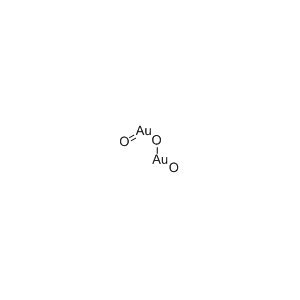
Chemical StructureMolecular Structure of Digold Trioxide

Primary Applications of Digold Trioxide

Digold Trioxide serves as a unique Au(III) oxide source, offering high oxidation state and facile reduction to metallic gold in catalytic and materials processes.

  1. Supported Gold Catalyst Preparation
    Used as a precursor for depositing Au on various supports (carbon, alumina, TiO₂) via reduction or decomposition, yielding active catalysts for CO oxidation, selective alcohol oxidation, and hydrogenation.

  2. Gold Nanoparticle Synthesis
    Enables controlled reduction to generate Au nanoparticles or clusters with unique electronic properties for plasmonics, sensing, and biomedical applications.

  3. Heterogeneous Oxidation Catalysis
    Exhibits activity in low-temperature oxidation of CO, aldehydes, and hydrocarbons, useful in emission control and fine chemical production.

  4. Thin-Film & Surface Modification
    Serves as a source for gold oxide thin films or surface layers in microelectronics, sensors, and plasmonic devices via thermal or chemical decomposition.

  5. Advanced Materials Research
    Employed in studies of gold oxide stability, mixed-metal oxides, and functional coatings requiring high gold oxidation state.

  6. Chemical & Materials Synthesis
    Provides a clean Au(III) source in non-aqueous or solid-state reactions where chloride contamination is undesirable.


  • High Gold Content & Purity
    Precise analytical control ensures consistent Au content, optimal crystallinity, and high active surface area for maximum performance.

  • Custom Material Specifications
    Tailored purity, particle morphology, surface area, and supported variants to perfectly align with your oxidation, reduction, or energy application.

  • Consistent Batch-to-Batch Reproducibility
    Rigorous testing (ICP, XRD, BET, activity assays) guarantees low variation and predictable performance during scale-up and production.

  • Secure Gold Supply Chain
    Responsible sourcing, strategic inventory management, and transparent pricing mitigate volatility and ensure long-term availability.

  • Technical & Regulatory Support
    Expert team provides guidance on reduction protocols, catalyst activation, performance optimization, and full documentation (COA, REACH, SDS) for seamless integration.


Hazards Classification

  • GHS Classification: Skin Irritation (Category 2); Eye Irritation (Category 2A); Specific Target Organ Toxicity, Single Exposure (respiratory) (Category 3); Aquatic Chronic (Category 3)

  • Hazard Statements: H315: Causes skin irritation; H319: Causes serious eye irritation; H335: May cause respiratory irritation; H413: May cause long lasting harmful effects to aquatic life

  • UN Number: Not regulated

  • Hazard Class: Not classified as hazardous for transport

  • Packing Group: Not applicable

GHS07
GHS07: Exclamation mark (irritant, respiratory)
GHS09
GHS09: Environment (aquatic hazard)
Before you order

Confirm the current commercial product record.

Include the required grade or purity, quantity, preferred packing, destination country/port and required document set.

  • 01Current specification
  • 02Batch or sample COA
  • 03Product- and supplier-specific SDS
  • 04Packing and shipping review
Request product review

INQUIRY

INQUIRY