

Potassium Tetrachloroaurate(III)

GTC-544

Gold Compounds

Potassium Tetrachloroaurate(III)

CAS No.
13682-61-6
Catalogue ID
GTC-544

Potassium Tetrachloroaurate(III), CAS 13682-61-6. Source-derived identification, physical data and applications are provided for catalogue reference; request the current specification, COA and SDS for the required grade.

Catalogue aliases / related identifiers

Potassium tetrachloroaurate; Potassium chloraurate; Potassium auric chloride; Potassium gold chloride; Potassium gold(III) tetrachloride; Potassium tetrachlorogold(III); Potassium tetrachloroaurate(3+); Potassium salt of tetrachloroauric acid

Supplied catalogue source: GTC-544 · Page 76

Reference data — confirm before ordering or use

The information below is a structured migration from the supplied catalogue snapshot. It is not a current product specification, COA or SDS. Confirm the actual supplier, grade, batch documents, classification, packing and destination requirements for your enquiry.


Basic Information of Potassium Tetrachloroaurate(III)

CAS No.13682-61-6
EC No.237-222-4
Chemical FormulaKAuCl₄
Molecular Weight361.77 g/mol
AppearanceBright yellow to orange-yellow crystalline powder
OdorOdorless
Melting pointDecomposes before melting (>300 °C)
Boiling pointNot applicable (decomposes)
Densityapprox. 3.2–3.4 g/cm³
SolubilityHighly soluble in water (>1000 g/L); soluble in ethanol, acetone
Nature (hazards)Causes severe skin burns and eye damage, may cause allergic skin reaction, harmful if swallowed or inhaled, toxic to aquatic life
RIDADRUN 3260, Corrosive solid, acidic, inorganic, n.o.s. (Potassium tetrachloroaurate(III)), Class 8, Packing Group III
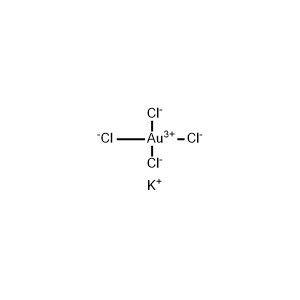
Chemical StructureMolecular Structure of Potassium Tetrachloroaurate(III)

Primary Applications of Potassium Tetrachloroaurate(III)

Potassium Tetrachloroaurate(III) is a stable, water-soluble Au(III) source widely used for gold reduction and deposition in nanotechnology and surface finishing.

  1. Gold Nanoparticle & Colloid Synthesis
    Serves as the primary gold precursor for controlled reduction to monodisperse Au nanoparticles using citrate or borohydride methods, essential for biosensors, drug delivery, plasmonics, and catalysis.

  2. Gold Electroplating & Electroless Deposition
    Provides Au(III) ions for electrolytic and autocatalytic gold plating baths, delivering bright, ductile, corrosion-resistant coatings on electronics, connectors, and jewelry.

  3. Supported Gold Catalyst Preparation
    Used in impregnation or deposition to create Au on carbon, alumina, or oxide supports for selective oxidation, hydrogenation, and CO removal in fine chemicals and emission control.

  4. Thin-Film & Seed Layer Deposition
    Enables solution-based gold film formation for microelectronics, sensors, and plasmonic devices requiring high-purity and controlled thickness.

  5. Organometallic Gold Complex Synthesis
    Acts as precursor for preparing Au(III) and reduced Au(I) complexes with phosphines, carbenes, or other ligands in catalysis and materials research.

  6. Advanced Materials & Nanotechnology
    Facilitates gold nanoshell, nanorod, or composite synthesis for photothermal therapy, SERS substrates, and functional coatings.


  • Precise Gold Content & Purity
    Advanced quality controls ensure accurate Au assay, minimal impurities, and batch reproducibility for reliable reduction or deposition performance.

  • Secure Precious Metal Sourcing
    Transparent, responsible gold procurement with inventory buffering to provide supply stability and competitive pricing.

  • Technical Application Support
    Dedicated specialists offer guidance on reduction protocols, nanoparticle stabilization, plating bath formulation, and process optimization.

  • Comprehensive Regulatory Compliance
    Full COA, REACH, RoHS, and detailed SDS documentation to facilitate seamless integration into global operations.

  • Sustainability & Recycling Commitment
    Ethical sourcing practices and gold recovery/recycling programs aligned with ESG objectives and circular economy principles.


Hazards Classification

  • GHS Classification: Skin Corrosion (Category 1A); Serious Eye Damage (Category 1); Acute Toxicity, Oral (Category 4); Acute Toxicity, Inhalation (Category 4); Aquatic Chronic (Category 1)

  • Hazard Statements: H314: Causes severe skin burns and eye damage; H302 + H332: Harmful if swallowed or if inhaled; H410: Very toxic to aquatic life with long lasting effects

  • UN Number: UN 3260

  • Hazard Class: 8 (Corrosive substances)

  • Packing Group: III

GHS05
GHS05: Corrosive
GHS07
GHS07: Exclamation mark (irritant, acute toxicity)
GHS09
GHS09: Environment (aquatic toxicity)
Before you order

Confirm the current commercial product record.

Include the required grade or purity, quantity, preferred packing, destination country/port and required document set.

  • 01Current specification
  • 02Batch or sample COA
  • 03Product- and supplier-specific SDS
  • 04Packing and shipping review
Request product review

INQUIRY

INQUIRY