

Chloro(triphenylphosphine)gold(I)

GTC-274

Gold Compounds

Chloro(triphenylphosphine)gold(I)

CAS No.
14243-64-2
Catalogue ID
GTC-274

Chloro(triphenylphosphine)gold(I), CAS 14243-64-2. Source-derived identification, physical data and applications are provided for catalogue reference; request the current specification, COA and SDS for the required grade.

Catalogue aliases / related identifiers

Triphenylphosphinegold(I) chloride; Chloro(triphenylphosphane)gold(I); (Triphenylphosphine)gold chloride; Gold(I) chloride triphenylphosphine complex; Triphenylphosphine gold monochloride; Chloro(triphenylphosphine)gold; $Ph_3PAuCl$

Supplied catalogue source: GTC-274 · Page 71

Reference data — confirm before ordering or use

The information below is a structured migration from the supplied catalogue snapshot. It is not a current product specification, COA or SDS. Confirm the actual supplier, grade, batch documents, classification, packing and destination requirements for your enquiry.


Basic Information of Chloro(triphenylphosphine)gold(I)

CAS No.14243-64-2
EC No.238-115-2
Chemical FormulaAuCl(P(C₆H₅)₃)
Molecular Weight494.10 g/mol
AppearanceWhite to pale yellow crystalline powder
OdorOdorless
Melting point~200 °C (decomposes)
Boiling pointNot applicable (decomposes)
Densityapprox. 2.0–2.2 g/cm³
SolubilityInsoluble in water; soluble in dichloromethane, chloroform, benzene, toluene, THF
Nature (hazards)May cause skin and eye irritation, harmful if swallowed or inhaled, toxic to aquatic life with long lasting effects
RIDADRUN 3077, Environmentally hazardous substance, solid, n.o.s. (Chloro(triphenylphosphine)gold(I)), Class 9, Packing Group III
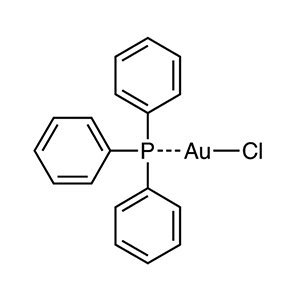
Chemical StructureMolecular Structure of Chloro(triphenylphosphine)gold(I)

Primary Applications of Chloro(triphenylphosphine)gold(I)

AuCl(PPh₃) is a foundational Au(I) precatalyst, readily activated by silver salts or acids to generate highly electrophilic gold species for selective transformations.

  1. Hydroamination & Hydroalkoxylation
     Catalyzes efficient addition of amines or alcohols to alkynes and allenes, providing atom-economical routes to enamines, imines, and oxygen heterocycles in pharmaceutical synthesis.

  2. Cycloisomerization & Rearrangements
     Enables selective cycloisomerization of enynes, allenynes, and propargylic compounds to form carbocycles and heterocycles with high regio- and stereocontrol.

  3. C–H Activation & Functionalization
     Promotes direct C–H functionalization of arenes, heterocycles, and aliphatic substrates, delivering efficient pathways to complex molecules in drug discovery.

  4. Nucleophilic Additions to Unsaturated Bonds
     Facilitates gold-catalyzed 1,2- and 1,4-additions to alkynes, allenes, and enones, offering mild conditions and broad functional group compatibility.

  5. Pharmaceutical & Natural Product Synthesis
     Widely applied in key steps of API manufacturing and natural product total synthesis, leveraging its high selectivity and mild reaction conditions.

  6. Catalyst Development & Mechanistic Studies
     Serves as a standard Au(I) source for ligand screening, counterion effects, and mechanistic investigations in gold catalysis R&D.


  • Superior Purity & Stability
     Rigorous quality controls ensure high Au content, minimal impurities, and preserved phosphine coordination for maximum catalytic activity.

  • Secure Precious Metal Sourcing
     Transparent, responsible gold procurement with inventory buffering to provide supply stability and competitive pricing.

  • Technical Catalysis Support
     Dedicated specialists offer guidance on activation (Ag salts, acids), substrate scope, reaction optimization, and scale-up for maximum efficiency.

  • Comprehensive Regulatory Compliance
     Full COA, REACH, RoHS, and detailed SDS documentation to facilitate seamless integration into pharmaceutical and fine chemical operations.

  • Sustainability & Recycling Programs
     Ethical sourcing practices and gold recovery/recycling programs aligned with ESG objectives and sustainable chemistry principles.


Hazards Classification

  • GHS Classification: Acute Toxicity, Oral (Category 4); Skin Irritation (Category 2); Eye Irritation (Category 2A); Aquatic Chronic (Category 3)

  • Hazard Statements: H302: Harmful if swallowed; H315: Causes skin irritation; H319: Causes serious eye irritation; H413: May cause long lasting harmful effects to aquatic life

  • UN Number: UN 3077

  • Hazard Class: 9 (Miscellaneous dangerous substances and articles)

  • Packing Group: III

GHS07
GHS07: Exclamation mark (irritant, acute toxicity)
GHS09
GHS09: Environment (aquatic hazard)
Before you order

Confirm the current commercial product record.

Include the required grade or purity, quantity, preferred packing, destination country/port and required document set.

  • 01Current specification
  • 02Batch or sample COA
  • 03Product- and supplier-specific SDS
  • 04Packing and shipping review
Request product review

INQUIRY

INQUIRY