GHS Classification: Corrosive (GHS05), Acute Toxicity (GHS06), Exclamation Mark (GHS07)
Hazard Statements: Causes severe skin burns and eye damage; harmful if swallowed or inhaled; may cause respiratory irritation.
UN Number: UN 3265
Hazard Class: 8 (Corrosive)
Packing Group: II
Triflic Acid
GTC-660
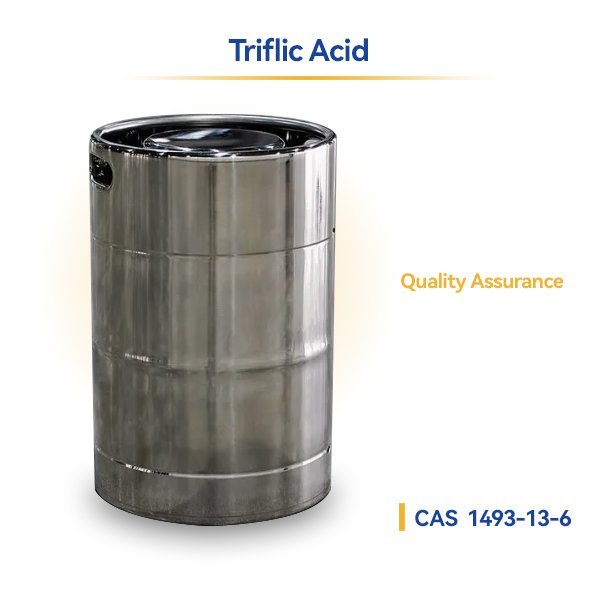
Representative packaging
Triflates
Triflic Acid
- CAS No.
- 1493-13-6
- Catalogue ID
- GTC-660
Triflic Acid, CAS 1493-13-6. Source-derived identification, physical data and applications are provided for catalogue reference; request the current specification, COA and SDS for the required grade.
Catalogue aliases / related identifiers
Trifluoromethanesulfonic Acid; TFMS Acid; TFMSA; Perfluoromethanesulfonic acid; Methanesulfonic acid, 1,1,1-trifluoro-; Trifluoromethylsulfonic acid
Supplied catalogue source: GTC-660 · Page 92
Reference data — confirm before ordering or use
The information below is a structured migration from the supplied catalogue snapshot. It is not a current product specification, COA or SDS. Confirm the actual supplier, grade, batch documents, classification, packing and destination requirements for your enquiry.
Basic Information of Triflic Acid
| CAS No.: | 1493-13-6 |
|---|---|
| EC No.: | 216-087-5 |
| Linear Formula: | CF₃SO₃H |
| Molecular Weight: | 150.08 |
| Appearance: | Colorless to slightly yellow liquid. |
| Melting Point: | -40 °C |
| Boiling point: | 162 °C (lit.) |
| Density: | 1.696 g/mL at 25 °C (lit.) |
| Solubility: | Miscible with water and many organic solvents. |
| Stability: | Highly stable thermally and hydrolytically; non-oxidizing. |
| Purity: | Available in high purity grades (e.g., 99% min) for sensitive catalytic and electrochemical applications. |
| RIDADR: | UN 3265 8/PG 2 |
| Chemical Structure: | ;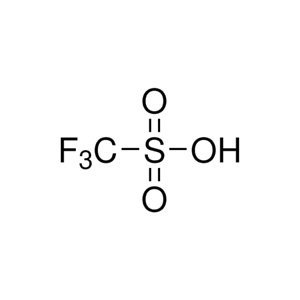 |
Our commitment to delivering high-purity Triflic Acid ensures a reliable and efficient component for your critical processes, offering consistent quality for diverse synthetic and industrial applications.
Primary Applications of Triflic Acid (Trifluoromethanesulfonic Acid)
Triflic Acid's extreme acidity and unique properties make it an invaluable reagent with significant applications in various advanced chemical processes:
Catalyst in Organic Synthesis:
As a powerful superacid, Triflic Acid is an exceptionally effective catalyst for a wide range of organic reactions. This includes:
Esterification and Amidation: Facilitates the formation of esters and amides under mild conditions.
Alkylation and Acylation: Highly efficient in Friedel-Crafts type reactions, promoting the addition of alkyl or acyl groups to aromatic compounds.
Polymerization: Used as an initiator or catalyst for the polymerization of various monomers, influencing molecular weight and polymer properties.
Isomerization and Rearrangement Reactions: Effective in facilitating complex molecular rearrangements.
Electrolyte in Electrochemical Applications:
Its high ionic conductivity and thermal stability make Triflic Acid a preferred electrolyte in advanced electrochemical systems, including certain types of fuel cells (e.g., proton exchange membrane fuel cells) and batteries, where its strong acidity and non-oxidizing nature are advantageous.
Pharmaceutical and Agrochemical Production:
Triflic Acid is a crucial reagent in the synthesis of complex active pharmaceutical ingredients (APIs) and agrochemicals. Its ability to catalyze highly selective reactions with high yields is invaluable in fine chemical manufacturing.
Precursor for Specialty Chemicals:
It serves as a key precursor for the synthesis of triflates (trifluoromethanesulfonate salts and esters), which are powerful leaving groups in organic synthesis and valuable intermediates in various chemical transformations.
Strong Acid Reagent:
Beyond its catalytic role, Triflic Acid is used as a potent strong acid in situations requiring extreme acidity, such as in the cleavage of protecting groups, or as a solvent for certain reactions.
Its role as one of the strongest non-oxidizing acids is discussed in detail in triflic acid as a superacid and activation reagent in organic synthesis.
Three Main Synthetic Routes
Electrolytic Fluorination Method:Methylsulfonyl chloride is electrolyzed in anhydrous hydrogen fluoride, where hydrogen atoms are gradually replaced by fluorine atoms. The final product is obtained and purified by distillation. This method requires sophisticated equipment but yields products of excellent purity.
Trifluoromethyl Oxidation Method:Using trifluoroiodomethane as the raw material, the reaction is catalyzed by a silver salt in the presence of sodium sulfite, followed by oxidation with hydrogen peroxide to obtain the target product. This route is suitable for small-scale laboratory synthesis.
Sulfur Trioxide Method:Trifluoromethane reacts directly with sulfur trioxide under the action of a catalyst. The process is relatively simple but requires strict temperature control (–30 °C to –10 °C).
Exceptional Purity & Consistent Quality: Our Triflic Acid is manufactured to stringent purity specifications, crucial for achieving optimal and reproducible results in sensitive catalytic processes, electrochemical research, and demanding synthetic reactions.
Expert Technical Support: Our dedicated team of specialists is readily available to offer comprehensive guidance on product application, safe handling, optimal storage, and usage in your specific chemical processes, ensuring safety and efficiency when working with a superacid.
Commitment to Quality & Responsible Stewardship: We adhere to the highest industry standards for quality management, environmental responsibility, and product stewardship across all our operations, ensuring peace of mind for our clients and sustainable sourcing practices.
Customized Solutions: We understand that different applications may require specific purity levels or concentrations. We are open to discussing customized solutions to meet your exact requirements.
Triflic Acid (CAS 1493-13-6) — FAQ
What is the pKa of Triflic Acid?
Triflic acid (CF₃SO₃H) is classified as a superacid with an estimated pKa of around –14. This makes it much stronger than conventional strong acids such as sulfuric acid or hydrochloric acid.
What is the density of Triflic Acid?
The density of triflic acid is approximately 1.696 g/cm³ at 25 °C. It is a colorless, fuming liquid that is highly corrosive and strongly hygroscopic.
Why is Triflic Acid hard to work with?
Triflic acid is extremely corrosive and reacts violently with water, releasing heat. It requires specialized equipment (glass or PTFE-lined containers) and strict moisture control. Handling should always be done in a fume hood with full PPE (acid-resistant gloves, goggles, and face protection).
How can Triflic Acid be distilled?
Triflic acid can be purified by vacuum distillation, typically using a glass apparatus with PTFE components. The process must exclude moisture, as even trace water can cause violent reaction and decomposition. Industrial-scale distillation should only be conducted by trained professionals under inert atmosphere.
Which is more acidic: Nitric Acid or Triflic Acid?
Triflic acid is much stronger than nitric acid. Nitric acid has a pKa of about –1.4, while triflic acid’s pKa is about –14. This large difference places triflic acid among the strongest known acids, often used in superacid chemistry.
Related Articles
For a broader understanding of how triflic acid relates to superacid behavior, triflation chemistry, and its derivatives, refer to the overview of triflic acid and triflate chemistry.
Hazards Classification



Before you order
Confirm the current commercial product record.
Include the required grade or purity, quantity, preferred packing, destination country/port and required document set.
- 01Current specification
- 02Batch or sample COA
- 03Product- and supplier-specific SDS
- 04Packing and shipping review
INQUIRY
Continue browsing
Related Products
Zinc Triflate
- CAS No.
- 54010-75-2
Zinc Triflate, CAS 54010-75-2. Source-derived identification, physical data and applications are provided for catalogue reference; request the current specification, COA and SDS for the…
Triflic Anhydride
- CAS No.
- 358-23-6
Triflic Anhydride, CAS 358-23-6. Source-derived identification, physical data and applications are provided for catalogue reference; request the current specification, COA and SDS for the…
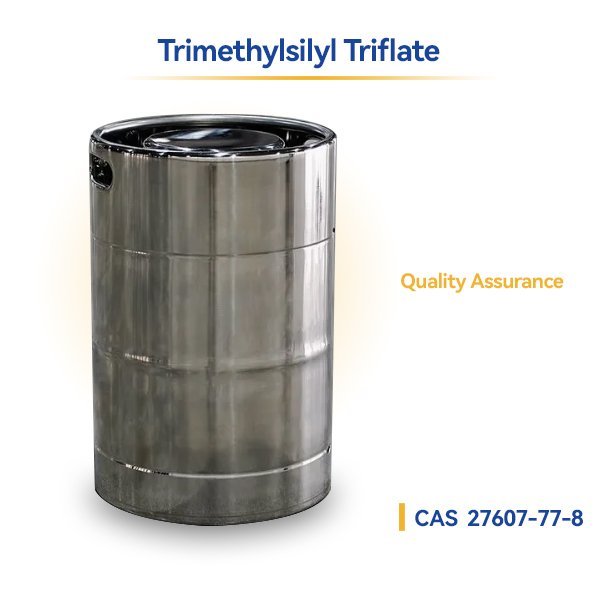
Trimethylsilyl Triflate
- CAS No.
- 27607-77-8
Trimethylsilyl Triflate, CAS 27607-77-8. Source-derived identification, physical data and applications are provided for catalogue reference; request the current specification, COA and SDS for the…
Sodium Triflate
- CAS No.
- 2926-30-9
Sodium Triflate, CAS 2926-30-9. Source-derived identification, physical data and applications are provided for catalogue reference; request the current specification, COA and SDS for the…

Scandium Triflate
- CAS No.
- 144026-79-9
Scandium Triflate, CAS 144026-79-9. Source-derived identification, physical data and applications are provided for catalogue reference; request the current specification, COA and SDS for the…
Potassium Triflate
- CAS No.
- 2926-27-4
Potassium Triflate, CAS 2926-27-4. Source-derived identification, physical data and applications are provided for catalogue reference; request the current specification, COA and SDS for the…
N-Phenyltriflimide
- CAS No.
- 37595-74-7
N-Phenyltriflimide, CAS 37595-74-7. Source-derived identification, physical data and applications are provided for catalogue reference; request the current specification, COA and SDS for the required…
Sodium Bis(trifluoromethanesulfonyl)imide
- CAS No.
- 91742-21-1
Sodium Bis(trifluoromethanesulfonyl)imide, CAS 91742-21-1. Source-derived identification, physical data and applications are provided for catalogue reference; request the current specification, COA and SDS for the…