Wilkinson’s Catalyst
- CAS No.
- 14694-95-2
Wilkinson's Catalyst, CAS 14694-95-2. Source-derived identification, physical data and applications are provided for catalogue reference; request the current specification, COA and SDS for the…
GTC-568
Rhodium Compounds
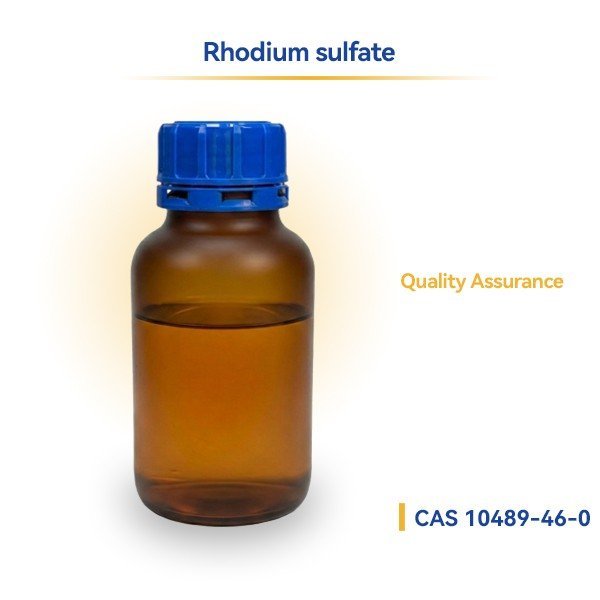
Rhodium(III) Sulfate Solution, CAS 10489-46-0. Source-derived identification, physical data and applications are provided for catalogue reference; request the current specification, COA and SDS for the required grade.
Rhodium sulfate solution; Rhodium(3+) sulfate; Dirhodium trisulfate; Rhodium sulfate bath; Sulfuric acid, rhodium(3+) salt (3:2); Rhodium(III) sulfate, bright plating solution; Rhodium(3+); trisulfate
Supplied catalogue source: GTC-568 · Page 78
The information below is a structured migration from the supplied catalogue snapshot. It is not a current product specification, COA or SDS. Confirm the actual supplier, grade, batch documents, classification, packing and destination requirements for your enquiry.
| CAS No. | 10489-46-0 |
|---|---|
| EC No. | 233-846-1 |
| Chemical Formula | Rh₂(SO₄)₃ (aq.) |
| Molecular Weight | 494.00 g/mol (anhydrous basis) |
| Appearance | Clear to yellowish-orange liquid (aqueous solution, typically 5–20% Rh w/w) |
| Odor | Odorless to slight sulfuric |
| Melting point | Not applicable (liquid solution) |
| Boiling point | >100 °C (water-based; decomposes on heating) |
| Density | 1.05–1.40 g/mL at 25 °C (concentration-dependent) |
| Solubility | Miscible with water; soluble in alcohols, acetone |
| Nature (hazards) | Corrosive to metals and skin, causes severe skin burns and eye damage, harmful if swallowed, toxic to aquatic life |
| RIDADR | UN 3264, Corrosive liquid, acidic, inorganic, n.o.s. (Rhodium(III) sulfate solution), Class 8, Packing Group III |
| Chemical Structure | 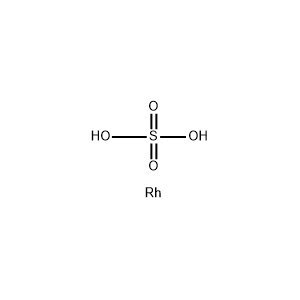 |
Rhodium(III) Sulfate Solution provides a clean, ready-to-use rhodium source for solution processing, enabling precise Rh incorporation in high-technology and catalytic applications.
Supported Rhodium Catalyst Impregnation
Used in wet impregnation of carbon, alumina, silica, or other supports to create high-dispersion Rh catalysts for hydrogenation, hydroformylation, and automotive emission control.
Rhodium Electroplating & Surface Finishing
Provides Rh(III) ions for electrolytic deposition of bright, corrosion-resistant rhodium coatings on electrical contacts, jewelry, and high-reliability electronic components.
Thin-Film Rhodium Deposition
Ideal for spin-coating, dip-coating, or ink formulations to produce rhodium electrodes, seed layers, or catalytic films in microelectronics and sensors.
Organometallic Rhodium Complex Synthesis
Acts as a halide-free Rh(III) precursor for preparing phosphine, carbene, or amine Rh complexes used in homogeneous catalysis and materials research.
Electrocatalyst Development for Energy Applications
Enables synthesis of Rh-based electrocatalysts for oxygen reduction reaction (ORR), hydrogen evolution, and alcohol oxidation in fuel cells and electrolyzers.
Advanced Materials & Nanotechnology
Facilitates controlled reduction to generate rhodium nanostructures, functional coatings, or supported clusters requiring high purity and controlled Rh loading.
Accurate & Consistent Rh Concentration
Precise analytical control ensures uniform rhodium content, low impurities, and batch reproducibility for reliable deposition or catalytic performance.
Halide-Free Formulation
Sulfate-based solution eliminates chloride risks, ideal for electronics, fuel cells, and processes demanding ultra-high purity rhodium.
Custom Solution Tailoring
Adjustable Rh levels, concentration ranges, and minor additives to perfectly match your specific process or formulation requirements.
Technical Process Support
Dedicated specialists provide advice on solution handling, deposition techniques, catalyst activation, and optimization for maximum efficiency.
Regulatory & Sustainability Focus
Full COA, REACH, RoHS, SDS documentation and rhodium recycling programs to support global compliance and your ESG commitments.
GHS Classification: Skin Corrosion/Irritation (Category 1B); Serious Eye Damage (Category 1); Acute Toxicity, Oral (Category 4); Aquatic Chronic (Category 2)
Hazard Statements: H314: Causes severe skin burns and eye damage; H302: Harmful if swallowed; H411: Toxic to aquatic life with long lasting effects
UN Number: UN 3264
Hazard Class: 8 (Corrosive substances)
Packing Group: III



Include the required grade or purity, quantity, preferred packing, destination country/port and required document set.
Wilkinson's Catalyst, CAS 14694-95-2. Source-derived identification, physical data and applications are provided for catalogue reference; request the current specification, COA and SDS for the…
Sodium Hexachlororhodate(III), CAS 14972-70-4. Source-derived identification, physical data and applications are provided for catalogue reference; request the current specification, COA and SDS for the…
Rhodium Carbonyl Chloride Dimer, CAS 14523-22-9. Source-derived identification, physical data and applications are provided for catalogue reference; request the current specification, COA and SDS…
Rhodium(III) 2-Ethylhexanoate, CAS 25470-96-6. Source-derived identification, physical data and applications are provided for catalogue reference; request the current specification, COA and SDS for the…
Rhodium(III) Acetate, CAS 42204-14-8. Source-derived identification, physical data and applications are provided for catalogue reference; request the current specification, COA and SDS for the…
Rhodium(III) Acetylacetonate, CAS 14284-92-5. Source-derived identification, physical data and applications are provided for catalogue reference; request the current specification, COA and SDS for the…
Rhodium(III) Chloride, CAS 10049-07-7. Source-derived identification, physical data and applications are provided for catalogue reference; request the current specification, COA and SDS for the…
Rhodium(III) Chloride Hydrate, CAS 20765-98-4. Source-derived identification, physical data and applications are provided for catalogue reference; request the current specification, COA and SDS for…