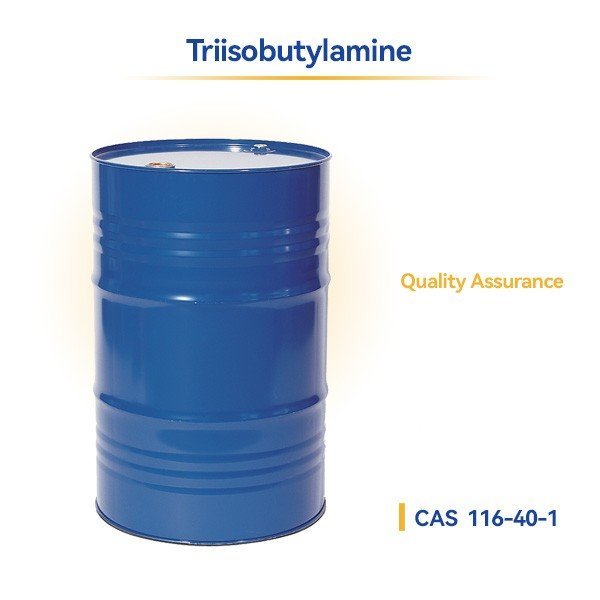
Triisobutylamine
- CAS No.
- 1116-40-1
Triisobutylamine, CAS 1116-40-1. Source-derived identification, physical data and applications are provided for catalogue reference; request the current specification, COA and SDS for the required…
GTC-414
Industrial Chemicals
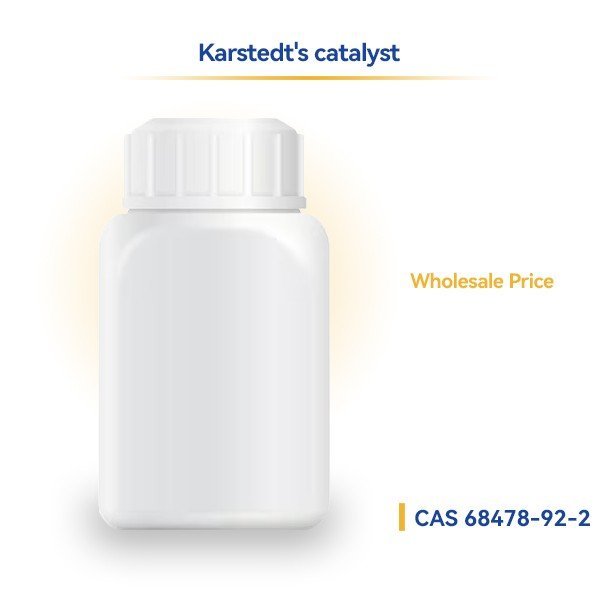
Karstedt's catalyst, CAS 68478-92-2. Source-derived identification, physical data and applications are provided for catalogue reference; request the current specification, COA and SDS for the required grade.
Platinum(0)-1,3-divinyl-1,1,3,3-tetramethyldisiloxane complex; Platinum-divinyltetramethyldisiloxane complex; 1,3-Diethenyl-1,1,3,3-tetramethyldisiloxane-platinum; Karstedt's solution; Platinum, 1,3-diethenyl-1,1,3,3-tetramethyldisiloxane complexes; Diathenyltetramethyldisiloxane-platinum complex; Pt(0)-1,3-divinyl-tetramethyldisiloxane; Karstedt catalyzer
Supplied catalogue source: GTC-414 · Page 62
The information below is a structured migration from the supplied catalogue snapshot. It is not a current product specification, COA or SDS. Confirm the actual supplier, grade, batch documents, classification, packing and destination requirements for your enquiry.
| Parameter | Value |
|---|---|
| CAS No. | 14221-01-3 |
| EC No. | 238-086-9 |
| Chemical Formula | C72H60P4Pd |
| Molecular Weight | 1155.56 g/mol |
| Appearance | Yellow to light yellow to beige crystalline powder or crystals |
| Odor | Odorless |
| Melting point | 103-107 °C (decomposes) |
| Boiling point | Not applicable (decomposes) |
| Density | approx. 1.4 g/cm³ |
| Solubility | Insoluble in water; soluble in benzene, toluene, THF, dichloromethane, chloroform (air-sensitive solutions) |
| Nature (hazards) | Harmful if swallowed, may cause long lasting harmful effects to aquatic life, air-sensitive |
| RIDADR | Not regulated (not subject to transport regulations as hazardous material in many classifications) |
| Chemical Structure | [Insert Molecular Structure Image Here] |
Palladium(II) Acetate serves as a highly effective precatalyst or direct catalyst in a wide array of palladium-mediated reactions, driving innovation in synthetic chemistry across industries.
Cross-Coupling Reactions
Acts as a key precursor in Suzuki-Miyaura, Heck, Sonogashira, and Negishi couplings, enabling efficient aryl-aryl, aryl-alkenyl, and aryl-alkynyl bond formations in pharmaceutical and agrochemical intermediates.
C-H Activation and Functionalization
Facilitates direct C-H arylation, acetoxylation, and olefination of arenes and heterocycles, providing atom-economical routes to complex molecules with minimal prefunctionalization.
Carbon-Heteroatom Bond Formation
Supports Buchwald-Hartwig amination and related ether/thioether couplings, delivering high-yield, selective access to nitrogen- and oxygen-linked pharmacophores under mild conditions.
Pharmaceutical API Synthesis
Widely employed in multistep syntheses of active pharmaceutical ingredients, offering excellent selectivity, functional group compatibility, and scalability for commercial production.
Fine Chemicals and Material Science
Enables synthesis of advanced intermediates, ligands, and functional materials, including OLED components, dyes, and polymers through precise Pd-catalyzed transformations.
Research and Catalyst Development
Serves as a standard Pd source for mechanistic studies, ligand screening, and development of novel palladium catalytic systems in academic and industrial R&D.
Exceptional Purity and Reproducibility
Advanced quality controls guarantee consistent Pd content, low impurity profiles, and reliable catalytic performance across batches.
Secure Precious Metal Sourcing
Transparent, responsible procurement of palladium with inventory buffering to ensure supply continuity despite market dynamics.
Technical Application Support
Experienced chemists offer reaction optimization, scale-up guidance, and troubleshooting to enhance your process efficiency.
Comprehensive Regulatory Compliance
Full documentation suite including COA, REACH, RoHS, and detailed SDS to streamline your global operations and audits.
Sustainability Focus
Ethical sourcing practices and precious metal recovery/recycling programs aligned with modern ESG requirements.
GHS Classification: Skin Sensitization (Category 1); Serious Eye Damage (Category 1); Aquatic Acute (Category 1); Aquatic Chronic (Category 1)
Hazard Statements: H317: May cause an allergic skin reaction; H318: Causes serious eye damage; H410: Very toxic to aquatic life with long lasting effects
UN Number: UN 3077
Hazard Class: 9 (Miscellaneous dangerous substances and articles)
Packing Group: III



Include the required grade or purity, quantity, preferred packing, destination country/port and required document set.
Triisobutylamine, CAS 1116-40-1. Source-derived identification, physical data and applications are provided for catalogue reference; request the current specification, COA and SDS for the required…
Sodium Dithionite, CAS 7775-14-6. Source-derived identification, physical data and applications are provided for catalogue reference; request the current specification, COA and SDS for the…
Diethanolamine, CAS 111-42-2. Source-derived identification, physical data and applications are provided for catalogue reference; request the current specification, COA and SDS for the required…
Formaldehyde Solution, CAS 50-00-0. Source-derived identification, physical data and applications are provided for catalogue reference; request the current specification, COA and SDS for the…
Paraformaldehyde, CAS 30525-89-4. Source-derived identification, physical data and applications are provided for catalogue reference; request the current specification, COA and SDS for the required…
Sodium Hypochlorite Solution (>5% Available Chlorine), CAS 7681-52-9. Source-derived identification, physical data and applications are provided for catalogue reference; request the current specification, COA…
Phosphoric Acid, CAS 7664-38-2. Source-derived identification, physical data and applications are provided for catalogue reference; request the current specification, COA and SDS for the…
Diacetone Alcohol, CAS 123-42-2. Source-derived identification, physical data and applications are provided for catalogue reference; request the current specification, COA and SDS for the…