GHS Classification: Flammable Solid (GHS02), Exclamation Mark (GHS07)
Hazard Statements: Flammable solid; may cause skin and eye irritation.
UN Number: UN 1325
Hazard Class: 4.1 (Flammable Solids)
Packing Group: II
Hexamethylcyclotrisiloxane (D3)
GTC-388
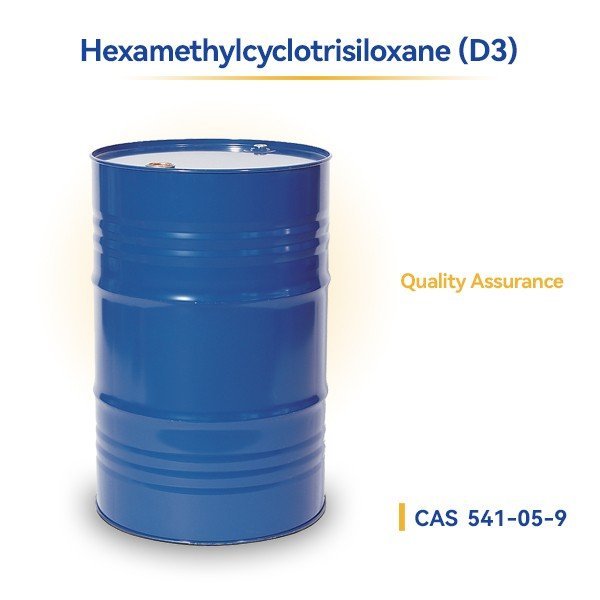
Representative packaging
Cyclic Siloxanes
Hexamethylcyclotrisiloxane (D3)
- CAS No.
- 541-05-9
- Catalogue ID
- GTC-388
Hexamethylcyclotrisiloxane (D3), CAS 541-05-9. Source-derived identification, physical data and applications are provided for catalogue reference; request the current specification, COA and SDS for the required grade.
Catalogue aliases / related identifiers
D3; Cyclotrisiloxane, hexamethyl-; Dimethylsiloxane cyclic trimer; 2,2,4,4,6,6-Hexamethyl-1,3,5,2,4,6-trioxatrisilinane; Cyclotrimethicone; SDK 10
Supplied catalogue source: GTC-388 · Page 53
Reference data — confirm before ordering or use
The information below is a structured migration from the supplied catalogue snapshot. It is not a current product specification, COA or SDS. Confirm the actual supplier, grade, batch documents, classification, packing and destination requirements for your enquiry.
Hexamethylcyclotrisiloxane (D3) is a fundamental organosilicon compound within the cyclic siloxane family. With the chemical formula [(CH₃)₂SiO]₃, it consists of three dimethylsiloxane units forming a stable ring structure. D3 typically appears as a white crystalline solid at room temperature, but can be a clear liquid when slightly warmed or in specific formulations. Its precise molecular structure and high reactivity make it an invaluable building block in the synthesis of specialized silicone polymers and materials.
Basic Information of Hexamethylcyclotrisiloxane
| CAS No.: | 541-05-9 |
|---|---|
| EC No.: | 208-765-4 |
| Linear Formula: | [(CH₃)₂SiO]₃ |
| Molecular Weight: | 222.46 |
| Appearance: | Transparent Liquid |
| Melting Point: | 50-64 °C (lit.) |
| Boiling point: | 134 °C (lit.) |
| Density: | Typically ≥99.5%, ensuring optimal performance in sensitive applications. |
| Solubility: | Soluble in many organic solvents (e.g., hydrocarbons, ethers, alcohols), insoluble in water. |
| Reactivity: | High reactivity for ring-opening polymerization (ROP) to form linear polysiloxanes. |
| Volatility: | Volatile, allowing for clean evaporation in certain applications. |
| RIDADR: | UN 1325 4.1/PG 2 |
| Chemical Structure: | 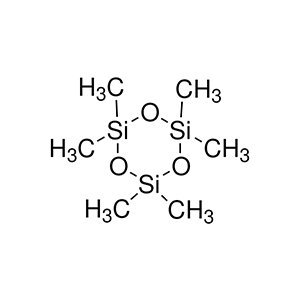 |
Applications of Hexamethylcyclotrisiloxane (D3)
Hexamethylcyclotrisiloxane (D3) is a critical monomer and intermediate, finding diverse applications across various industries due to its unique properties:
Silicone Polymerization:
Primary monomer for synthesizing linear polydimethylsiloxanes (PDMS) through ring-opening polymerization. These polymers are foundational for silicone oils, fluids, and elastomers.
Used to create high-molecular-weight silicone rubbers and resins with superior thermal stability, flexibility, and electrical insulation properties.
Enables the production of specialty silicone materials with tailored viscosities and functionalities.
Advanced Materials:
Precursor for the synthesis of silicone-based copolymers and block copolymers.
Component in the development of advanced composite materials where silicone characteristics are desired.
Chemical Synthesis:
Intermediate in the production of various organosilicon compounds and specialty chemicals.
Used in specific silane functionalization reactions.
Research and Development:
Essential reagent in academic and industrial research for exploring new silicone chemistries and material science.
Exceptional Purity: Our D3 boasts high purity levels, crucial for controlled polymerization and consistent product quality in your applications.
Consistent Quality: Strict quality control measures ensure every batch meets the highest standards of consistency and performance.
Expert Support: Our knowledgeable team is ready to provide technical assistance and answer any questions you may have regarding D3's properties and applications.
Hazards Classification


Before you order
Confirm the current commercial product record.
Include the required grade or purity, quantity, preferred packing, destination country/port and required document set.
- 01Current specification
- 02Batch or sample COA
- 03Product- and supplier-specific SDS
- 04Packing and shipping review
INQUIRY
Continue browsing
Related Products
Tetramethyltetravinylcyclotetrasiloxane (D4Vi)
- CAS No.
- 2554-06-5
Tetramethyltetravinylcyclotetrasiloxane (D4Vi), CAS 2554-06-5. Source-derived identification, physical data and applications are provided for catalogue reference; request the current specification, COA and SDS for the…
Octamethylcyclotetrasiloxane (D4)
- CAS No.
- 556-67-2
Octamethylcyclotetrasiloxane (D4), CAS 556-67-2. Source-derived identification, physical data and applications are provided for catalogue reference; request the current specification, COA and SDS for the…
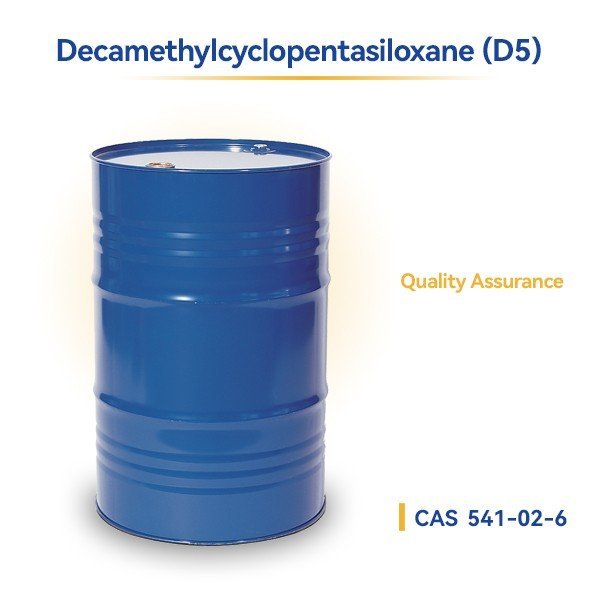
Decamethylcyclopentasiloxane (D5)
- CAS No.
- 541-02-6
Decamethylcyclopentasiloxane (D5), CAS 541-02-6. Source-derived identification, physical data and applications are provided for catalogue reference; request the current specification, COA and SDS for the…
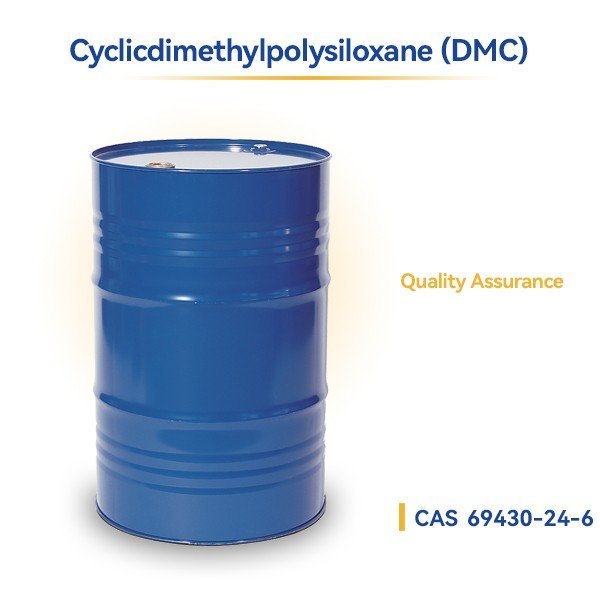
Cyclicdimethylpolysiloxane (DMC)
- CAS No.
- 69430-24-6
Cyclicdimethylpolysiloxane (DMC), CAS 69430-24-6. Source-derived identification, physical data and applications are provided for catalogue reference; request the current specification, COA and SDS for the…