GHS Classification: Flammable Liquid (GHS02), Acute Toxicity (GHS06), Health Hazard (GHS08)
Hazard Statements: Flammable liquid and vapor; harmful if swallowed, in contact with skin, or if inhaled; may cause respiratory irritation; may cause drowsiness or dizziness.
UN Number: UN 1915
Hazard Class: 3 (Flammable Liquids)
Packing Group: III
Cyclohexanone
GTC-292
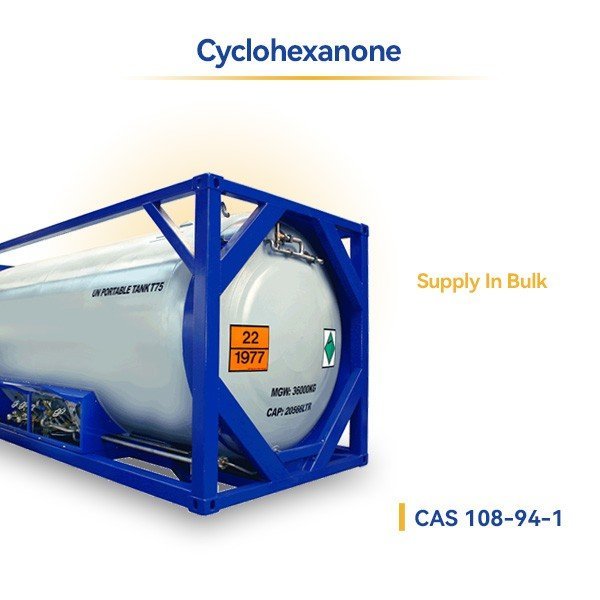
Representative packaging
Ketones
Cyclohexanone
- CAS No.
- 108-94-1
- Catalogue ID
- GTC-292
Cyclohexanone, CAS 108-94-1. Source-derived identification, physical data and applications are provided for catalogue reference; request the current specification, COA and SDS for the required grade.
Catalogue aliases / related identifiers
Pimelic Ketone; Cyclohexyl Ketone; Ketohexamethylene; Anone; Sextone
Supplied catalogue source: GTC-292 · Page 17
Reference data — confirm before ordering or use
The information below is a structured migration from the supplied catalogue snapshot. It is not a current product specification, COA or SDS. Confirm the actual supplier, grade, batch documents, classification, packing and destination requirements for your enquiry.
Basic Information of Cyclohexanone
Cyclohexanone (CAS No. 108-94-1) meets stringent quality standards, ensuring optimal performance for your specific needs:
| CAS No.: | 108-94-1 |
|---|---|
| EC No.: | 203-631-1 |
| Linear Formula: | C₆H₁₀O |
| Molecular Weight: | 98.15 |
| Appearance: | Colorless to pale yellow liquid |
| Odor: | Acetone-like, peppermint-like odor |
| Melting Point: | -47 °C (lit.) |
| Boiling point | 155-156 °C (lit.) |
| Density: | 0.947 g/mL at 25 °C (lit.) |
| Solubility: | Slightly soluble in water; miscible with most organic solvents. |
| Purity: | 116 °F |
| RIDADR: | UN 1915 3/PG 3 |
| Chemical Structure: | 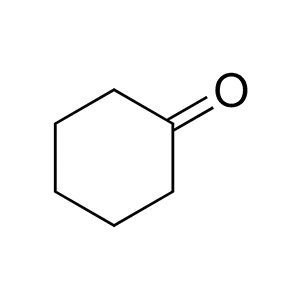 |
Its consistent purity and reliable properties make it a preferred choice for manufacturers worldwide.
What is Cyclohexanone used for
Cyclohexanone's unique chemical structure and solvent properties enable its widespread use in diverse industries:
Versatile Solvent:
Cyclohexanone serves as an excellent solvent for a variety of materials due to its high solvency power. It is extensively used in:
Resins: Effective in dissolving numerous natural and synthetic resins, including vinyl resins, acrylic resins, and epoxy resins.
Paints & Lacquers: A key component in paint and lacquer formulations, improving flow, leveling, and drying characteristics.
Adhesives & Inks: Used in the formulation of various adhesives and printing inks for consistent performance.
Pesticides & Fungicides: Acts as a solvent carrier for active ingredients in agricultural chemical formulations.
Crucial Intermediate for Nylon Production:
One of the most significant applications of Cyclohexanone is its role as a fundamental intermediate in the synthesis of nylon. It is a direct precursor for:
Its efficient conversion to these monomers underscores its importance in the global polymer industry.
Caprolactam: The primary monomer for the production of Nylon 6.
Adipic Acid: A key raw material for the production of Nylon 6,6.
Pharmaceutical and Agricultural Chemicals:
Cyclohexanone is employed in the synthesis pathways of various pharmaceutical compounds and active ingredients for agricultural chemicals, leveraging its reactive ketone group for specific chemical transformations.
Chemical Reagent:
As a reactive ketone, Cyclohexanone serves as a building block in the synthesis of other organic compounds, including fragrances, dyes, and other specialty chemicals.
Exceptional Purity: Our Cyclohexanone is manufactured to high purity standards, ensuring optimal performance in your applications.
Commitment to Quality & Safety: We adhere to the highest industry standards for quality management, safety, and environmental responsibility throughout our operations.
Related Articles
Frequently Asked Questions (FAQ)
What is Cyclohexanone?
Cyclohexanone (CAS 108-94-1) is a colorless, oily liquid with a characteristic odor. It is an important industrial solvent and chemical intermediate, mainly used in the production of Nylon-6 and Nylon-66 precursors (adipic acid and caprolactam).
What is the molecular formula and molar mass of Cyclohexanone?
The molecular formula is C6H10O with a molar mass of 98.15 g/mol.
Is Cyclohexanone hazardous?
Yes. Cyclohexanone is classified as a flammable liquid and harmful substance. It may cause skin and eye irritation, and harmful effects if inhaled or swallowed. Proper PPE and safe handling practices are required.
Is Cyclohexanone flammable?
Yes. Cyclohexanone has a flash point of approximately 44 °C and is classified as a flammable liquid (Category 3, GHS). It should be stored and handled away from heat, sparks, and open flames.
What are the main applications of Cyclohexanone?
Cyclohexanone is primarily used as an intermediate in the production of adipic acid and caprolactam, both essential raw materials for Nylon-6 and Nylon-66. It is also used as a solvent in paints, resins, lacquers, dyes, and in the manufacture of pharmaceuticals, agrochemicals, and plasticizers.
Is Cyclohexanone polar or nonpolar?
Cyclohexanone is considered a polar aprotic solvent. The carbonyl (C=O) group gives it polarity, while the cyclohexane ring contributes hydrophobic character. This duality makes it an effective solvent for many organic reactions.
Is Cyclohexanone soluble in water?
Cyclohexanone is moderately soluble in water (~25 g/L at 20 °C) and highly miscible with many organic solvents such as alcohols, ethers, and ketones.
Is Cyclohexanone aromatic?
No. Cyclohexanone is not aromatic because the cyclohexane ring does not have conjugated pi-electrons required for aromaticity. It is a saturated cyclic ketone.
How is Cyclohexanone transported?
It is classified as a dangerous good under UN 1915, Hazard Class 3 (Flammable Liquids), Packing Group III. Typical packaging includes 200 L steel drums (~190 kg) or 1000 L IBC totes. Transport must comply with international regulations (ADR, IMDG, IATA).
Hazards Classification



Before you order
Confirm the current commercial product record.
Include the required grade or purity, quantity, preferred packing, destination country/port and required document set.
- 01Current specification
- 02Batch or sample COA
- 03Product- and supplier-specific SDS
- 04Packing and shipping review
INQUIRY
Continue browsing
Related Products
Diacetone Alcohol
- CAS No.
- 123-42-2
Diacetone Alcohol, CAS 123-42-2. Source-derived identification, physical data and applications are provided for catalogue reference; request the current specification, COA and SDS for the…
Methyl Isoamyl Ketone
- CAS No.
- 110-12-3
Methyl Isoamyl Ketone, CAS 110-12-3. Source-derived identification, physical data and applications are provided for catalogue reference; request the current specification, COA and SDS for…
Methyl isobutyl ketone (MIBK)
- CAS No.
- 108-10-1
Methyl isobutyl ketone (MIBK), CAS 108-10-1. Source-derived identification, physical data and applications are provided for catalogue reference; request the current specification, COA and SDS…
Methyl Amyl Ketone
- CAS No.
- 110-43-0
Methyl Amyl Ketone, CAS 110-43-0. Source-derived identification, physical data and applications are provided for catalogue reference; request the current specification, COA and SDS for…
Diisobutyl Ketono
- CAS No.
- 108-83-8
Diisobutyl Ketono, CAS 108-83-8. Source-derived identification, physical data and applications are provided for catalogue reference; request the current specification, COA and SDS for the…